
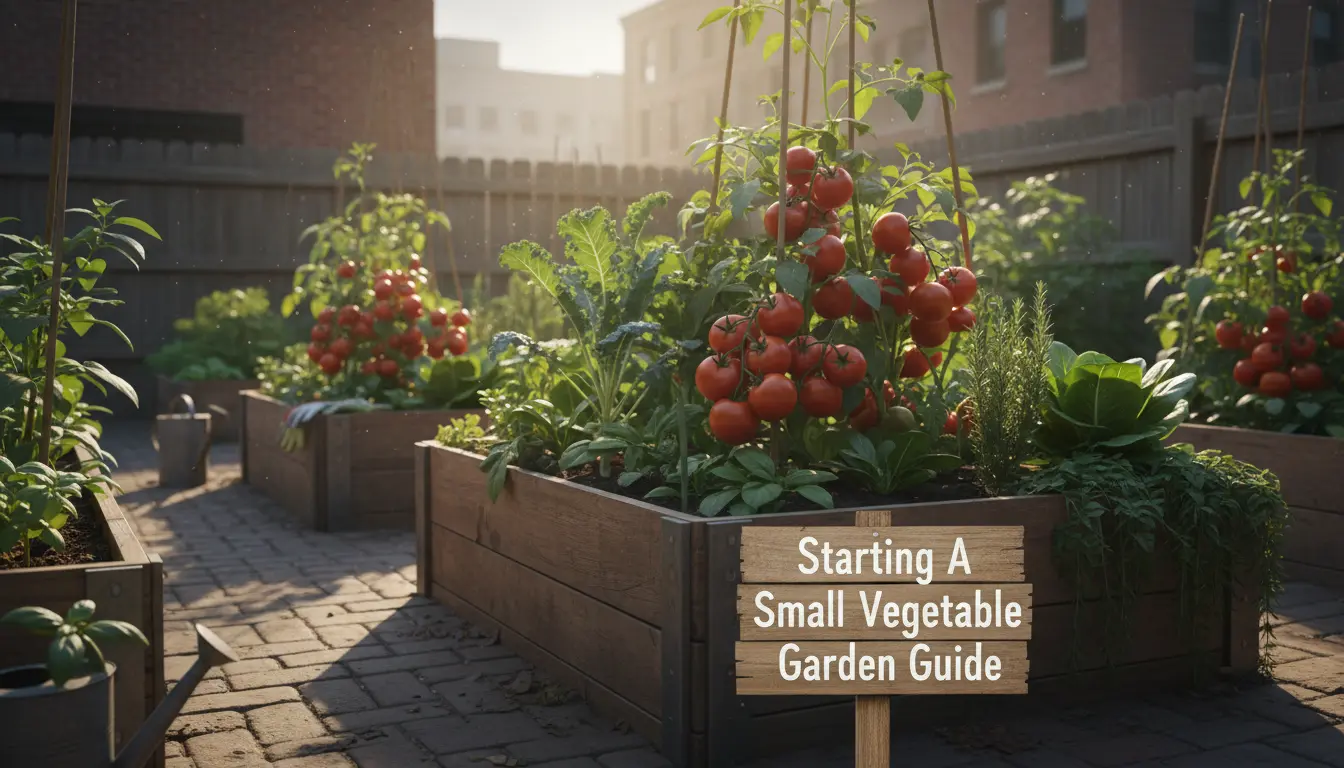
Starting a small vegetable garden is a practical way to grow fresh food, save money, and enjoy time outdoors. This guide breaks the process into clear steps you can follow on a balcony, patio, or small yard.
Planning Your Small Vegetable Garden
Before you plant, create a simple plan. Decide on space, sunlight, and how much time you can commit each week.
- Measure the area and note sunlight patterns for a week.
- List vegetables you and your household eat most.
- Decide between ground beds, raised beds, or containers.
Choosing the Right Location for Your Small Vegetable Garden

Most vegetables need 6–8 hours of sunlight daily. Place your garden where it gets the most sun and has easy access to water.
Avoid low spots that collect cold air or near large trees that compete for nutrients.
Picking Vegetables for a Small Vegetable Garden
Choose plants that fit your space and skill level. For small gardens, pick high-yield, compact, or vertical varieties.
- Easy starters: lettuce, radish, spinach, herbs (basil, parsley).
- Compact fruiting plants: bush tomatoes, dwarf peppers, patio cucumbers.
- Vertical options: pole beans, peas, and cucumbers trained on trellises.
Preparing Soil and Containers for a Small Vegetable Garden
Good soil is the foundation of a productive small vegetable garden. If you use containers, choose the right mix and size.
Soil Mix and Fertilizer for a Small Vegetable Garden
Test soil pH if possible; most vegetables prefer a pH of 6.0–7.0. Amend heavy clay with compost and sand to improve drainage.
For containers, use a high-quality potting mix with added compost. Feed plants with balanced organic fertilizer every 4–6 weeks during the season.
Container and Raised Bed Options for a Small Vegetable Garden
Containers are ideal for balconies and patios. Choose at least 12 inches deep for most vegetables and larger for tomatoes or peppers.
Raised beds warm up earlier and improve drainage. Use untreated wood, composite, or stone and fill with a mix of topsoil, compost, and coarse materials.
Planting, Watering, and Care in a Small Vegetable Garden
Planting at the right time and using consistent care keeps plants healthy. Follow local frost dates for timing.
Planting Schedule and Spacing for a Small Vegetable Garden
Use seed packets or plant tags for spacing and depth. When space is tight, try succession planting to harvest continuously.
- Example: Plant lettuce every 2–3 weeks for a steady supply.
- Interplant fast crops (radishes) between slower ones (carrots) to maximize space.
Watering and Pest Management in a Small Vegetable Garden
Water deeply and less often to promote strong roots. Aim for the soil to be moist but not waterlogged.
Common pest controls include handpicking, row covers, and encouraging beneficial insects like ladybugs. Use organic soap sprays or neem oil sparingly and as a last resort.
Planting marigolds near tomatoes can reduce some nematode and insect problems naturally. Companion plants often help control pests and improve yields.
Case Study: Balcony Success With a Small Vegetable Garden
Sarah, living in a third-floor apartment, converted a 6 ft by 3 ft balcony into a small vegetable garden using containers and vertical supports.
She planted two dwarf tomato plants, a hanging basket of herbs, a container of lettuce, and a trellis for pole beans. Within the first season she harvested weekly salads and two baskets of tomatoes.
Her routine was 15 minutes daily for watering and weekly checks for pests. Using a basic compost tea once a month improved plant vigor noticeably.
Seasonal Tips and Harvesting for a Small Vegetable Garden
Adjust crops by season: cool-season greens in spring and fall, warm-season vegetables in summer. Protect early spring and late fall crops with fabric covers.
Harvest regularly to encourage more production. Pick tomatoes when they start to color and ripen off the vine if needed to avoid pests.
Basic Troubleshooting for a Small Vegetable Garden
- Yellowing leaves: check watering and soil nutrients.
- Poor fruit set: ensure adequate sunlight and pollinators.
- Wilting: inspect roots for rot or pests and check drainage.
Simple Checklist to Start Your Small Vegetable Garden
- Choose location with 6+ hours of sun.
- Select 4–6 easy crops suitable for your space.
- Prepare soil or buy quality potting mix.
- Install containers, raised beds, or trellis supports.
- Water deeply, mulch to retain moisture, and monitor pests weekly.
Starting a small vegetable garden is manageable with a clear plan and a short weekly routine. Begin with a few reliable crops, observe what works in your microclimate, and expand gradually.