
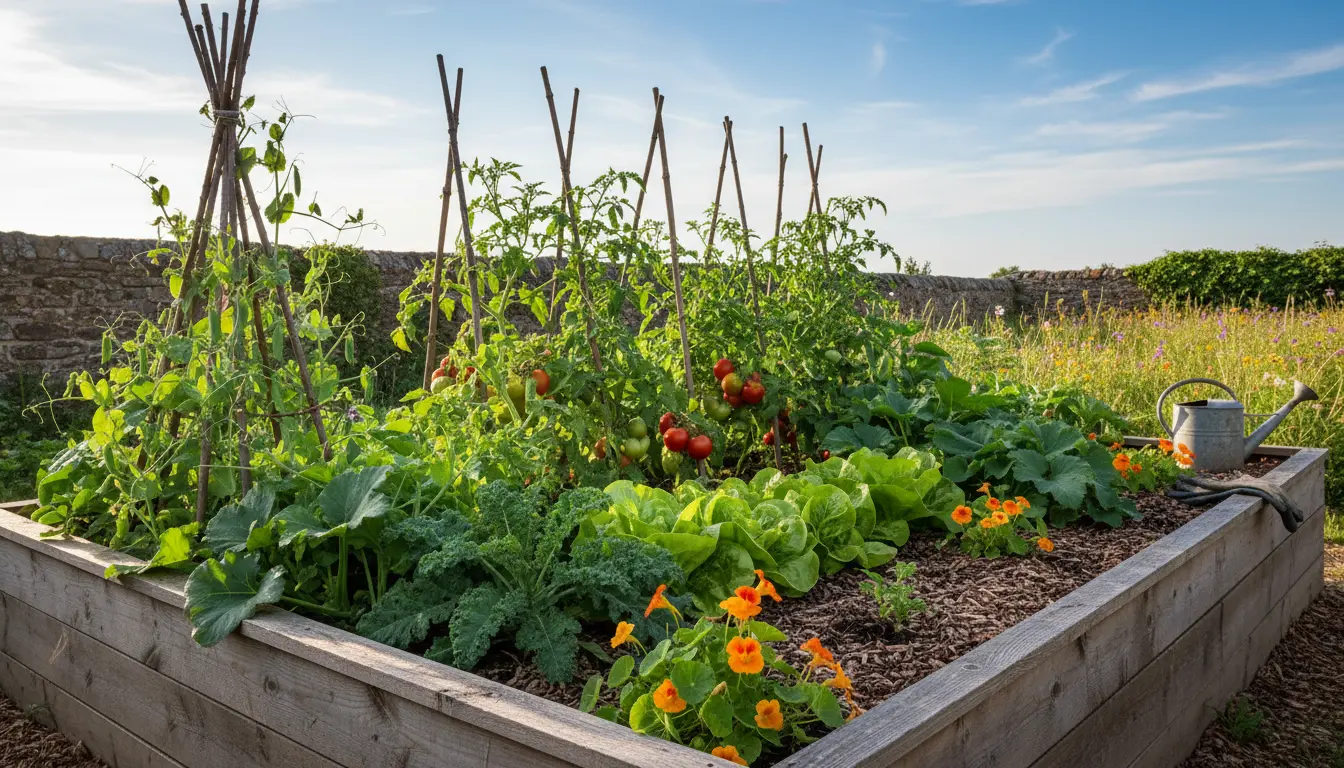
Quick overview to start a small vegetable garden
Starting a small vegetable garden is a practical way to grow fresh food, save money, and enjoy outdoor activity. This guide covers site selection, soil preparation, plant choices, watering, and basic maintenance.
Choose the right spot for your small vegetable garden
Light is the most important factor when you start a small vegetable garden. Most vegetables need 6 to 8 hours of direct sunlight each day.
Look for a flat or gently sloped area with good drainage. If you have limited ground space, consider containers or raised beds on a patio or balcony.
Sun, shade, and microclimates
Observe the site at different times of day to map sun and shade. Morning sun and afternoon shade can work for leafy crops like lettuce.
Use fences, walls, or reflective surfaces to extend light in tighter spaces.
Prepare soil and beds for a small vegetable garden
Healthy soil is the foundation of a productive small vegetable garden. Aim for loose, well-draining soil rich in organic matter.
Build raised beds or loosen ground soil to a depth of 8–12 inches. Mix in compost and a balanced slow-release fertilizer if needed.
Soil mix for containers and raised beds
- 1 part quality topsoil or garden soil
- 1 part compost
- 1 part coarse sand or perlite for drainage
This mix holds moisture and nutrients while preventing compaction in a small vegetable garden.
Choose easy crops for a small vegetable garden

Select vegetables that fit your space, climate, and skill level. Start with varieties known for high yield and low maintenance.
Recommended vegetables for small gardens
- Leafy greens: lettuce, spinach, Swiss chard
- Herbs: basil, parsley, cilantro
- Compact fruiting plants: cherry tomatoes, dwarf peppers
- Root crops in deep containers: radishes, carrots
- Fast growers: green beans, baby cukes
Choose compact or bush varieties labeled for containers or small spaces to maximize production.
Planting schedule and spacing for a small vegetable garden
Follow seed packet or plant tag guidance for spacing and planting depth. Overcrowding increases disease and reduces yield.
Use succession planting to keep harvests steady: sow new lettuce every 2–3 weeks or stagger tomato planting for continuous fruit.
Example planting plan
- Bed 1: Lettuce (rows), radishes between rows
- Bed 2: Two cherry tomato plants with basil between them
- Containers: One pepper and one herb pot
Watering and feeding your small vegetable garden
Consistent water is critical, especially in small gardens and containers. Water deeply 2–3 times a week rather than light daily sprinkling.
Mulch with straw or shredded bark to conserve moisture and reduce weeds in a small vegetable garden.
Fertilizing tips
Use a balanced, slow-release fertilizer at planting and supplement with liquid feed every 3–4 weeks for heavy feeders like tomatoes.
For organic care, side-dress with compost or fish emulsion according to package directions.
Pest and disease control in a small vegetable garden
Small gardens are easier to manage for pests. Early detection and simple barriers often work well.
Practical pest control methods
- Handpick larger pests like caterpillars in the morning
- Use row covers to protect seedlings from insect damage
- Encourage beneficial insects with flowers and avoid broad-spectrum insecticides
Raised beds warm more quickly in spring, allowing earlier planting and increasing the growing season by several weeks in many regions.
Maintenance routine for a successful small vegetable garden
Simple weekly tasks keep the garden productive: check soil moisture, remove weeds, harvest ripe produce, and scan for pests or disease.
Pruning some crops, like indeterminate tomatoes, improves air circulation and fruit quality in a small vegetable garden.
Case study: Laura’s balcony small vegetable garden
Laura converted a 6-foot balcony into a productive small vegetable garden using three large containers and one raised trough. She planted cherry tomatoes, basil, lettuce, and peppers.
Within two months she had fresh salads and herbs, and she reports saving $25–$35 per month on greens during the season. Simple drip irrigation and a weekly feeding kept plants healthy.
Seasonal tips to expand your small vegetable garden
Rotate crops and add cover crops or green manure in off-seasons to rebuild soil. In colder climates, use cold frames or cloches to extend the season.
Try vertical supports for vining crops to save ground space and increase yield per square foot.
Final checklist to start a small vegetable garden
- Choose a sunny site with good drainage
- Prepare soil or a quality container mix
- Select compact, high-yield crops suited to your climate
- Water consistently and mulch to retain moisture
- Monitor pests and harvest regularly
Starting a small vegetable garden is manageable with basic planning and a weekly routine. Focus on soil, sunlight, and simple maintenance, and you can enjoy fresh homegrown vegetables even in limited space.