
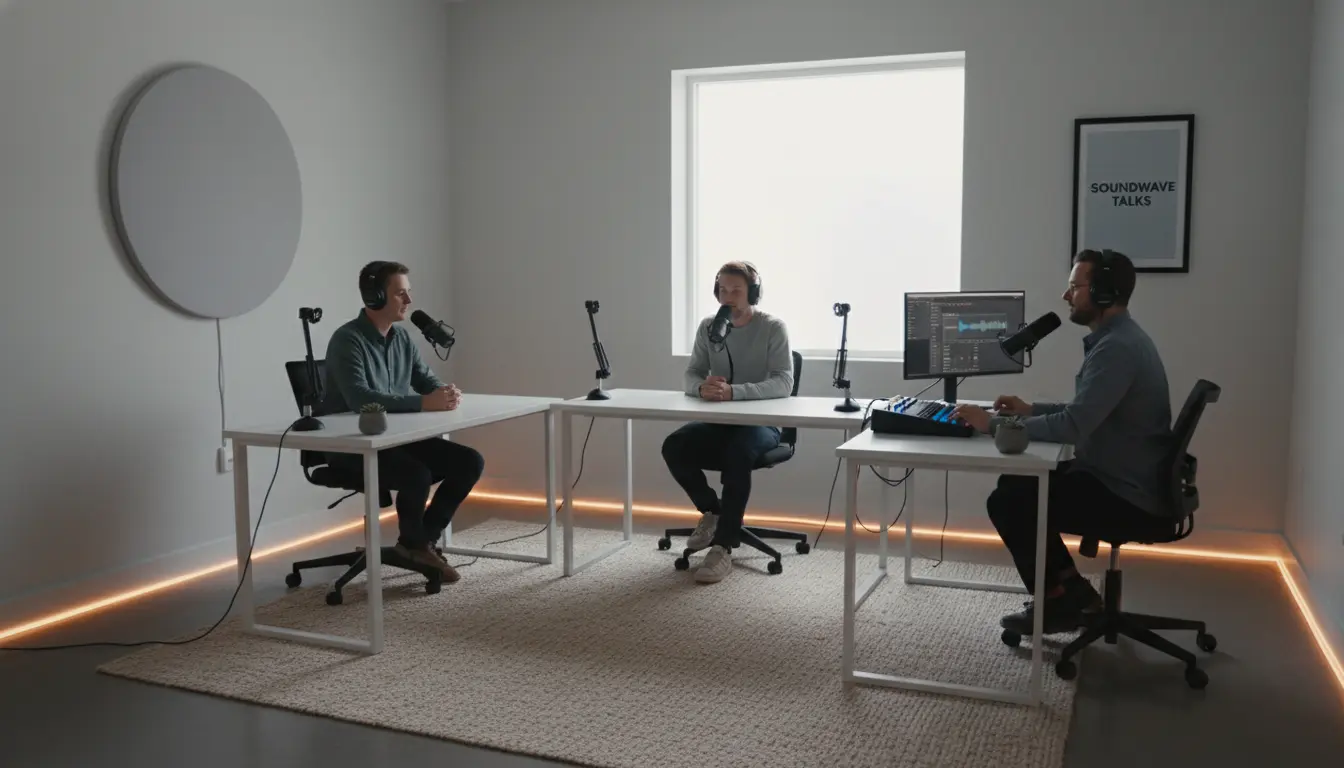
Plan Your Show: The First Step to Start a Podcast
Before you record a single episode, decide what your podcast will cover and who it is for. A clear topic and target audience keep episodes focused and help with promotion.
Define your format, episode length, and publishing schedule. Consistency builds an audience over time.
Choose a Topic and Audience
Select a topic you can talk about for many episodes without running out of ideas. Narrowing the audience makes it easier to market your show.
- Topic idea: niche hobby, industry insights, interviews, or storytelling.
- Audience: beginners, professionals, hobbyists, or local communities.
Episode Format and Frequency
Decide if your podcast will be solo, co-hosted, or interview-based. Typical lengths are 20–60 minutes.
Choose a release cadence you can maintain: weekly, biweekly, or monthly.
Essential Equipment to Start a Podcast
You don’t need expensive gear to start, but good audio quality matters. Listeners expect clear sound with minimal background noise.
Basic Equipment List
- USB microphone (affordable and plug-and-play)
- Headphones for monitoring audio
- Pop filter or foam windscreen
- Optional: audio interface and XLR mic for upgrade paths
Choose equipment that fits your budget. A solid USB mic and quiet room are enough for many beginners.
Recording and Editing: How to Start a Podcast Professionally
Recording and editing are where your podcast takes shape. Use simple software to start and improve with practice.
Recording Tips
- Record in a quiet room with soft furnishings to reduce echo.
- Speak clearly and at a steady pace. Keep a conversational tone.
- Record a short sound check before each episode to set levels.
Editing Basics
Use free or low-cost editing tools like Audacity, GarageBand, or Reaper. Trim pauses, remove obvious mistakes, and apply gentle compression and EQ.
Keep edits natural; over-editing can make audio sound unnatural.
Publishing: How to Start a Podcast and Get It Online
To publish your podcast you need hosting, an RSS feed, and distribution to major directories.
Choose a Podcast Host
Podcast hosts store audio files and provide an RSS feed. Popular hosts include Libsyn, Anchor, Podbean, and Buzzsprout.
- Look for analytics, episode management, and easy distribution features.
- Consider costs: free plans may add limitations or branding.
Submit to Directories
Submit your RSS feed to Apple Podcasts, Spotify, Google Podcasts, and other directories. Each platform has simple submission steps.
Provide a clear show title, description, and cover art that meets size and format requirements.
Promotion and Growth: How to Start a Podcast Audience
Launching is only the beginning. Promotion helps new listeners discover your show.
Practical Promotion Tactics
- Share episodes on social media and in relevant online communities.
- Publish show notes and transcripts on a blog for SEO benefits.
- Collaborate with guests and ask them to share their episode.
- Encourage reviews and subscriptions to improve directory visibility.
Monetization Options
Monetization comes later. Typical paths include sponsorships, listener support, and premium content.
- Sponsorships and host-read ads
- Patreon or membership platforms for bonus content
- Affiliate links and product sales
Quick Checklist to Start a Podcast
- Define topic, audience, and format
- Choose basic equipment and a quiet recording space
- Record a pilot episode and edit for clarity
- Choose a host and create podcast RSS feed
- Submit to directories and promote consistently
Apple Podcasts was an early driver of podcast growth. Consistent episode length and clear descriptions improve your chances of appearing in suggested lists.
Real-World Example: Local Book Club Podcast
A small local book club started a monthly podcast to discuss regional authors. They used a single USB mic, recorded in a community center, and published six episodes in the first three months.
By publishing show notes and tagging local authors on social media, they grew from 50 downloads an episode to 600 downloads and landed a sponsorship with a local bookstore.
Final Tips for How to Start a Podcast
Start small, prioritize audio quality, and publish consistently. Your first episodes are practice—expect learning and improvement.
Track listener data, ask for feedback, and iterate on format and promotion to grow your show over time.
Ready to start a podcast? Plan one episode this week and record a short pilot to test your setup.