
How to Start a Kitchen Herb Garden: Quick Overview
Starting a kitchen herb garden is an easy way to add fresh flavor to meals and bring greenery into small spaces. This guide shows practical steps you can follow today, with supplies you likely already have or can buy cheaply.
Choose the Right Herbs for Your Kitchen Herb Garden
Select herbs that are easy to grow and that you use often. Classic beginner herbs include basil, parsley, chives, mint, and thyme.
- Basil: Great for sunny windowsills and frequent harvesting.
- Parsley: Tolerates lower light and provides continuous leaves.
- Chives: Compact and forgiving, ideal for small pots.
- Mint: Vigorous grower; keep in its own pot to avoid spreading.
- Thyme and oregano: Drought-tolerant and low maintenance.
Pick Containers and Soil for a Healthy Kitchen Herb Garden
Containers should have drainage holes to prevent root rot. Use pots sized for the mature plant—6 to 8 inches for single herbs, larger for mixed containers.
Use a high-quality potting mix labeled for containers or herbs. Avoid garden soil, which can compact and drain poorly indoors.
Container Tips for a Successful Kitchen Herb Garden
- Terracotta pots dry faster and help prevent overwatering.
- Self-watering pots reduce the chance of drying out but monitor for root saturation.
- Group small pots on a tray to simplify watering and protect surfaces.
Light Requirements for Your Kitchen Herb Garden
Most culinary herbs need 4–6 hours of direct sunlight or 10–12 hours of bright light from a grow lamp. A south- or west-facing window is ideal.

If natural light is limited, use a full-spectrum LED grow light positioned 6–12 inches above the herbs. Timers make lighting routine easy.
Watering and Feeding Your Kitchen Herb Garden
Water when the top 1 inch of soil feels dry. Overwatering is the most common mistake—allow roots to breathe between waterings.
Feed herbs with a balanced liquid fertilizer every 3–4 weeks during the growing season. Use half the recommended strength for frequent feeders like basil.
Watering Schedule Example
- Check soil moisture every 2–3 days.
- Water thoroughly until water drains from the bottom.
- Empty saucers within 30 minutes to avoid root rot.
Pruning, Harvesting, and Maintaining Flavor
Regular harvesting encourages bushier growth. Pinch or cut stems above a pair of leaves to promote branching.
Avoid removing more than one-third of a plant at once. For basil and mint, harvest frequently; for slow growers like thyme, harvest less aggressively.
Common Problems and Troubleshooting for a Kitchen Herb Garden
Pests like aphids and whiteflies appear occasionally indoors. Wipe leaves with a damp cloth or use insecticidal soap for small infestations.
Yellowing leaves often mean overwatering or poor drainage. Move plants to brighter light if growth is leggy or weak.
Quick Troubleshooting Checklist
- Leggy growth: Increase light or rotate pots weekly.
- Yellow leaves: Check drainage and reduce watering.
- Slow growth: Add light and a diluted fertilizer dose.
- Mint spreading: Re-pot in a separate container.
Seasonal Care and Overwintering Your Kitchen Herb Garden
Indoor herbs are often perennials that slow growth in winter. Reduce fertilizer and watering in cooler months.
If light is insufficient, move grow lights closer or switch to longer daily lighting. Clip back woody herbs in early spring to revive new growth.
Case Study: Small Space Success with a Kitchen Herb Garden
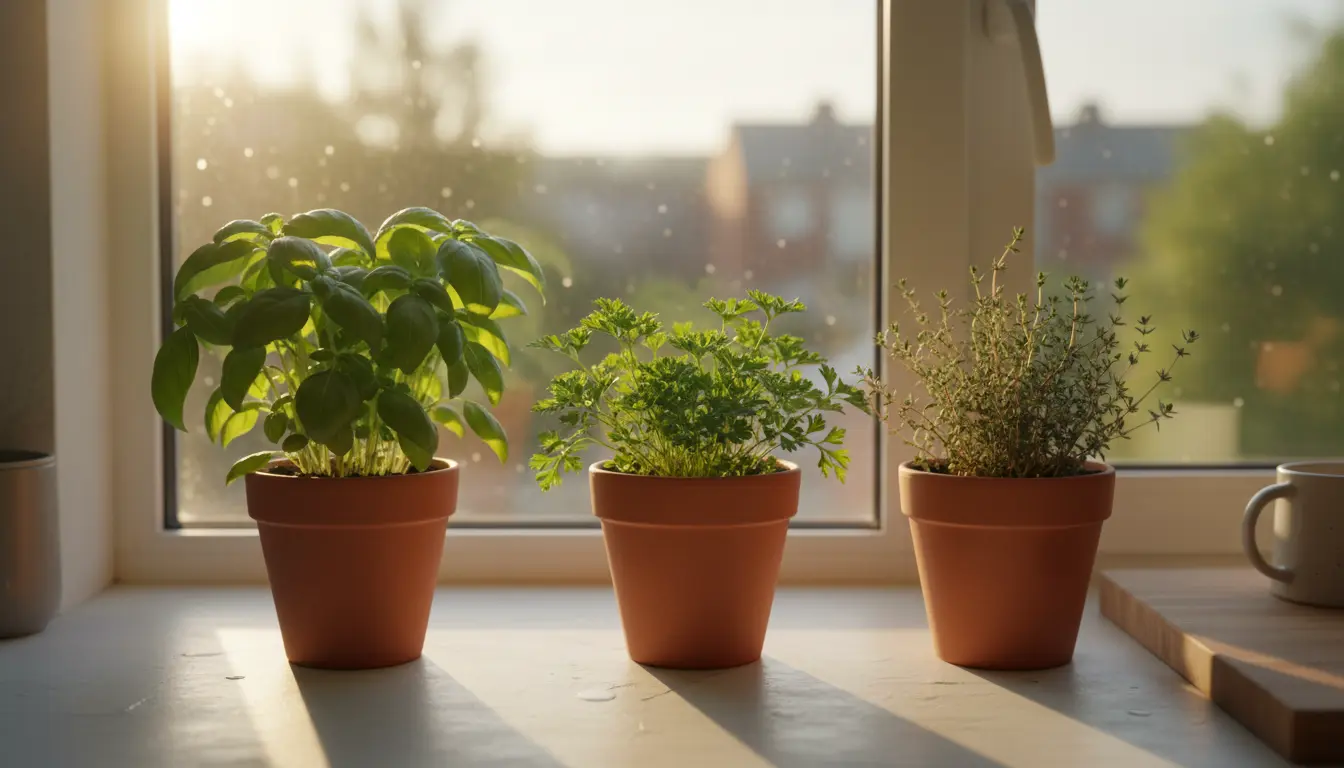
Anna lives in a one-bedroom apartment and wanted fresh herbs for cooking. She started with three 6-inch terracotta pots on her south-facing windowsill.
She chose basil, chives, and parsley and used a lightweight potting mix. Anna watered when the top inch of soil dried and rotated the pots weekly for even light.
Within six weeks she had regular harvests. Fresh basil on pasta and chives on omelets reduced her grocery trips and inspired her to add a small mint pot in the kitchen.
Practical Checklist to Start Your Kitchen Herb Garden Today
- Choose 3–5 herbs you use frequently.
- Buy pots with drainage and a quality potting mix.
- Place plants in a bright window or set up a grow light.
- Water when the top inch of soil is dry and fertilize monthly.
- Harvest regularly and prune to encourage bushy growth.
With a small investment of time and simple care, anyone can have a productive kitchen herb garden. Start small, learn from each season, and expand as your confidence grows.