
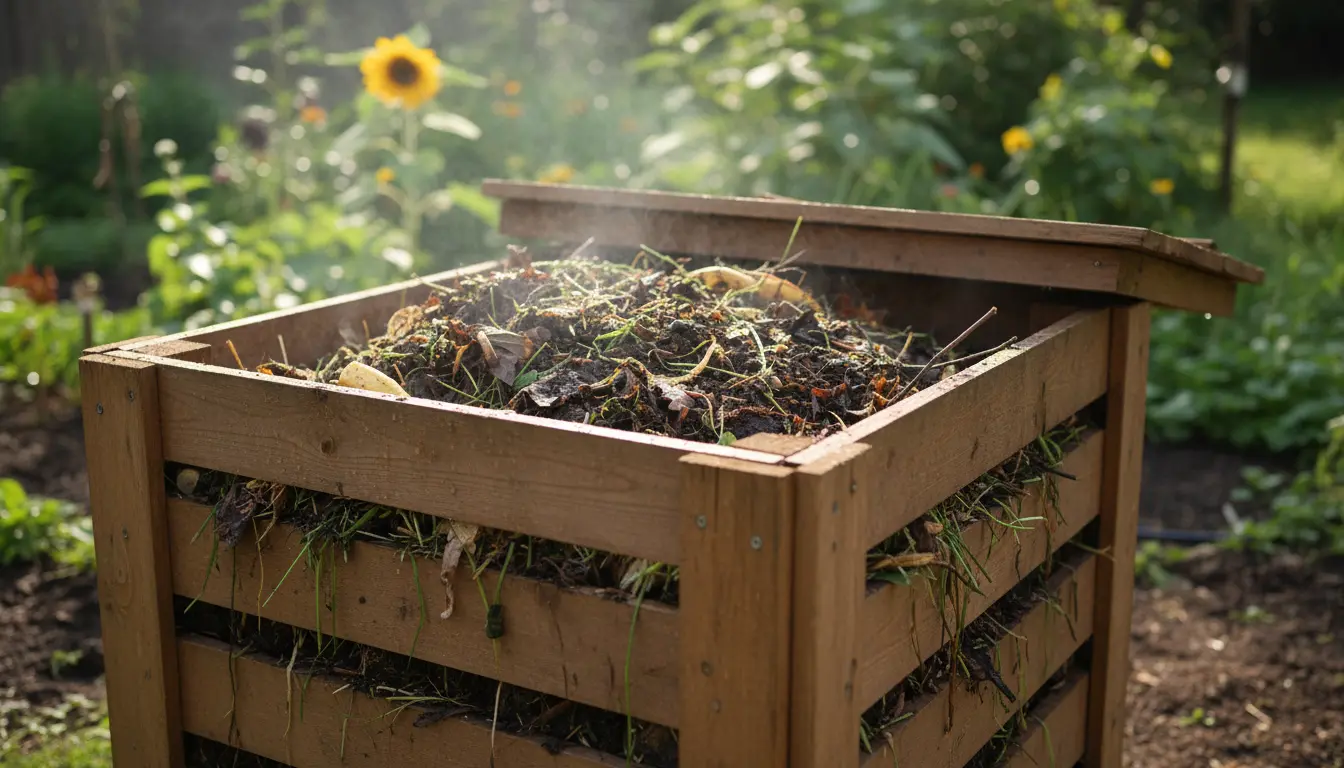
Why start a home compost bin
Composting turns kitchen scraps and yard waste into nutrient-rich soil for your garden. It reduces landfill waste and saves money on fertilizer.
This guide explains how to choose, build, and maintain a home compost bin with clear, practical steps. No prior experience required.
Choose the right home compost bin
Pick a bin size and type that fits your space and effort level. Options include tumblers, stationary bins, and simple DIY piles.
Consider these factors when selecting a compost bin:
- Available space (balcony, backyard, or community garden)
- Amount of kitchen and yard waste you produce
- Ease of turning and harvesting compost
Types of home compost bins
Tumbler bins rotate to speed up decomposition and reduce turning effort. They work well for small to medium households.
Stationary bins or DIY wooden or wire bins are low-cost and suitable for larger volumes and outdoor gardens.
Location and setup for your home compost bin
Place your compost bin on bare soil where possible to allow worms and microbes to move in. Choose a spot with partial shade to maintain moisture.
Ensure easy access for adding scraps and for turning the pile. Keep the bin within a 5–10 meter walk from your kitchen if possible.
Basic setup steps
- Level the ground and place your bin on soil or gravel for drainage.
- Start with a base layer of coarse material like twigs or straw to improve airflow.
- Add alternating layers of green and brown materials (details below).
What to add to a home compost bin
Compost needs a balance of carbon-rich ‘brown’ materials and nitrogen-rich ‘green’ materials. Aim for roughly a 3:1 ratio by volume of browns to greens.
- Greens: vegetable scraps, fruit peels, coffee grounds, fresh grass clippings
- Browns: dry leaves, shredded paper, cardboard, straw, small branches
Avoid adding meat, dairy, oily foods, diseased plants, and pet waste to a standard home compost bin. These items attract pests and can cause odors.
How to maintain your home compost bin
Proper maintenance keeps decomposition active and prevents bad smells. Focus on moisture, aeration, and balance.
Key maintenance tasks:
- Turn or aerate the pile weekly or every two weeks to add oxygen.
- Keep the pile as damp as a wrung-out sponge; add water in dry weather.
- Add more brown material if it becomes too wet or smells sour.
Speeding up composting
Chop materials into small pieces, maintain the 3:1 brown to green mix, and keep the pile at least 1 cubic meter if you want faster, hotter composting. Tumblers help speed the process for smaller volumes.
Troubleshooting common issues with home compost bins
If your compost smells bad, it is usually too wet or lacks oxygen. Turn the pile and add dry brown materials like shredded paper or dried leaves.
If decomposition is very slow, add more greens or chop materials finer. Cold weather slows microbial activity; expect slower results in winter.
Common problems and fixes
- Problem: Fruit flies — Cover fresh food scraps with brown layer and bury them. Use a closed bin or kitchen caddy with a lid.
- Problem: No heat — Increase pile size, add greens, and insulate the bin to raise internal temperature.
- Problem: Too wet — Add dry browns and improve drainage or aeration.
Harvesting and using compost from your home compost bin
Compost is ready when dark, crumbly, and earthy-smelling, usually after 3–12 months depending on conditions. Sift or screen to separate finished compost from larger undecomposed pieces.
Use finished compost to enrich garden beds, mix into potting soil, or topdress lawns. A little goes a long way; apply a 1–3 cm layer to beds or mix 1 part compost to 3 parts soil for potting mixes.
Simple case study: One family s home compost bin
Maria, a homeowner with a small backyard, started a 200-liter compost tumbler. She added kitchen scraps and shredded leaves in a 3:1 ratio and turned it twice a week.
Within four months Maria had dark, usable compost. She cut her household waste sent to landfill by about 30% and used the compost in her vegetable beds with visible improvement in plant health.
Practical tips and quick checklist
Keep these quick tips handy when managing your home compost bin. They help avoid common mistakes and keep the process efficient.
- Balance greens and browns; aim for 3 parts browns to 1 part greens.
- Keep the compost moist but not soggy; add water during dry spells.
- Turn or stir the pile regularly to supply oxygen.
- Chop or shred large pieces to speed decomposition.
- Use a closed container or bury fresh food to reduce flies.
Final advice for successful home composting
Start small and learn by doing. Composting is forgiving; adjustments over time will improve results.
Record what you add and how often you turn the pile for a month or two. That simple log helps you fine-tune the balance and timing for consistently good compost.