
Why Start a Backyard Vegetable Garden
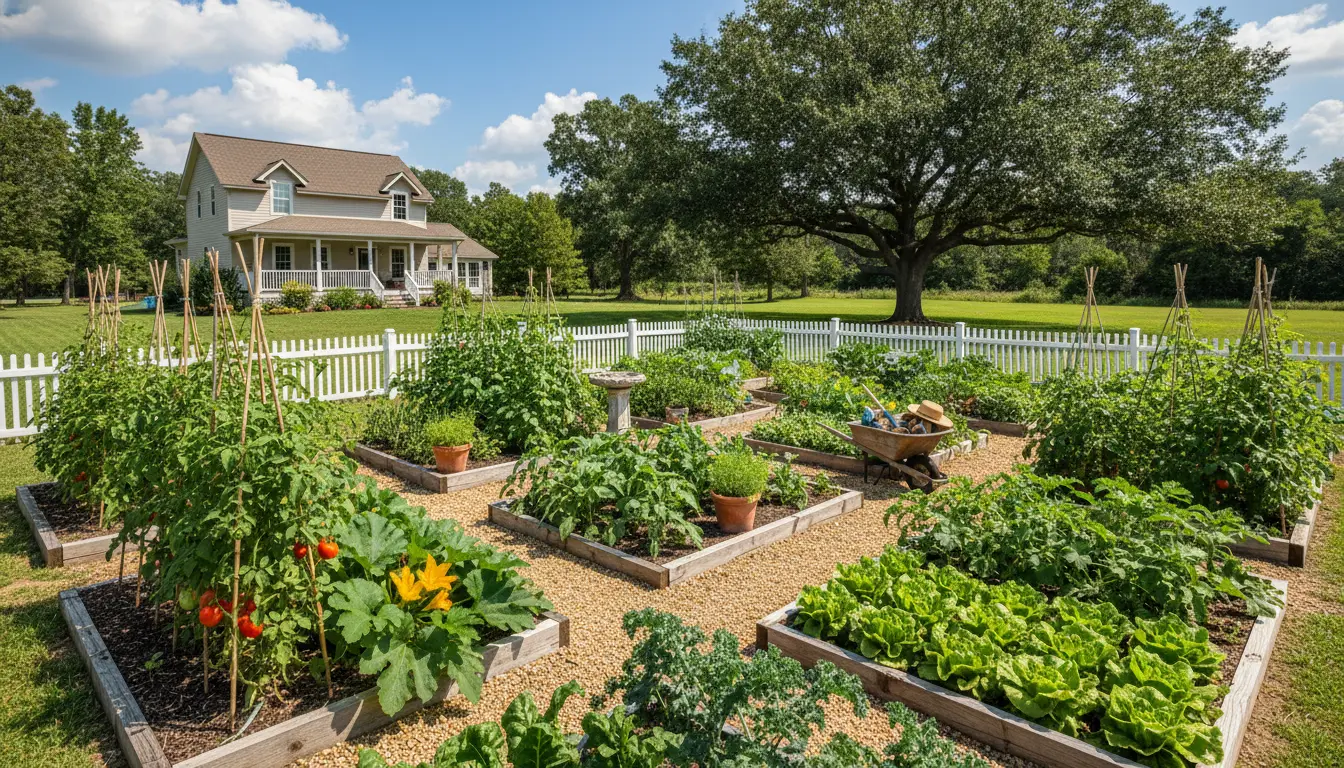
Growing your own food saves money and gives you fresh produce at peak flavor. A backyard vegetable garden can fit small spaces and scale to larger yards.
This guide walks you through planning, soil preparation, plant selection, watering, maintenance, and a short case study to make the process practical.
Planning Your Backyard Vegetable Garden
Good planning reduces wasted time and increases yields. Start by assessing space, sunlight, and local climate.
Sketch a small plan showing raised beds, containers, or rows. Note where sun falls at different times of day.
Choose the Right Spot
Most vegetables need 6–8 hours of direct sunlight. Pick a flat area with good drainage and easy access to water.
If full sun is limited, choose leafy greens and root crops that tolerate partial shade.
Decide on Beds or Containers
Raised beds warm faster and drain better. Containers work well on patios or for gardeners with limited soil access.
Consider these pros and cons:
- Raised beds: better soil control, easier weeding, higher yield per square foot.
- In-ground rows: cost-effective for larger spaces but need more soil work.
- Containers: flexible and portable, but need frequent watering and fertilizing.
Soil Preparation for a Backyard Vegetable Garden
Healthy soil is the foundation of a productive backyard vegetable garden. Test and amend your soil before planting.
Start with a simple soil test kit or send a sample to a local extension service for a pH and nutrient report.
Improve Soil Structure
Add organic matter such as compost, well-rotted manure, or leaf mold. Work in 2–4 inches of compost on top and mix into the top 6–8 inches.
For heavy clay, add coarse sand and compost to improve drainage. For sandy soil, increase organic matter to retain moisture.
Soil Fertility Tips
- Use balanced slow-release fertilizer at planting if soil test shows low nutrients.
- Top-dress with compost mid-season to replenish nutrients.
- Rotate families of vegetables each year to reduce disease and nutrient depletion.
Plant Selection and Timing in a Backyard Vegetable Garden
Choose vegetables suited to your climate and the season. Start with easy crops if you are new to gardening.
Good beginner choices include tomatoes, peppers, lettuce, radishes, beans, and herbs.
Use a Planting Calendar
Find your last frost date and plan seeds or transplants around it. Cool-season crops go in early spring and fall; warm-season crops after frost risk passes.
Stagger plantings of lettuce and radishes every 2–3 weeks for continual harvests.
Watering and Irrigation for a Backyard Vegetable Garden
Consistent moisture is crucial. Deep, infrequent watering encourages strong roots compared with frequent shallow watering.
Aim to keep the root zone evenly moist; most vegetables need about 1–1.5 inches of water per week depending on weather.
Efficient Watering Methods
- Drip irrigation or soaker hoses deliver water directly to roots and reduce evaporation.
- Mulch with straw or wood chips to retain moisture and suppress weeds.
- Water in the morning to reduce disease and evaporation losses.
Pest and Disease Management in a Backyard Vegetable Garden
Integrated pest management (IPM) emphasizes prevention and monitoring before treatment. Start with cultural practices.
Keep beds clean, rotate crops, and remove diseased plants promptly to limit spread.
Low-Toxic Solutions
- Handpick larger pests like caterpillars and slugs early in the morning or evening.
- Use floating row covers to protect young plants from insects.
- Apply biological controls or insecticidal soap only when monitoring shows a threshold of damage.
Harvesting and Storage from a Backyard Vegetable Garden
Harvest vegetables at peak ripeness for best flavor and nutrition. Frequent picking often encourages more production.
Store root vegetables in a cool, dark place; refrigerate leafy greens promptly to extend shelf life.
Simple Tools and Supplies for a Backyard Vegetable Garden
You don’t need many tools to start. Basic items include a spade, hand trowel, watering can or hose with nozzle, and pruning shears.
Optional useful supplies: compost, mulch, row covers, trellises, and soil test kit.
Many common kitchen herbs like basil, parsley, and chives repel pests and can improve vegetable garden yields when planted nearby.
Case Study: Small Backyard Garden Success
Sarah converted a 200 square foot sunny strip beside her driveway into three raised beds. She started with compost-rich soil and tomatoes, lettuce, and bush beans.
By rotating crops and using drip irrigation with mulch, she harvested fresh salad greens through summer and saved over $300 on produce that year.
The key steps she followed: plan sunlight, amend soil, choose easy crops, and water consistently.
Getting Started Today
Begin with a small, manageable area and one or two types of vegetables. Keep a simple journal of planting dates, varieties, and harvests to learn what works in your yard.
With basic planning and regular care, a backyard vegetable garden can provide healthy food and satisfying results in the first season.
Ready to start? Sketch your bed layout, test your soil, and pick your first seeds based on your last frost date.