
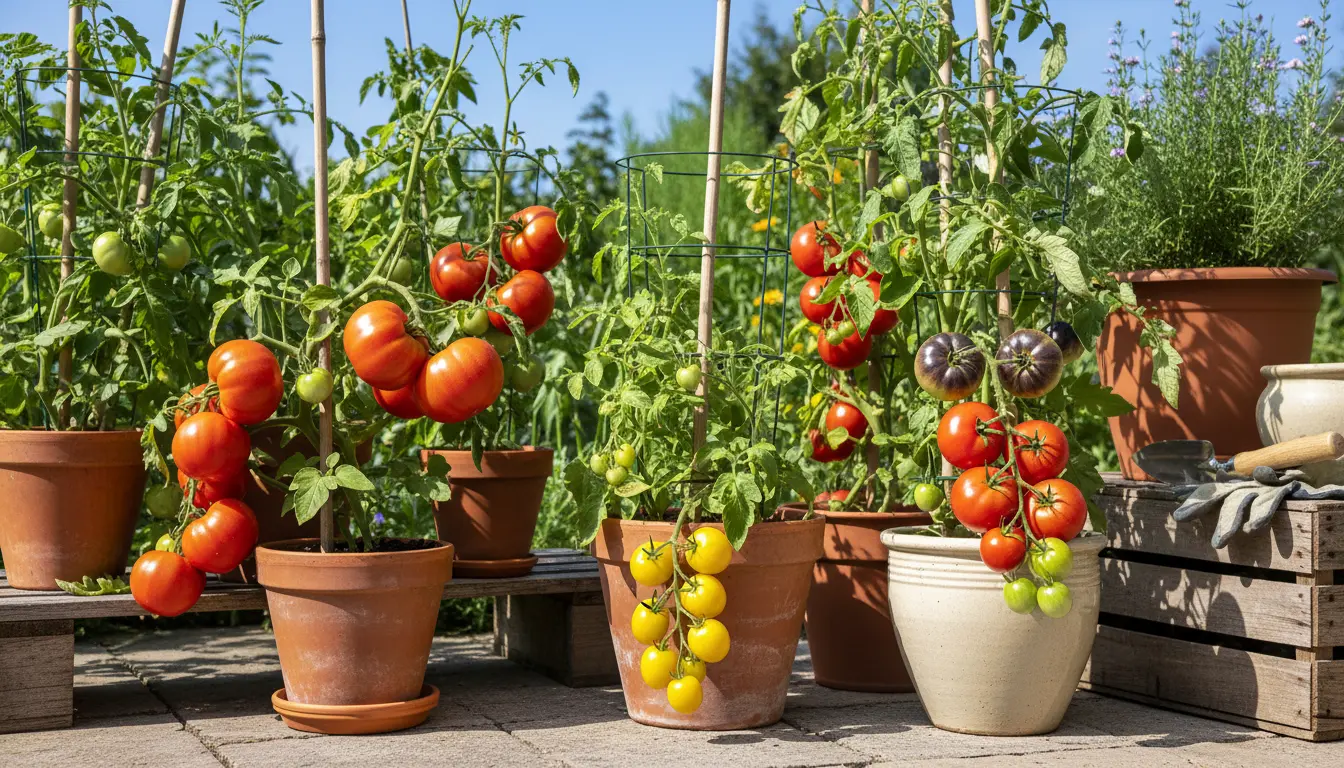
Overview: Why grow tomatoes in containers
Growing tomatoes in containers is a reliable way to produce fresh fruit when ground space is limited. Containers let you control soil, water, and location for better results in small yards or balconies.
This guide explains the essential steps to grow tomatoes in containers, from choosing the right pot to harvest and pest control. Follow these practical instructions to improve yields and reduce common mistakes.
Choose the right tomato variety for containers
Not every tomato plant suits a pot. Determinate varieties and patio types are compact and work well in small containers. Indeterminate varieties produce larger vines and need bigger support and deeper containers.
Recommended varieties for containers:
- Patio and bush types (determinate): smaller, bushy plants.
- Cherry and grape tomatoes: productive and compact.
- Dwarf indeterminate varieties: offer continuous harvest with proper support.
Container selection for tomatoes in containers
Size matters: choose a pot at least 12 inches (30 cm) in diameter for a single plant. Larger containers (18–24 inches) improve moisture retention and root development for bigger varieties.
Materials to consider:
- Terra cotta: breathable but dries faster; water more often.
- Plastic: retains moisture and is lightweight.
- Fabric grow bags: good drainage and air pruning of roots.
Drainage and placement
Ensure pots have drainage holes. Elevate containers slightly to allow water to escape and prevent root rot. Place containers where plants get at least 6–8 hours of direct sun daily.
Soil mix and planting
Use a high-quality container mix rather than garden soil. A good mix contains compost, peat or coconut coir, and perlite for drainage. Fertile, well-draining media supports steady growth and reduces disease risk.
Planting tips:
- Fill the container leaving 2–3 inches at the top for watering.
- Bury transplants deeper than in the nursery; roots form along buried stems.
- Space one plant per 12–24 inch container depending on variety size.
Watering and feeding schedule for tomatoes in containers
Containers dry faster than garden beds, so consistent watering is crucial. Water when the top inch of soil is dry. Deep, even watering encourages strong roots and steady fruit set.
Fertilizer routine:
- Start with a balanced slow-release fertilizer at planting.
- Switch to a tomato-specific liquid feed every 2 weeks after fruit set.
- Monitor leaf color; pale leaves often indicate nitrogen or iron deficiency.
Mulching and moisture retention
Apply a 1–2 inch layer of organic mulch on the soil surface to slow evaporation and stabilize temperature. Mulch also reduces soil splash, which helps lower disease spread.
Support, pruning, and training
Even compact tomatoes benefit from support. Use cages, stakes, or trellises to keep fruit off the soil and improve air circulation. Training plants saves space and simplifies harvest.
Pruning tips for containers:
- Remove suckers (side shoots) on indeterminate varieties to focus energy on fruit.
- For determinate varieties, prune minimally to avoid reducing yield.
- Keep lower leaves trimmed to prevent soil-borne disease from splashing up.
Pest and disease management
Container-grown tomatoes face fewer soil pests but still contend with aphids, whiteflies, and fungal diseases. Monitor plants regularly and act early.
Low-risk control methods:
- Hand-remove pests or spray with insecticidal soap for small infestations.
- Ensure good air flow and avoid overhead watering to reduce fungal risks.
- Rotate crops and refresh soil mix each season to limit disease carryover.
Tomatoes grown in containers often ripen earlier than those in ground beds because soil warms up faster in pots. This can extend your harvest window in cooler climates.
Harvesting and post-harvest care
Harvest tomatoes when they reach full color and yield slightly to pressure. For peak flavor, allow fruit to ripen on the vine when possible. Pick regularly to encourage continued production.
After harvest, remove all plant debris and either compost healthy material or discard diseased parts. Clean containers and refresh soil for the next season.
Case study: Urban balcony success
Maria, a city apartment resident, grew cherry tomatoes in four 12-inch pots on a south-facing balcony. She chose a determinate cherry variety and used a commercial potting mix with slow-release fertilizer.
Results and practices:
- Watered daily in hot weather and fed a liquid fertilizer every two weeks.
- Used small tomato cages for support and removed lower leaves to reduce disease.
- Harvested 10–12 pounds of tomatoes across one season, enough for fresh salads and several jars of sauce.
This example shows containers can produce meaningful yields with consistent care and the right variety selection.
Common problems and quick fixes
- Yellow leaves: Check watering and nutrient levels; test soil moisture and feed appropriately.
- Blossom end rot: Maintain even calcium availability by consistent watering and using calcium-rich amendments if needed.
- Poor pollination: Gently shake plants or use a soft brush to transfer pollen within flowers.
Final checklist to grow tomatoes in containers
- Choose a suitable compact variety for containers.
- Use at least a 12-inch pot with good drainage.
- Plant in a nutrient-rich, well-draining mix and mulch the surface.
- Water consistently and feed a tomato-specific fertilizer.
- Provide support, prune carefully, and monitor for pests.
With the right container, soil, and routine care, you can reliably grow tomatoes in containers and enjoy fresh fruit even in limited spaces. Start small, observe your plants, and adjust care to local conditions for the best results.