
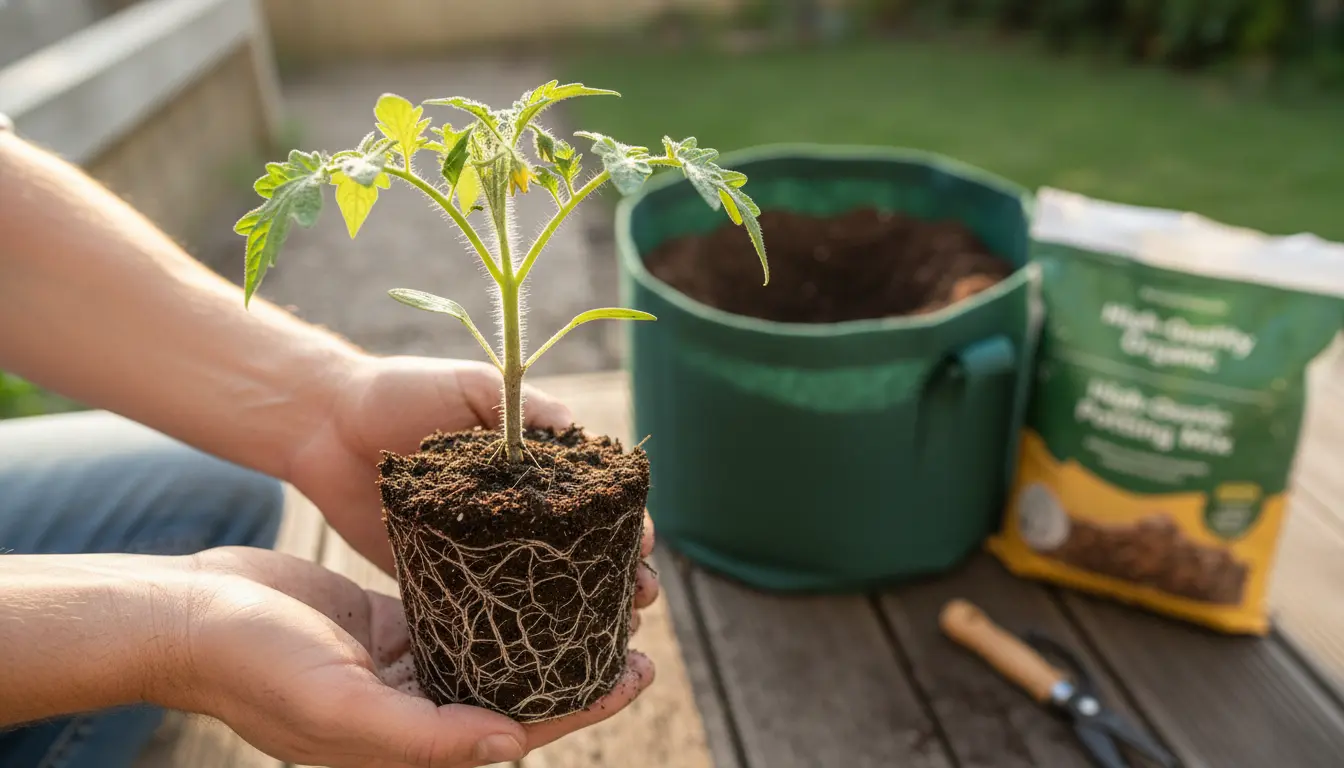
Growing tomatoes in containers is a practical way to enjoy fresh fruit when space is limited. This guide gives clear, actionable steps to choose containers, soil, and varieties, and to manage watering, feeding, and pests.
Why grow tomatoes in containers
Container tomato growing works well on balconies, patios, and small yards. Containers reduce soil-borne diseases, let you control soil quality, and can be moved for light or frost protection.
Choosing containers for growing tomatoes in containers
Container choice affects root development and water needs. Use sturdy pots with good drainage to support healthy plants and prevent waterlogging.
Container size and material
- Large determinate varieties: 10–15 gallon containers.
- Indeterminate (vining) varieties: 15–20 gallon containers or grow bags.
- Materials: plastic retains moisture; terracotta breathes but dries faster; fabric grow bags balance drainage and aeration.
Drainage and placement
Ensure at least one drainage hole and elevate the pot slightly to let excess water escape. Place containers where plants get 6–8 hours of direct sun daily.
Soil and planting when growing tomatoes in containers
Use a light, well-draining potting mix formulated for containers. Avoid garden soil that compacts and reduces aeration.
Recommended potting mix components
- High-quality potting soil as a base.
- Added compost for nutrients and water retention.
- Perlite or coarse sand to improve drainage.
Selecting tomato varieties for containers
Choose varieties suited to container life. Look for compact or determinate types if you want smaller plants with concentrated harvests.
- Good container choices: Bush varieties, Patio, Tiny Tim, or Determinate Roma.
- If space and support are available, small indeterminate types like cherry tomatoes also perform well.
Watering and feeding for successful growing tomatoes in containers
Containers dry out faster than garden beds, so consistent watering is critical. Monitor moisture every day during hot weather.
Watering tips
- Water deeply until water drains from the bottom.
- Water in the morning to reduce disease risk and heat stress.
- Use mulch on the surface to reduce evaporation.
Fertilizing routine
Container soil loses nutrients more quickly, so feed regularly. Use a balanced slow-release fertilizer at planting and supplement with a liquid fertilizer every 2–3 weeks once flowers appear.
Pruning, staking, and support when growing tomatoes in containers
Proper support improves air circulation and keeps fruit clean. Prune as needed to focus energy on fruit production.
Support methods
- Tomato cages or heavy stakes for indeterminate varieties.
- String trellis for vertical growers in limited space.
Pruning basics
- Remove lower leaves that touch the soil to reduce disease.
- For indeterminate types, pinch off suckers to manage size and focus fruiting.
Pest and disease management for growing tomatoes in containers
Containers reduce some risks but do not eliminate pests or diseases. Regular inspection helps catch problems early.
- Watch for aphids, whiteflies, and tomato hornworms.
- Use hand removal, insecticidal soap, or beneficial insects for control.
- Prevent fungal disease by avoiding wetting leaves and providing good airflow.
Tomatoes grown in containers often ripen earlier because soil warms faster in smaller volumes. Warmer roots speed up fruit development.
Seasonal care and wintering container tomatoes
In temperate regions, container tomatoes are ideal for season extension. Move containers to a protected area during cold snaps.
- To extend season, place containers near a south-facing wall for extra warmth.
- Reduce watering and stop fertilizing as the plant declines after frost threats.
Quick checklist for growing tomatoes in containers
- Choose the right container size and ensure drainage.
- Use a quality potting mix with compost and perlite.
- Pick compact or suitable varieties for containers.
- Water consistently and fertilize regularly during the season.
- Provide stakes or cages and prune for airflow.
- Inspect for pests and treat early.
Small case study: Balcony harvest in a small space
Marcos, an apartment gardener, used two 15-gallon fabric pots on his sunny balcony. He planted two determinate and one cherry tomato plant, using a commercial potting mix and a slow-release fertilizer.
He watered daily in July and added liquid fertilizer every three weeks after the first flowers appeared. By mid-summer he harvested steady truss tomatoes and a bowl of cherry tomatoes each week.
Marcos avoided major pest issues by inspecting weekly and removing a few aphids by hand. His container setup produced enough for salads and sharing with a neighbor.
Final tips for growing tomatoes in containers
Start with good containers and soil, maintain consistent care, and choose appropriate varieties for your space. Small adjustments in watering and support can greatly improve yields.
With attention to light, water, and nutrients, container-grown tomatoes deliver fresh flavor even when outdoor space is limited.