
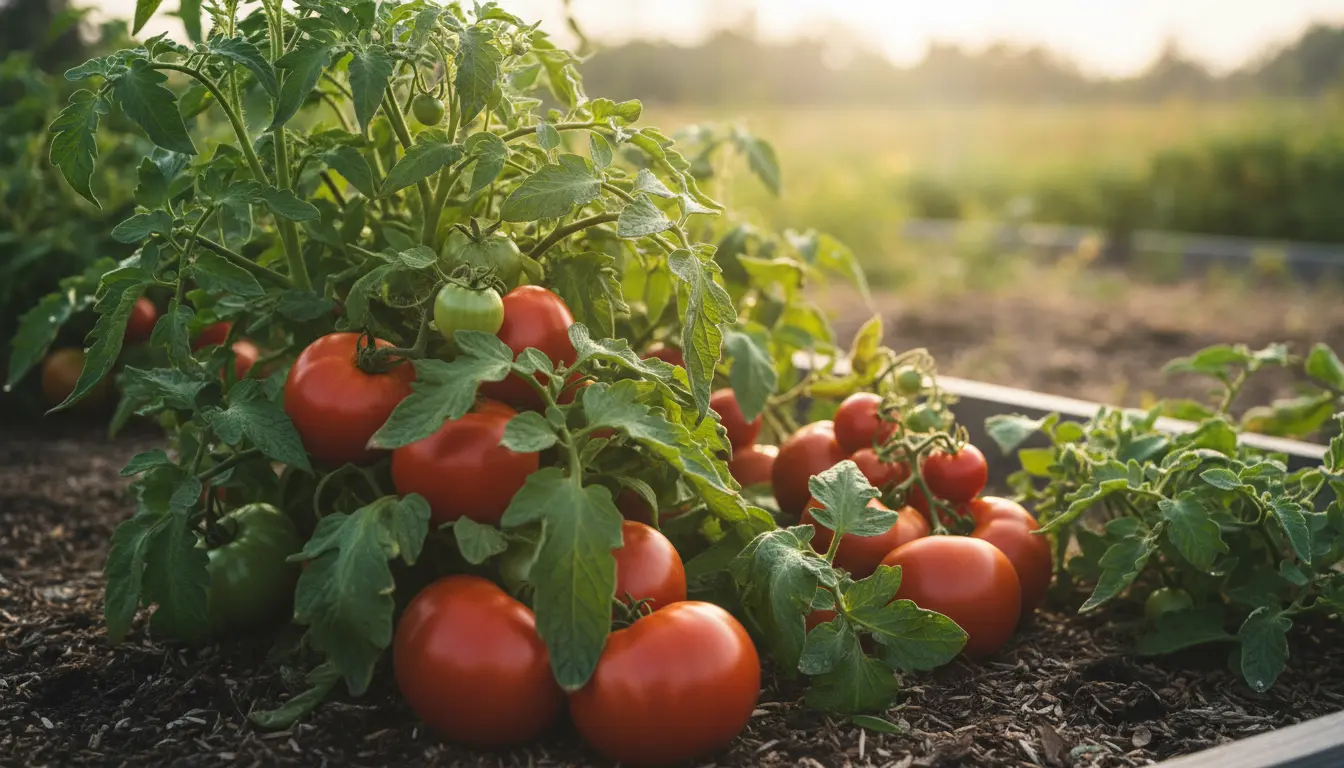
Growing tomatoes is one of the most rewarding tasks for a beginner gardener. This guide gives practical steps to help you grow tomatoes with reliable results, whether you have a backyard plot or a small balcony.
Choosing Varieties to Grow Tomatoes
Pick a variety that suits your space and climate. Determinate types stay compact and fruit all at once, while indeterminate types vine and produce over the season.
Consider these quick facts when you choose a variety:
- Cherry and grape tomatoes are great for containers and quick harvests.
- Beefsteak and slicing types work well in ground beds for larger fruit.
- Look for disease-resistant varieties labeled with V, F, N, or T (for verticillium, fusarium, nematode, or tobacco mosaic virus tolerance).
How to Grow Tomatoes: Soil and Planting
Tomatoes need rich, well-draining soil with good organic matter. Aim for a soil pH between 6.0 and 6.8 for best nutrient uptake.
Follow these steps to prepare and plant:
- Amend soil with compost or well-rotted manure to improve fertility and structure.
- If planting in containers, use a high-quality potting mix with added compost.
- Plant seedlings deep — bury two-thirds of the stem to encourage a strong root system.
Planting Tips to Grow Tomatoes Stronger

Harden off seedlings for a week before transplanting. Space determinate plants about 18–24 inches apart and indeterminate plants 24–36 inches apart.
Mulch after planting to conserve moisture and reduce weeds. Use straw, shredded leaves, or black plastic depending on your garden style.
Growing Tomatoes: Watering and Feeding
Consistent moisture is key to avoid blossom end rot and cracking. Water at the base of the plant early in the day to reduce leaf wetness and disease risk.
Fertilize with a balanced formula early and switch to a phosphorus and potassium focused feed once fruit sets. Avoid excessive nitrogen late in the season to prevent lush foliage at the expense of fruit.
Watering Schedule to Grow Tomatoes
- Containers: daily or every other day in hot weather.
- In-ground: two to three times weekly, depending on rainfall.
- Adjust based on soil moisture — stick a finger 2 inches into soil to check.
Pest and Disease Management When You Grow Tomatoes
Monitor plants weekly for pests like aphids, hornworms, and whiteflies. Early action prevents major damage.
Use integrated pest management (IPM) practices:
- Hand-remove large pests like hornworms.
- Introduce beneficial insects such as ladybugs for aphids.
- Apply organic sprays (insecticidal soap, neem oil) when needed.
Common Diseases to Watch For
Late blight, early blight, and septoria leaf spot are common. Remove affected leaves, improve air circulation, and rotate crops annually to reduce risk.
Tomato plants are not true trees but grow woody stems under some conditions. Burying stems when planting encourages roots to form along the buried stem for a stronger plant.
Supporting and Pruning to Grow Tomatoes Well
Support indeterminate plants with stakes, cages, or trellises to keep fruit off the ground. Caging is low-maintenance while staking can save space.
Prune sparingly: remove suckers for indeterminate types if you want larger fruit and better airflow, but avoid over-pruning which reduces yield.
Harvesting and Storing Tomatoes
Harvest tomatoes when they reach full color and are slightly soft to the touch. For long storage, pick mature green fruit and ripen indoors at room temperature.
Store ripe tomatoes at room temperature out of direct sunlight and use within a week for best flavor.
Simple Harvesting Tips
- Twist or cut fruit to avoid damaging the stem.
- Collect in shallow bins to prevent bruising.
- For salsa or canning, harvest when fruit is fully ripe for best acidity and flavor.
Real-World Case Study: Urban Balcony Grower
Case study: Maria, a first-time urban gardener, grew tomatoes on a sunny balcony using two 20-inch containers. She chose ‘Sweet 100’ cherry tomatoes and used a mix of potting soil, compost, and perlite.
Her routine: water every other day, feed a diluted liquid fertilizer every two weeks, and support vines with small tomato cages. She harvested over 60 cherry tomatoes in a single season and prevented blight by removing lower leaves and improving airflow.
Key takeaways from Maria’s success:
- Choose compact, productive varieties for small spaces.
- Use lightweight, well-draining soil and regular feeding.
- Consistent watering and ventilation reduce disease risk.
Quick Troubleshooting Guide to Grow Tomatoes
If fruit has black or soft bottoms, check calcium levels and water consistency to prevent blossom end rot. If leaves yellow from the bottom up, test for nutrient deficiencies and consider a balanced fertilizer.
For persistent issues, take a clear photo and consult a local extension office or garden forum to get a diagnosis and targeted advice.
Following these practical steps will help you grow tomatoes more reliably. Start small, keep notes on what you try, and adjust as you learn about your microclimate and soil.