
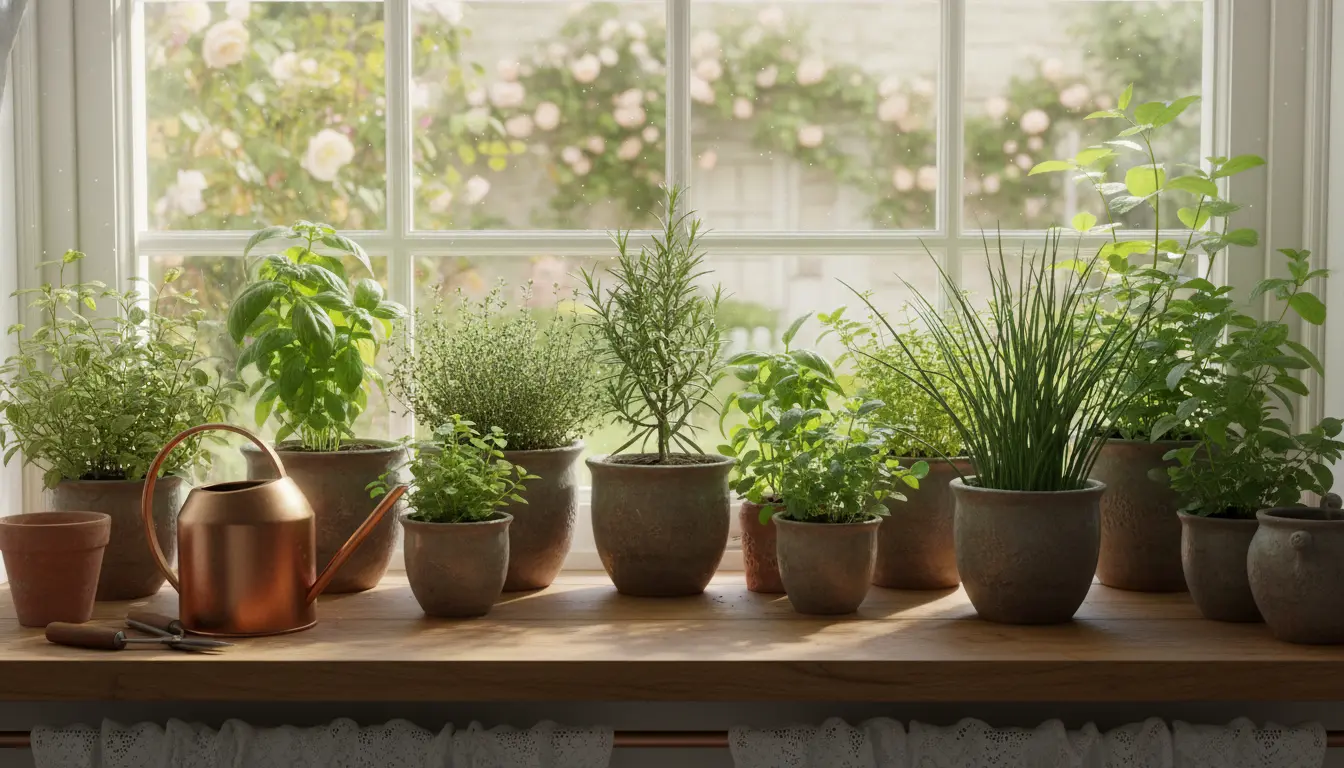
Growing herbs indoors is a simple way to add fresh flavor to meals and bring greenery into small spaces. This guide gives practical steps to plan, plant, and care for an indoor herb garden with reliable tips you can use right away.
Why start an indoor herb garden
An indoor herb garden saves money and supplies fresh ingredients year-round. Herbs like basil, parsley, and thyme are easy to grow inside with basic supplies and moderate care.

Indoor gardening also improves air quality and can be a low-effort hobby for beginners. The key is correct light, soil, and consistent watering.
Planning your indoor herb garden
Start by choosing a location that gets enough light and fits your daily routine. A south- or west-facing windowsill is ideal for most culinary herbs.
Decide how many plants you want and the types you cook with most. A small windowsill can hold 3–6 herb pots comfortably.
Choosing herbs for an indoor herb garden
Pick herbs that tolerate indoor conditions and frequent harvesting. Good choices include:
- Basil — thrives in bright light and warm temperatures.
- Peppermint or mint — tolerant of moderate light, but use a separate pot as it spreads.
- Parsley — prefers bright, indirect light and regular moisture.
- Thyme and rosemary — like bright light and leaner soil.
- Chives — grow well in small containers and resist pests.
Containers and soil for your indoor herb garden
Choose containers with drainage holes to prevent root rot. Small terracotta pots are a good choice because they breathe and dry faster than plastic.
Use a well-draining potting mix formulated for herbs or vegetables. Avoid garden soil, which is too dense for indoor pots.
Lighting and placement tips

Light is the most common limiting factor for an indoor herb garden. Aim for 6–8 hours of bright light per day for most herbs.
If natural light is limited, use LED grow lights placed 6–12 inches above the plants for 10–12 hours daily. Position pots so leaves receive light evenly to avoid legginess.
Watering and fertilizing your indoor herb garden
Watering frequency depends on pot size and plant type. Check soil with your finger; water when the top inch feels dry.
Too much water causes yellow leaves and root rot. Ensure pots drain freely and empty saucers after watering.
Fertilizer recommendations
Feed herbs with a balanced, water-soluble fertilizer at half strength every 4–6 weeks during active growth. Over-fertilizing can reduce flavor intensity.
Pruning and harvesting for better growth
Regular harvesting encourages fuller, bushier plants. Pinch or snip stems above a set of leaves rather than removing entire branches.
For basil and mint, pinch the top 2–3 inches when plants reach 6–8 inches tall. For woody herbs like rosemary, remove 1–2-inch tips to shape the plant.
Pest control and common problems
Indoor pests are usually minor but include aphids, spider mites, and fungus gnats. Inspect leaves weekly and act early if you see problems.
Quick control methods:
- Wipe leaves with a damp cloth to remove dust and small pests.
- Use insecticidal soap or neem oil for aphids and mites.
- Let soil dry slightly to reduce fungus gnat populations.
Some herbs, like basil, can double their leaf production when you harvest regularly. Light pruning signals the plant to grow more stems and leaves.
Winter care for your indoor herb garden
In winter, indoor light drops. Move herbs closer to windows and increase supplemental lighting if leaves start stretching.
Reduce fertilizer in late fall and water sparingly because growth slows. Rotate pots occasionally to keep plants balanced toward the light source.
Small case study: One-month kitchen windowsill success
Sara, a busy home cook, started three 4-inch pots of basil, chives, and parsley on a south-facing windowsill. She used a basic potting mix and a small LED strip light for two hours in the morning.
Within four weeks she harvested basil leaves weekly and kept chives trimmed for garnishes. Simple weekly watering and a light feed at week three increased her yields and flavor strength.
Result: fresh herbs available for salads and sauces, reduced grocery trips, and a noticeable improvement in meal flavor.
Quick checklist to start your indoor herb garden
- Choose a bright spot or plan for LED grow lights.
- Select 3–6 herbs you cook with often.
- Use pots with drainage and a well-draining potting mix.
- Water when the top inch of soil is dry.
- Harvest regularly to encourage growth and flavor.
Final tips for a thriving indoor herb garden
Start small and add more plants as you gain confidence. Keep a simple schedule for watering and light to prevent common mistakes.
With minimal time and cost, an indoor herb garden will reward you with fresh flavor and a green corner in your home.