
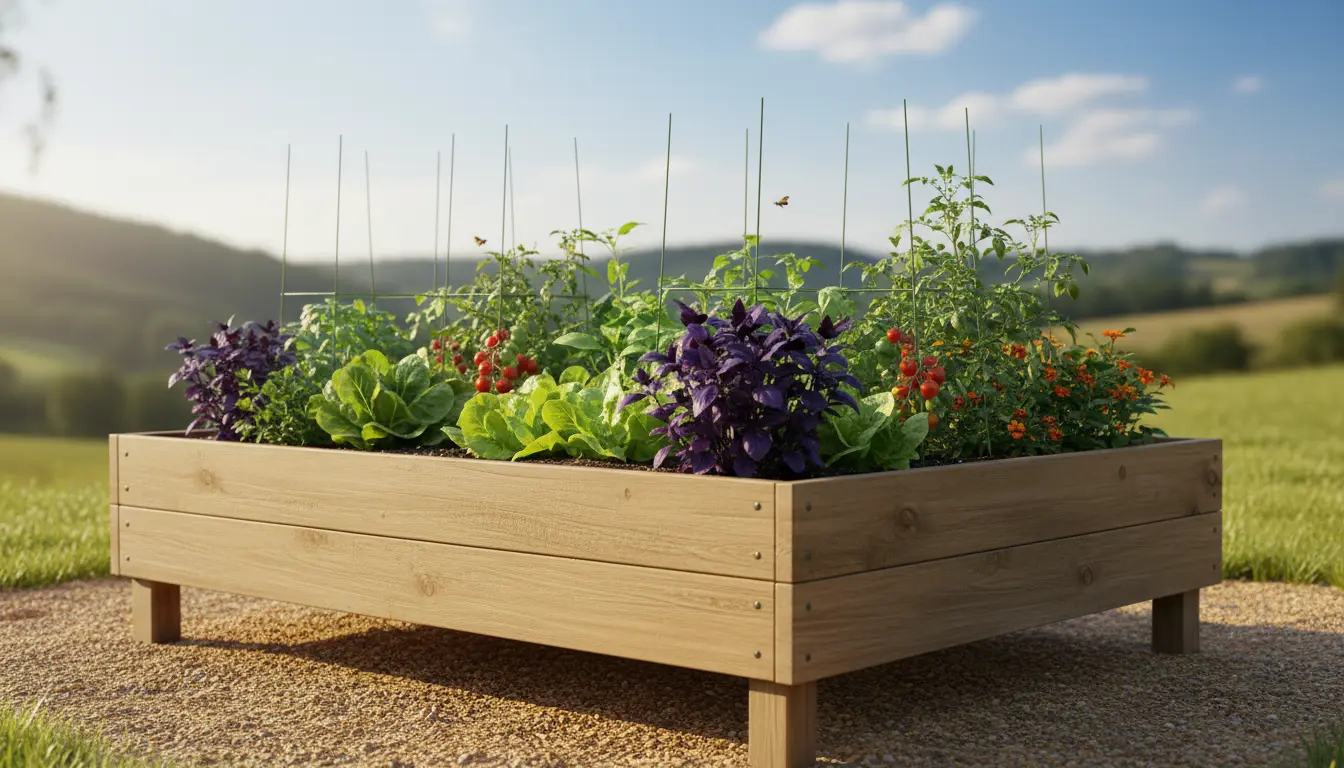
Why build a raised garden bed
Raised garden beds improve drainage, reduce soil compaction, and make planting easier on your back. You can control soil quality and extend the growing season with warmer soil that drains well.
This guide shows how to build a raised garden bed using common materials and basic tools. Follow these steps to create a durable, productive bed for vegetables, herbs, or flowers.
Planning your raised garden bed

Decide location, size, and height before you start. Choose a sunny spot with at least six hours of direct sun for most vegetables.
Standard bed sizes are 4 feet wide so you can reach the center from either side, and 8 feet long fits lumber easily. Height depends on your needs: 6 to 12 inches for shallow-rooted plants, 12 to 18 inches for root vegetables, and 18 to 24 inches for easier access.
Materials to build a raised garden bed
- Wood boards (cedar or treated lumber safe for gardens) or composite boards
- Deck screws or galvanized hardware
- Landscape fabric (optional) to suppress weeds
- Soil mix: topsoil, compost, and coarse sand or perlite
- Tools: saw, drill, measuring tape, level, and shovel
Step-by-step: How to build a raised garden bed
Follow these construction steps. Each step is short so you can check off tasks as you go.
1. Mark and prepare the site

Clear grass and debris where the bed will sit. Use stakes and string to mark corners and confirm dimensions.
If the soil is compacted, loosen the ground with a fork to improve drainage.
2. Cut and assemble the frame
Cut boards to length. For a 4×8 bed use two 8-foot boards and two 4-foot boards. Stack or join boards at the corners and secure with screws or corner brackets.

Use a level to make sure the tops are even; adjust as needed. For taller beds stack a second layer of boards and attach securely.
3. Add a base if needed
For a clean look and to stop weeds, lay landscape fabric on the ground inside the bed. If drainage is poor, add a 2–3 inch layer of coarse gravel or small rocks.
4. Fill with the right soil mix
A common mix is 40% topsoil, 40% compost, and 20% aeration material like coarse sand or perlite. This mix retains moisture and provides nutrients while allowing roots to grow.
Fill in layers and lightly tamp down; do not compact the soil hard—roots need air.
Planting and initial care
Plan rows or blocks depending on the crop. Use companion planting rules to maximize space and reduce pests.
- Transplants: plant deeper than the pot neck and firm soil around stems.
- Seeds: follow packet depth instructions and keep soil moist until germination.
- Mulch: add 1–2 inches of organic mulch to reduce weeds and conserve moisture.
Watering and maintenance
New beds dry faster than in-ground gardens. Water deeply once or twice a week rather than light daily watering to encourage deep roots.
Fertilize with compost or a balanced vegetable fertilizer after initial planting and again mid-season if needed.
Common adjustments and tips
Raised beds can shift over time. Check screws and joints each season and replace boards if they rot.
For small yards, use multiple narrow beds along a path. For limited mobility, build beds at waist height or use planter boxes on legs.
Pest reduction strategies
- Use floating row cover to protect seedlings from insects.
- Rotate crops yearly to avoid disease buildup in the soil.
- Introduce beneficial insects and avoid broad-spectrum pesticides.
Did You Know?
Small case study: A neighbor’s first raised bed
Sarah, a first-time gardener, built a 4×8 cedar bed 12 inches high. She filled it with a 40/40/20 soil mix and planted tomatoes, basil, and lettuce in spring.
By mid-summer she reported healthier plants and fewer weeds than her previous in-ground attempts. The first season produced enough tomatoes for canning and daily salads, and maintenance required about 30 minutes per week.
Costs and material choices
Cost depends on materials. Cedar is pricier but lasts longer without chemicals. Composite boards last longest but cost more upfront.
Budget example for a 4×8 bed:
- Wood: $50–$200 depending on type
- Soil and compost: $80–$200 for sufficient mix
- Hardware and tools: $20–$60 if not already owned
Final checklist before you plant
- Site receives sufficient sunlight
- Bed is level and secure
- Soil mix is prepared and filled to desired height
- Paths and irrigation are planned
- Tools, mulch, and seeds/transplants are ready
Building a raised garden bed is a practical, low-risk way to start productive gardening. With basic materials and a few hours of work, you can create a tidy, efficient growing space that improves yields and reduces maintenance.