
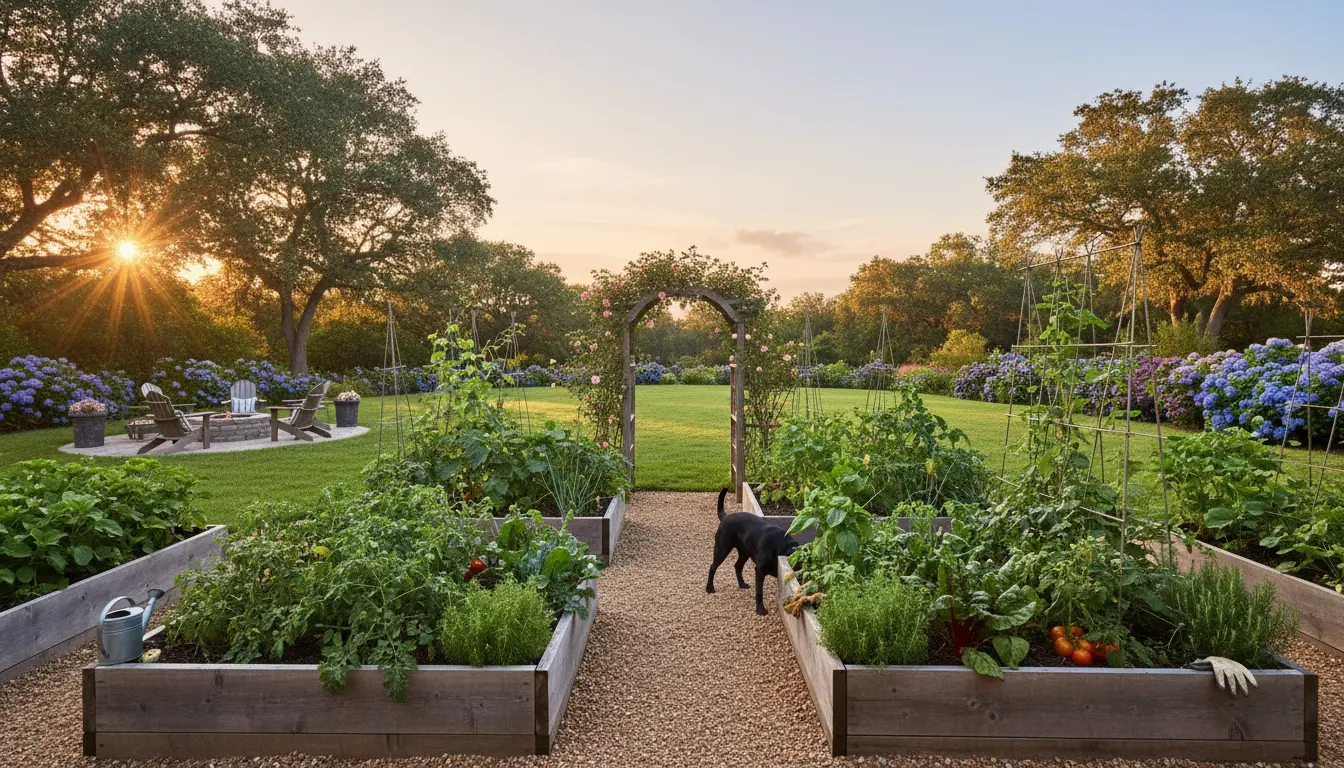
Why choose a raised garden bed
Raised garden beds make gardening easier and more productive. They improve drainage, warm up faster in spring, and keep soil conditions under control.
These beds reduce bending and kneeling, which is helpful for gardeners with limited mobility. They also limit weed pressure and can protect plants from compacted soil.
Planning your raised garden bed

Before you start building, decide on size, location, and materials. Common sizes are 4 feet wide so you can reach the middle from either side, and lengths vary to fit your space.
Consider sunlight, access to water, and proximity to pathways. Choose a spot that receives at least six hours of sun for most vegetables.
Best sizes and placement for a raised garden bed
- Width: 3–4 feet (easy to reach across).
- Length: Any length; 8–12 feet is common for rows.
- Depth: 12–18 inches for most vegetables; 18–24 inches for deep-rooted crops.
- Location: Full sun, good drainage, and near a water source.
Materials for a raised garden bed
Select materials that resist rot and are safe for growing food. Cedar and redwood last long and are naturally rot-resistant.

Other options include untreated pine, recycled plastic timbers, or concrete blocks. Avoid pressure-treated wood with older chemicals; modern treatments are safer but check labels.
Basic tools and supplies
- Saw and drill or screws (for wood frames).
- Measuring tape and level.
- Landscape fabric or cardboard (weed barrier).
- Quality garden soil and compost.
- Optional: corner brackets, gravel for drainage.
How to build a raised garden bed: step-by-step
Follow these steps to build a simple wooden raised garden bed. This project suits a weekend and a small budget.
Step 1: Mark and prepare the site
Clear vegetation and level the ground where the bed will sit. If drainage is poor, consider a 2–3 inch layer of gravel under the bed.

Lay landscape fabric or cardboard to block weeds but allow water to pass through.
Step 2: Build the frame
Cut four boards to your chosen dimensions. For a 4×8 foot bed, use two 8-foot boards and two 4-foot boards.
Join corners with screws or brackets. Check for square using a measuring diagonal or a carpenter’s square.
Step 3: Place and secure the frame
Set the frame on the prepared site and press it into the soil so it sits flush. Add corner stakes if the soil is soft or if you want extra stability.
If you plan taller beds, stack a second layer of boards and screw through the lower layer for strength.
Step 4: Add soil mix
Fill the bed with a mix of topsoil, compost, and a light amendment such as perlite or coarse sand for drainage. A common ratio is 60% topsoil, 30% compost, and 10% drainage amendment.
Level the surface and water thoroughly to settle the mix before planting.
Soil, planting, and maintenance for a raised garden bed
Use nutrient-rich, loose soil to promote root growth. Top up the bed with compost each season to maintain fertility.
Follow simple maintenance habits: mulch to conserve moisture, water deeply but less often, and rotate crops yearly to reduce pests and disease.
Planting tips
- Plant in blocks rather than rows to maximize space.
- Interplant fast growers (radishes) with slower crops (tomatoes).
- Use trellises at the north side of the bed to avoid shading short plants.
Raised beds can warm up 1–3 degrees Fahrenheit sooner in spring, allowing earlier planting and longer growing seasons in many climates.
Common mistakes to avoid with raised garden beds
- Making beds too wide to reach the center comfortably.
- Using poor-quality fill soil without organic matter.
- Placing beds in too much shade for the chosen crops.
Small case study: One season from a 4×8 raised garden bed
Sarah built a 4x8x12 inch cedar bed in her suburban backyard. She filled it with a 60/30/10 soil mix and planted tomatoes, peppers, lettuce, and basil.
Over one season she harvested 15 pounds of tomatoes, multiple pepper harvests, and continuous salad greens. Adding 2 inches of compost in late fall kept the bed productive the next year.
Cost and time estimate for a raised garden bed
Costs vary by material. A basic 4×8 cedar bed costs $120–$250 for lumber and soil. Recycled plastic or concrete blocks can change the budget.
Expect 3–6 hours of work for a single person to build and fill a 4×8 bed, depending on tools and preparation.
Final tips for a successful raised garden bed
- Start with quality soil—plant health begins below ground.
- Keep beds narrow for easy access and maintenance.
- Plan crop rotation and companion planting to reduce pests.
Building a raised garden bed is an effective way to control soil, improve yields, and enjoy easier gardening. With basic tools and straightforward steps, most gardeners can have a productive bed ready in a weekend.