
Why Home Vegetable Gardening Matters
Home vegetable gardening gives you fresh produce, saves money, and connects you to seasonal food. Beginners can start small and grow confidence with a few simple steps.
This guide focuses on practical actions you can take in your first season. Follow these steps to plan, plant, and maintain a productive home vegetable garden.
Plan Your Home Vegetable Garden
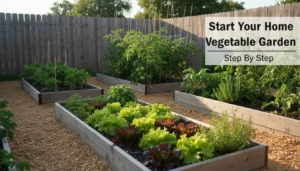
Good planning reduces wasted time and resources. Begin by choosing what you want to eat and how much space you have.
- List vegetables your household eats often.
- Match plant size and sunlight needs to available space.
- Decide between containers, raised beds, or in-ground rows.
Site Selection for Vegetable Gardening
Most vegetables need 6–8 hours of direct sun daily. Watch the proposed site at different times to check sun exposure.
Consider access to water, soil drainage, and wind protection. A nearby hose and a sheltered spot will make daily care easier.
Prepare Soil for Home Vegetable Gardening
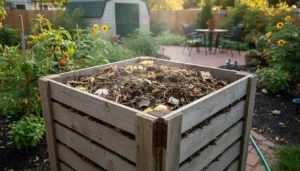
Soil health is the foundation of a productive garden. Test soil or assume you need to add organic matter if you haven’t gardened before.
- Remove weeds and debris from the planting area.
- Work in 2–4 inches of compost to improve structure and nutrients.
- For heavy clay, add coarse sand and more compost; for sandy soil, add compost and mulch to retain moisture.
Simple Soil Test
Take a small handful of moist soil and squeeze it. If it forms a ribbon and feels sticky, it has high clay. If it crumbles easily, it is likely sandy.
Adjust with compost and cover crops as needed to improve fertility over seasons.
Choosing Plants and Timing
Start with easy crops: lettuce, radishes, tomatoes, green beans, and herbs. These tend to be forgiving for first-time gardeners.
- Use seedlings for tomatoes and peppers to shorten the season.
- Sow fast crops like radishes and salad greens between slower crops.
- Check your local last frost date and plant accordingly.
Succession Planting
Succession planting keeps harvests steady. After harvesting a crop, plant another in the same space.
Example: Plant lettuce in early spring, then follow with bush beans in mid-summer.
Watering and Mulching
Consistent watering is crucial. Aim for deep, infrequent watering to encourage strong roots.
- Water early in the day to reduce evaporation and disease risk.
- Use 1–2 inches of mulch to retain moisture and suppress weeds.
- Consider drip irrigation or soaker hoses for efficient watering.
Pest and Disease Management
Start with prevention: healthy soil, proper spacing, and crop rotation reduce problems. Inspect plants weekly for early signs of pests or disease.
- Handpick large pests like caterpillars or slugs.
- Use row covers to protect seedlings from insects.
- Apply organic options like neem oil or insecticidal soap when needed.
When to Seek Medical or Expert Help
If you detect severe disease or an unfamiliar pest that spreads rapidly, consult a local extension service or gardening forum for identification and options.
Harvesting and Storage
Harvest vegetables at their peak for best flavor and nutritional value. Check seed packets for timing and visual cues.
- Harvest leafy greens regularly to encourage regrowth.
- Pick tomatoes when they are fully colored and slightly soft.
- Store root crops in a cool, dark place and use herbs fresh or freeze/preserve them.
Companion planting can reduce pests and improve yields. For example, planting basil near tomatoes can improve tomato flavor and help repel certain insects.
Small Case Study: A Beginner Raised Bed
Sarah, a new gardener in a small city yard, built a 4×8 raised bed in spring. She filled it with a mix of topsoil and compost and planted tomatoes, lettuce, and bush beans.
She watered deeply twice a week with a soaker hose and mulched with straw. By late summer she harvested regular salads and a dozen tomatoes each week.
Her key wins were starting small, using compost, and keeping a simple watering routine.
Quick Checklist to Start Home Vegetable Gardening
- Choose 3–5 easy crops you eat often.
- Find a sunny site with nearby water access.
- Prepare soil with compost and remove weeds.
- Plant at the right time for your climate and use mulch.
- Inspect weekly for pests and harvest regularly.
Home vegetable gardening is a rewarding hobby that anyone can start. With planning, basic soil care, and simple routines, beginners can grow healthy vegetables in their yards or containers.