
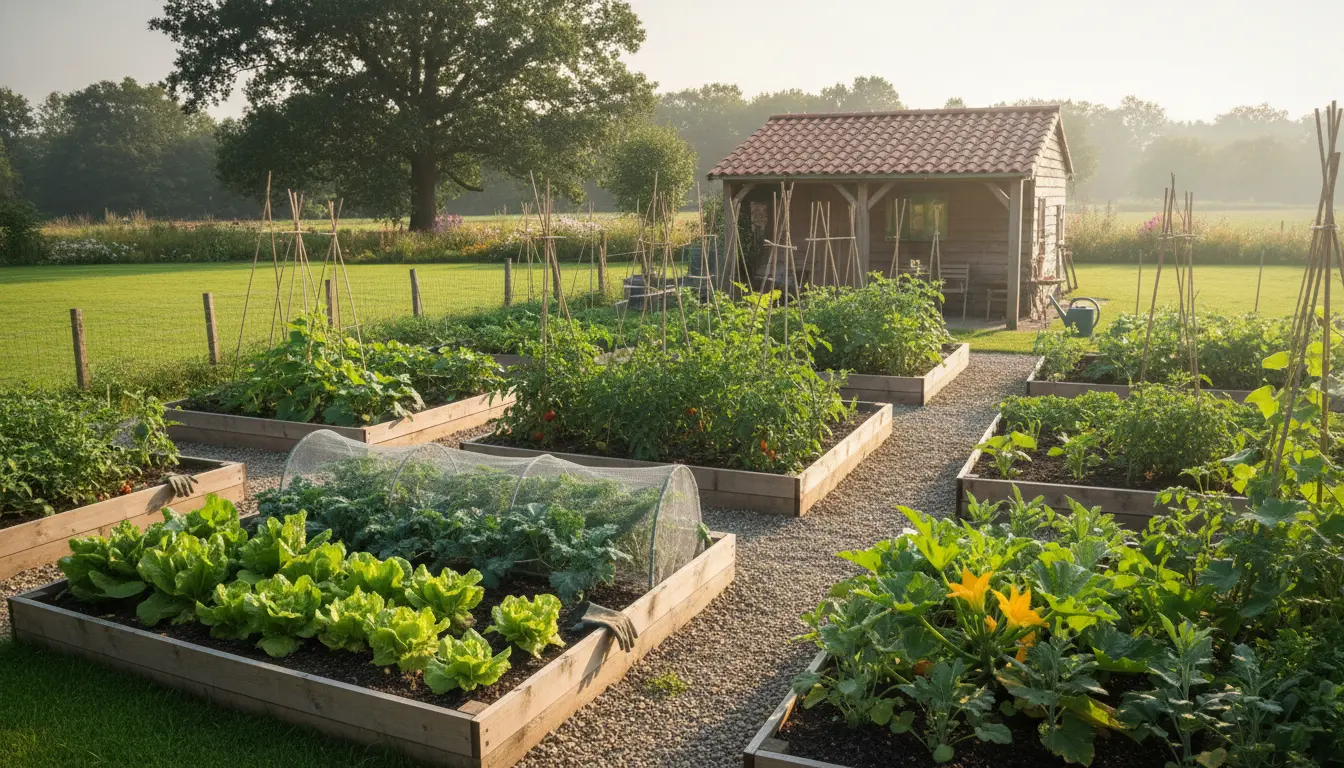
Why a Home Vegetable Garden Works
Growing vegetables at home saves money, improves diet quality, and reduces food miles. Many beginners succeed with a few simple techniques and consistent care.
This guide explains the core steps for a productive home vegetable garden and offers practical tips for common problems.
How to Start a Home Vegetable Garden
Starting a home vegetable garden begins with choosing the right location and layout. Good planning reduces future maintenance and improves yields.
Choose the Site
Select a spot with at least six hours of sunlight per day. Sun exposure is the most important factor for most vegetables.
Consider proximity to water, wind exposure, and foot traffic when picking your site.
Decide on Garden Type

Options include in-ground beds, raised beds, and containers. Each type suits different spaces and soil conditions.
- In-ground beds: Best if soil quality is good and you have room to expand.
- Raised beds: Better drainage and warmer soil; ideal for small yards.
- Containers: Good for balconies and patios; choose larger pots for bigger plants.
Soil Preparation for a Home Vegetable Garden
Healthy soil is the foundation of a productive garden. Test and amend your soil before planting to ensure plants get nutrients and drainage they need.
Test and Amend
Use a basic soil test kit or send a sample to a local extension service. Aim for a neutral pH (6.0–7.0) for most vegetables.
Add compost, well-rotted manure, or balanced organic fertilizer to improve fertility and structure.
Soil Structure and Mulch
Loamy soil with good drainage helps roots develop. Avoid compacted soil by adding organic matter and not working it when wet.
Apply 2–3 inches of mulch to conserve moisture, suppress weeds, and moderate soil temperature.
Planting and Crop Selection
Choose vegetables suited to your climate, season, and available space. Start with easy crops to build confidence and success.
Beginner-Friendly Vegetables
- Leafy greens: Lettuce, spinach, chard
- Root crops: Carrots, radishes, beets
- Nightshades and beans: Tomatoes, peppers, bush beans
Follow seed packet instructions for spacing, depth, and timing. Stagger planting to extend your harvest through the season.
Watering, Feeding, and Maintenance
Proper watering and regular maintenance keep your home vegetable garden productive and disease-free. Consistency is more important than frequency.
Watering Best Practices
Water deeply and less often to encourage strong root systems. Aim for 1–1.5 inches of water per week, adjusting for rainfall and temperature.
Use drip irrigation or a soaker hose to reduce leaf wetness and conserve water.
Fertilizing and Crop Rotation
Feed vegetables with a balanced fertilizer or side-dress with compost midseason. Heavy feeders like tomatoes benefit from extra nitrogen early and phosphorus later.
Rotate families of crops each year to reduce pest and disease build-up in the soil.
Pest and Disease Management in a Home Vegetable Garden
Integrated pest management (IPM) focuses on prevention, monitoring, and targeted control. Start with cultural practices before chemical controls.
Practical IPM Steps
- Inspect plants weekly for signs of pests or disease.
- Remove diseased leaves and dispose of them away from the garden.
- Use row covers or netting to protect young plants from insects.
Introduce beneficial insects like ladybugs or use organic options such as insecticidal soap when necessary.
Adding a thin layer of coffee grounds to the soil can slightly increase nitrogen content and improve soil structure over time. Use sparingly and mix with compost.
Harvesting and Storing from Your Home Vegetable Garden
Harvest at the right stage to enjoy peak flavor and encourage continued production. Most vegetables taste best when picked young and fresh.
Store root vegetables in cool, dark places and leafy greens in the refrigerator wrapped in a damp cloth to extend freshness.
Small Real-World Case Study
Case: A two-year experiment by a suburban family converted a 10×10 ft lawn patch into raised beds. They planted tomatoes, beans, and leaf greens in year one and added carrots and herbs in year two.
Results: The family reduced produce purchases by 60% in summer, learned to compost kitchen waste, and harvested enough tomatoes to make sauces for the year. Challenges included early-season pests and irregular watering, which they solved with row covers and a simple drip timer.
Quick Checklist for a Successful Home Vegetable Garden
- Choose a sunny, accessible location.
- Test soil and add compost.
- Select beginner-friendly crops for your climate.
- Water deeply and mulch to retain moisture.
- Monitor pests and use IPM practices.
- Rotate crops and enrich soil each season.
Final Tips for Garden Success
Start small and expand as you gain experience. Keeping a garden journal helps track planting dates, varieties, and outcomes.
Community resources such as extension services, local gardening groups, and seed swaps are valuable for troubleshooting and sharing surplus produce.