
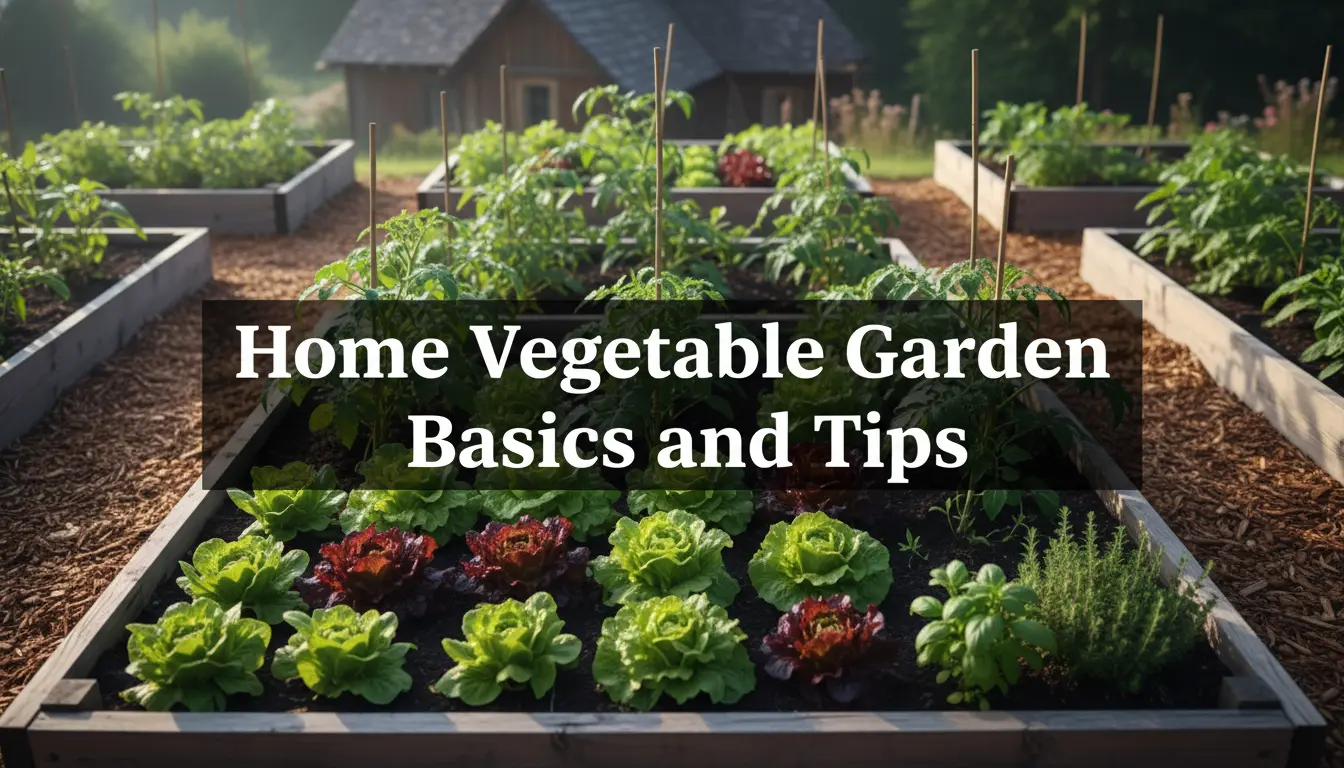
Starting a home vegetable garden is a practical way to grow fresh produce, save money, and enjoy outdoor activity. This guide covers the core home vegetable garden basics you need to plan, plant, and maintain a productive garden without complicated jargon.
Home Vegetable Garden Basics: Plan Your Garden
Good planning makes gardening easier and more productive. Begin by choosing a location with at least six hours of direct sunlight and easy access to water.
Decide How Much to Grow
Consider available space, time, and what your household eats most. A 4×8 raised bed will feed a small family a few salad greens and tomatoes each season.
- Small balconies: focus on herbs and leafy greens in containers.
- Backyards: use raised beds or in-ground rows for tomatoes, beans, and squash.
- New gardeners: start with 3–5 easy crops like lettuce, radish, cherry tomatoes, and bush beans.
Home Vegetable Garden Basics: Prepare Your Soil
Healthy soil is the foundation of a productive garden. Test soil pH or buy a simple kit to check acidity and nutrient levels.
If soil is poor, use raised beds with a mix of compost, topsoil, and a light garden soil to improve drainage and fertility.
Soil Preparation Steps
- Clear weeds and debris from the planting area.
- Loosen soil to 8–12 inches with a fork or tiller.
- Mix in 2–3 inches of compost per foot of bed depth.
- Level and water to settle the mix before planting.
Home Vegetable Garden Basics: Choose Plants and Varieties

Pick crops suited to your climate and season. Look at the seed packet for days to maturity and choose compact or disease-resistant varieties when space is limited.
Begin with these easy, reliable vegetables:
- Lettuce and salad greens — fast and good for containers.
- Radishes — mature quickly in cool weather.
- Cherry tomatoes — productive and space-efficient.
- Bush beans — low maintenance and beginner friendly.
Home Vegetable Garden Basics: Planting and Spacing
Follow spacing guidelines on seed packets or plant tags. Crowded plants compete for light, water, and nutrients and are more prone to disease.
Use succession planting to get continuous harvests: plant small batches of lettuce or radishes every 2–3 weeks during the season.
Example Planting Layout for a 4×8 Bed
- Row 1: lettuce (8–10 plants spaced 6–8 inches apart)
- Row 2: bush beans (12–16 plants)
- Row 3: cherry tomatoes (2–3 plants with cages)
- Row 4: radishes interplanted with herbs
Home Vegetable Garden Basics: Watering and Feeding
Consistent watering is crucial. Most vegetables need about 1 inch of water per week, delivered evenly at the soil level.
Use a simple drip irrigation or soaker hose to reduce evaporation and leaf wetness, which lowers disease risk.
Feeding Schedule
- Work compost into soil before planting for steady nutrients.
- Side-dress tomatoes with compost or a balanced organic fertilizer halfway through the season.
- Use a liquid feed every 3–4 weeks for leafy greens if growth slows.
Home Vegetable Garden Basics: Pest and Disease Management
Monitor plants weekly and act early when problems appear. Many issues are preventable with good sanitation and crop rotation.
- Hand-pick larger pests like caterpillars and beetles.
- Use floating row covers to protect seedlings from insects.
- Remove and compost diseased leaves; do not leave them on the ground.
Natural Control Options
Encourage beneficial insects, use neem oil for aphids, and apply diatomaceous earth along plant bases for slugs.
Tomatoes are related to potatoes and share many pests and diseases. Rotating where you plant tomatoes each year reduces disease buildup in the soil.
Home Vegetable Garden Basics: Harvesting and Maintenance
Harvest crops at the right time for best flavor and to encourage continued production. Regular harvesting of lettuce and beans extends yields.
Keep a simple maintenance routine: weed weekly, check supports and ties, and top up mulch to conserve moisture.
Storage and Use Tips
- Cool leafy greens quickly after harvest to extend freshness.
- Blanch and freeze excess beans and tomatoes for later use.
- Keep a small notebook to record what varieties performed well.
Small Case Study: Balcony Container Garden
Maria, a city renter, started a balcony garden with four 12-inch pots. She planted two cherry tomato plants, a pot of mixed salad greens, and a pot of basil.
Using a potting mix with added compost and a consistent watering schedule, she harvested fresh salads weekly and a steady supply of tomatoes all summer. Her initial investment paid off in food saved and better tasting produce.
Key takeaways from her example: start small, choose compact varieties, and maintain a regular watering and feeding routine.
Home Vegetable Garden Basics: Final Checklist
- Choose a sunny site and plan your space.
- Prepare soil with compost and check pH if possible.
- Select easy varieties and follow spacing guidelines.
- Water consistently and mulch to conserve moisture.
- Monitor pests and rotate crops annually.
By following these home vegetable garden basics, you can build a productive, low-stress garden that fits your space and lifestyle. Start small, learn from each season, and expand as your confidence grows.