
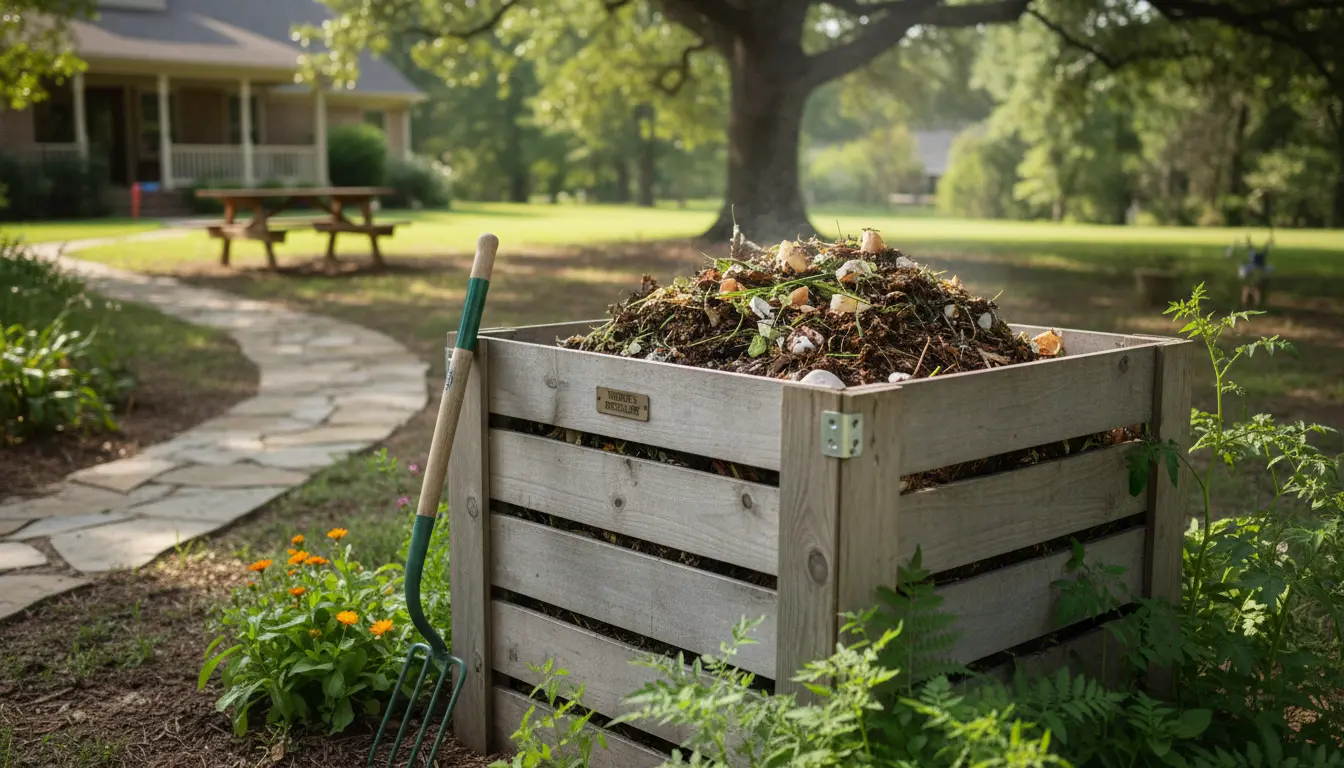
A reliable home composting system turns kitchen scraps and yard waste into rich soil for your garden. This guide covers the simplest systems, setup steps, maintenance tips, and troubleshooting to keep compost healthy and odor-free.
How a Home Composting System Works
Home composting relies on microorganisms to break down organic matter into humus. The key elements are carbon, nitrogen, air, moisture, and time.
Balancing these elements helps microbes thrive and speeds decomposition. A well-managed system produces dark, crumbly compost in months rather than years.
Key Components of a Home Composting System
- Greens (nitrogen): vegetable scraps, coffee grounds, fresh grass clippings.
- Browns (carbon): dry leaves, cardboard, shredded paper, straw.
- Air: regular turning or passive aeration to supply oxygen.
- Moisture: compost should be damp like a wrung-out sponge.
Choosing the Right Home Composting System
Select a system based on space, effort, and how fast you want results. Here are common options for homes:
- Open pile: Low cost, flexible size, requires more space and turning.
- Compost bin: Tidy and contained, good for yards and neighborhoods.
- Tumbler: Easier turning and faster results, but higher upfront cost.
- Worm bin (vermicompost): Great for apartments or small spaces; produces fine castings but needs more care.
Selecting Location for Your Home Composting System
Choose a spot that is level, has good drainage, and is convenient for carrying scraps. Partial shade helps maintain moisture without overheating the pile.

Keep it at least a few feet from property lines and structures to avoid pests and odors reaching neighbors.
Step-by-Step: Setting Up a Home Composting System
Follow these basic steps to start effective home composting.
- Prepare a base layer of coarse browns like small branches or straw to improve airflow.
- Add alternating layers of greens and browns. Aim for roughly 1 part greens to 2–3 parts browns by volume.
- Moisten layers as you add them until the pile is damp. Avoid waterlogging.
- Turn or aerate the pile every 1–2 weeks to introduce oxygen and speed decomposition.
- Monitor temperature and moisture. Adjust materials as needed.
Simple Maintenance for a Home Composting System
Regular, small tasks keep the system working well. Check moisture weekly and add water in dry weather. Turn the pile to prevent odors and compaction.
Add garden lime sparingly only if the pile becomes too acidic. Most home piles stay near neutral with proper mixes of greens and browns.
Compost can reduce household waste by up to 30 percent and improve garden soil structure, water retention, and nutrient availability.
Troubleshooting Your Home Composting System
Common issues are easy to fix when you know what to look for.
- Bad odors: Usually from too much greens or poor aeration. Add browns and turn the pile.
- Slow decomposition: Add nitrogen-rich greens, chop materials smaller, and ensure the pile is moist and warm.
- Pests: Avoid adding meat, dairy, or oily foods. Use a closed bin or bury food inside the pile.
- Too dry: Add water and more greens. Cover the pile to retain moisture during hot weather.
When Is Compost Ready?
Finished compost is dark, crumbly, and smells earthy. Particle size should be small, and original materials should be unrecognizable.
Depending on the system and conditions, compost can be ready in 2–12 months.
Using Finished Compost From Your Home Composting System
Apply compost to garden beds, mix into potting soil, or use as a top dressing around shrubs and trees. It improves structure and supplies slow-release nutrients.
Use a 1–3 inch layer on beds or mix one part compost to three parts soil for planting mixes.
Small Real-World Case Study
Case Study: A two-person household in Portland set up a 60-gallon tumbler and a small worm bin. They diverted kitchen scraps for cooking and yard trimmings into the tumbler and used the worm bin for coffee grounds and fruit peels.
After six months they produced enough compost to top-dress two raised beds and reduce weekly trash output. Simple turning once per week and adding shredded cardboard kept their systems balanced and odor-free.
Quick Tips to Improve Your Home Composting System
- Chop or shred large items to speed breakdown.
- Keep a small countertop pail to collect scraps and reduce trips to the bin.
- Mix fresh grass clippings with dry leaves to avoid compaction.
- Use a compost thermometer to monitor temperature for faster results.
Starting a home composting system is an effective way to reduce waste and create valuable soil amendments. With a few simple choices and regular, light maintenance, most households can produce compost that improves garden health and reduces landfill contributions.