
Why Home Composting Works
Home composting turns kitchen scraps and yard waste into a useful soil amendment. It reduces landfill waste and helps gardens retain nutrients and moisture.
With basic steps and small effort, most households can maintain a stable compost system. This guide focuses on practical actions you can start today.
How to Start Home Composting

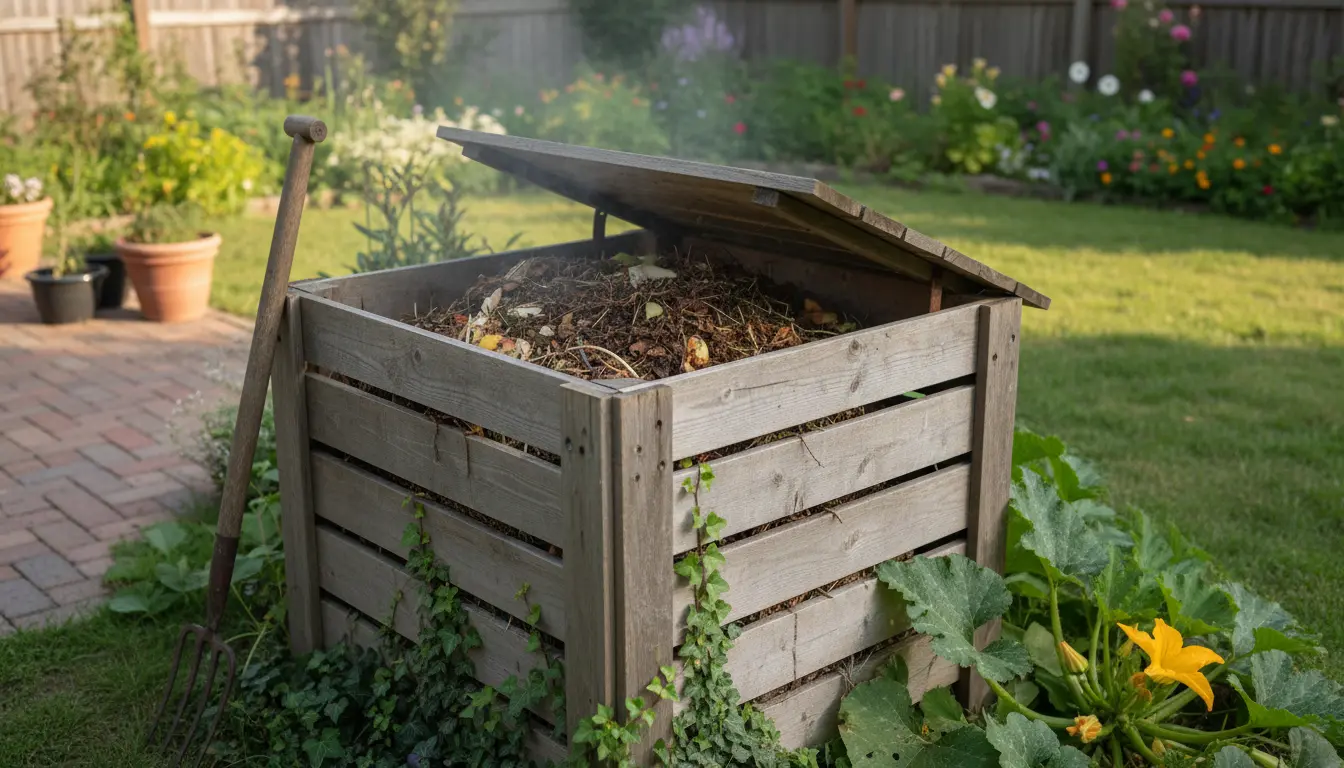
Begin by deciding the composting method that fits your space and lifestyle. Options include a simple pile, a tumbling bin, or a stationary bin with a lid.
Key factors are odor control, turning frequency, and the ability to maintain moisture. Choose a method you will keep up with.
Choosing a Compost Bin
Select a bin based on available space and ease of use. Tumblers speed up mixing, while open bins are cheaper and simple.
- Small balcony: use a compact, sealed composting unit or vermicompost with worms.
- Backyard: use a 3-bin system or a large stationary bin for larger volume.
- Renters: consider a worm bin or a community compost drop-off program.
Where to Place Your Bin
Place the bin on soil or grass to allow drainage and access for microbes and worms. Avoid direct sun that dries the pile too quickly.
Keep the bin within convenient reach so you will add scraps regularly. Proximity encourages consistent use.
What to Compost: Greens and Browns
Compost success depends on balancing nitrogen-rich material (greens) and carbon-rich material (browns).
- Greens: vegetable scraps, fruit peels, coffee grounds, fresh grass clippings.
- Browns: dry leaves, shredded paper, cardboard, small wood chips, straw.

Aim for roughly a 1:2 or 1:3 ratio by volume of greens to browns. If the pile is too wet and smells, add more browns.
Maintaining Your Compost
Two tasks keep compost healthy: turning and monitoring moisture. Turn the pile to introduce air and speed decomposition.
Check moisture by squeezing a handful. It should feel like a damp sponge, not dripping wet or bone dry.
Turning Frequency
For hot, fast composting turn every 1 to 2 weeks. For slower, low-effort composting turn monthly or simply layer materials.
Use a garden fork or a tumbler to mix. Turning helps maintain oxygen for aerobic microbes and reduces odors.
Troubleshooting Common Problems
Smelly compost: usually too much green or too wet. Fix by adding browns and turning often.
Attraction of pests: avoid adding meat, dairy, oily foods, or large chunks of fruit. Bury food scraps or use a sealed bin.
Slow decomposition: add more greens, chop materials smaller, and keep the pile moist.
When Is Compost Ready to Use?
Finished compost is dark, crumbly, and smells earthy. It will no longer have recognizable food pieces or fresh leaves.
Typical timespan ranges from 2 months for a hot, managed system to 12 months for a slow pile.
How to Use Finished Compost
Use compost as a soil amendment, top dressing, or in potting mixes. Apply a 1 to 3 inch layer to garden beds and work it lightly into the topsoil.
- Vegetable gardens: mix 20 to 30 percent compost into planting beds.
- Lawns: top-dress with a thin layer and water in.
- Potted plants: use a 10 to 20 percent compost blend with other potting components.
Case Study: A Small Household Compost System
The Rivera household in Portland converted kitchen scraps and yard clippings into compost using a 55-gallon tumbling bin. They started with a 2:1 browns to greens ratio and turned the bin weekly.
Within four months they produced usable compost and reduced weekly landfill waste by an estimated 40 percent. Their vegetables responded with fuller leaves and 10 to 15 percent higher yields the following season.
Practical Tips and Examples
- Chop items smaller to speed decomposition. Eggshells crush easily and break down faster.
- Keep a small counter bucket with a tight-fitting lid for kitchen scraps to reduce trips outside and odors.
- Use shredded newspaper as an inexpensive brown if dry leaves are not available.
- For cold climates, insulate the bin with straw bales or move it to a protected spot to retain heat in winter.
Final Checklist to Start Home Composting
- Choose a bin that fits your space and commitment level.
- Balance greens and browns; aim for 1:2 by volume.
- Keep the pile moist and aerated; turn regularly.
- Avoid meat, dairy, and oily foods to reduce pests and odors.
- Harvest finished compost when it is dark and crumbly.
Home composting is a low-cost, practical way to recycle organic waste and enrich your soil. Start small, monitor the pile, and adjust the balance as you learn what works best for your household.