
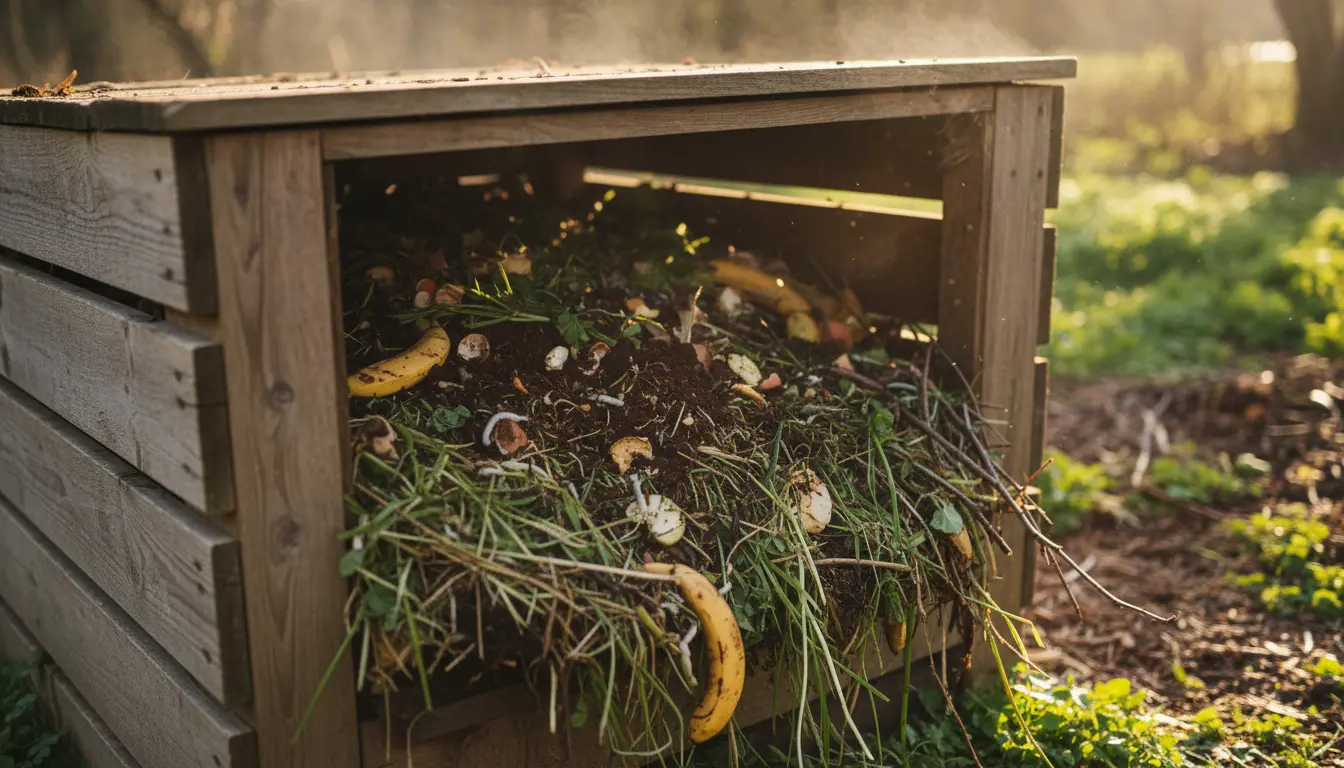
Home Composting Basics
Home composting turns kitchen scraps and yard waste into nutrient-rich soil. It reduces landfill waste while improving garden health.
This guide covers setup, the carbon-to-nitrogen balance, maintenance, and troubleshooting to help beginners start composting successfully.
Why Choose Home Composting
Composting at home saves money on soil amendments and cuts household waste. It also supports soil structure and plant growth by returning organic matter to the garden.
What You Can Compost
Knowing what to add to your compost bin helps maintain a healthy breakdown process. Items are generally grouped into “browns” and “greens.”
- Browns (carbon): dry leaves, shredded paper, cardboard, straw.
- Greens (nitrogen): vegetable scraps, fruit peels, coffee grounds, fresh grass clippings.
- Avoid or limit: meat, dairy, oils, diseased plants, pet waste, and large wood pieces.
Setting Up a Home Compost Bin
You can use a purchased bin, a tumbling composter, or a simple DIY pile. Choose a location with partial shade and good drainage.
Basic Setup Steps
- Place the bin on soil or a grassy area to allow beneficial organisms access.
- Start with a 4–6 inch layer of coarse browns for airflow.
- Add alternating layers of greens and browns, keeping the pile roughly moistened like a wrung-out sponge.
Maintaining the Right Balance
Balance is the key to efficient decomposition. Aim for a carbon to nitrogen (C:N) ratio near 25–30:1.
Practical rules make this easier for beginners.
- Mix two to three parts browns to one part greens by volume.
- Chop or shred larger items to speed decomposition.
- Turn or aerate the pile every 1–2 weeks to add oxygen.
Moisture and Temperature
Check moisture by squeezing a handful of compost: it should feel damp but not drip. Too wet conditions cause odors and slow decomposition.
Temperature varies with activity. A hot pile (130–160°F / 55–70°C) decomposes fast, but a cold pile still works more slowly and is fine for passive composting.
Household compost can reduce your trash volume by up to 30 percent and return nutrients to soil in 3–12 months depending on method and care.
Troubleshooting Common Issues
Even simple compost systems can encounter problems. Use these quick checks to diagnose and fix issues.
- Bad odors: Add more browns and turn the pile to increase airflow.
- Slow breakdown: Chop materials finer, add greens if dry, and ensure appropriate moisture.
- Pests: Avoid putting meat, dairy, and oily foods. Use a closed bin or bury food scraps in the pile.
How to Speed Up Home Composting
Want finished compost faster? Use a mix of techniques that improve microbial activity and airflow.
- Shred or chop materials to increase surface area.
- Turn the pile frequently for aerobic conditions.
- Add finished compost or garden soil to introduce microbes.
- Use a compost thermometer to track optimal temperatures if aiming for hot composting.
Small Tools and Additions
Tools like a pitchfork, shredder, or garden scissors reduce labor and speed decomposition. A compost tumbler aids turning and containment in small yards.
Using Finished Compost
Finished compost is dark, crumbly, and earthy-smelling. It should no longer show recognizable food items.
- Mix 1–2 inches of finished compost into garden beds before planting.
- Topdress lawns with a thin layer to improve soil health.
- Use as a potting mix amendment at about 20–30 percent by volume.
Real-World Example: A Small Urban Case Study
Emma, a two-person household in a small city apartment with a balcony, started a 30-gallon compost bin. She added kitchen scraps and shredded paper, aiming for a 2:1 brown-to-green mix.
After six months of regular turning and moisture checks, Emma harvested about 12 liters of usable compost. She used it to topdress potted herbs and saw noticeably healthier growth and reduced watering needs.
Simple Weekly Routine for Home Composting
Make composting manageable with a short weekly routine.
- Empty kitchen container into the outdoor bin twice a week.
- Add a handful of shredded browns after every green addition.
- Check moisture weekly and turn the pile every 1–2 weeks.
Final Tips for Successful Home Composting
Start small and learn by doing. Keep the basics in mind: balance, moisture, and aeration. Use finished compost to close the loop between your kitchen and garden.
With regular, simple care, home composting becomes a low-effort habit that delivers long-term benefits for your garden and the environment.