
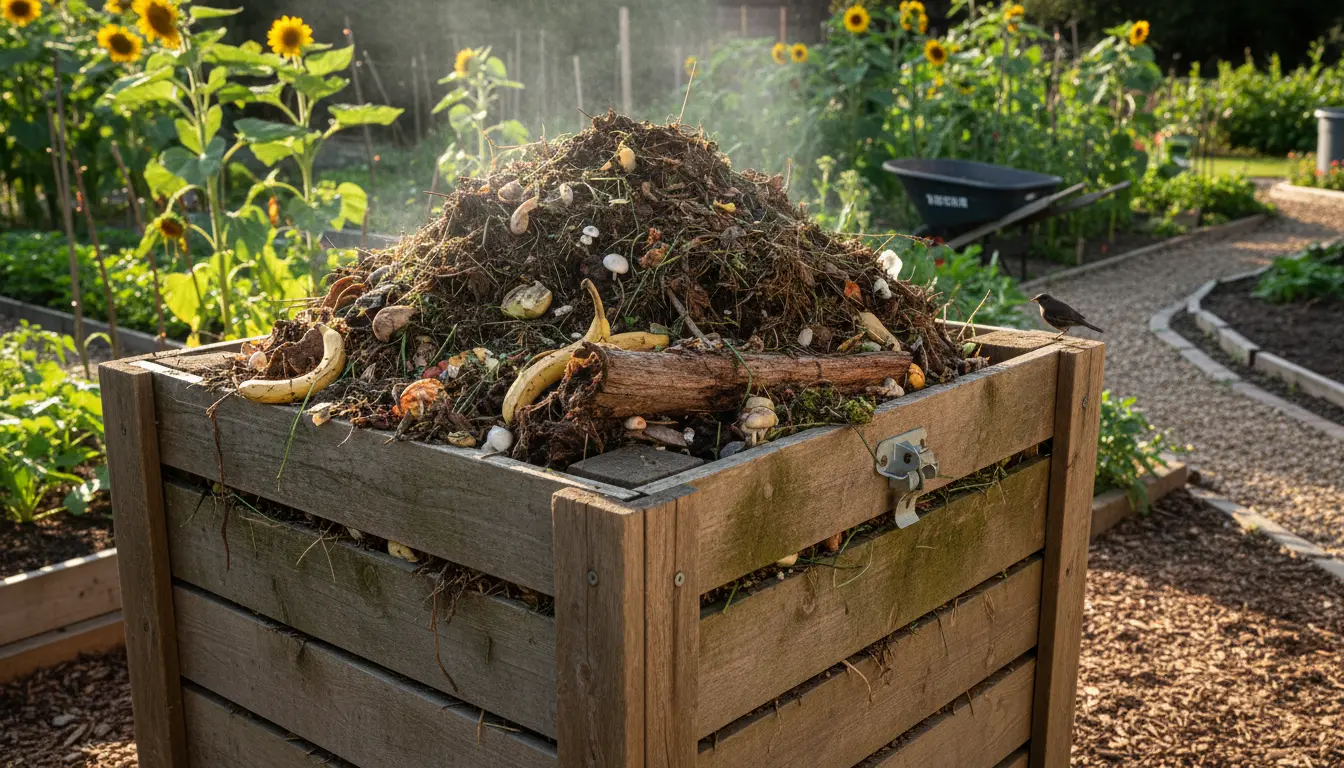
Why Home Composting Matters
Home composting turns kitchen scraps and yard waste into nutrient-rich material for your garden. It reduces household waste, cuts methane emissions from landfills, and saves money on soil amendments.
This guide explains practical steps for successful home composting, what to include, how to maintain a compost pile, and common troubleshooting tips. Follow simple routines and you can produce usable compost in months.
A properly managed compost pile can reach temperatures above 130°F (54°C), which helps kill weed seeds and pathogens. You do not need industrial equipment to reach beneficial temperatures.
Getting Started with Home Composting
Start by selecting a compost system that fits your space and needs. Options range from a simple pile to tumblers or dedicated bins.
Consider accessibility, smell control, and whether you want fast results or a low-maintenance approach.
Choose a Compost System for Home Composting
Common choices include:
- Open pile: Low cost and flexible for larger yards.
- Compost bin: Contained and neater for small yards.
- Compost tumbler: Easier turning, faster decomposition.
- Vermicompost bin: Uses worms to speed up breakdown indoors or in shaded areas.
What to Compost: Greens and Browns
Balance is key. ‘Greens’ provide nitrogen, while ‘browns’ supply carbon. Aim for a mix close to 2:1 or 3:1 browns to greens by volume for steady decomposition.
- Greens: Vegetable scraps, fruit peels, coffee grounds, fresh grass clippings.
- Browns: Dry leaves, shredded cardboard, straw, paper (non-glossy).
- Avoid: Meat, dairy, oily foods, diseased plants, pet waste.
Composting Process: Layering, Moisture, Aeration
Build your pile in layers: a base of coarse browns for drainage, then alternating greens and browns. Keep the pile moist like a wrung-out sponge and turn regularly to introduce oxygen.
Turning frequency depends on system and goals. Tumblers can be turned weekly for faster results; a static bin may need monthly aeration with a garden fork.
Managing Temperature and Time in Home Composting
Temperature indicates activity. A hot pile (100–140°F / 38–60°C) decomposes quickly and sanitizes weed seeds. Cooler piles take longer but still produce quality compost.
Typical timelines:
- Hot, actively managed pile: 2–4 months.
- Cold or low-maintenance pile: 6–12 months.
- Vermicompost: 2–6 months depending on feed rate.
Troubleshooting Common Issues in Home Composting
If the pile smells rotten, it is too wet or lacks oxygen. Add dry browns, mix, and allow aeration.
If decomposition is slow, check the carbon to nitrogen balance, moisture, and particle size. Shred or chop materials to speed breakdown.
Frequent Problems and Solutions
- Bad odors: Add dry leaves or cardboard and turn the pile.
- Fruit flies: Bury fresh food scraps and cover with brown material.
- Cold pile: Add more greens and turn to introduce air, or insulate with straw during cool months.
Small Real-World Example
Case study: A two-person household in a suburban yard started a 3-bin compost system. They collected kitchen scraps in a countertop pail and added yard leaves from weekly raking.
By maintaining a rough 3:1 ratio of browns to greens and rotating bins monthly, they produced usable compost within five months. The finished compost improved the soil structure in their vegetable beds and reduced their grocery bill for seedlings and soil amendments.
How to Use Finished Compost
Finished compost is dark, crumbly, and smells earthy. Screen before use if you want a fine texture.
Applications:
- Top dressing lawns and garden beds.
- Mixing into potting soil or raised beds.
- Using as mulch around trees and shrubs to retain moisture.
Quick Checklist and Tips for Home Composting
- Choose a bin or pile location with partial sun and good drainage.
- Keep a small counter pail for daily collection of greens.
- Shred or chop large items to speed decomposition.
- Monitor moisture: add water if dry, add browns if soggy.
- Turn or aerate regularly to maintain oxygen.
- Use finished compost to feed soil rather than plants directly in large amounts.
Home composting is a manageable, low-cost habit that benefits your garden and the environment. With the right mix of materials and simple maintenance, you can convert household waste into a valuable resource.