
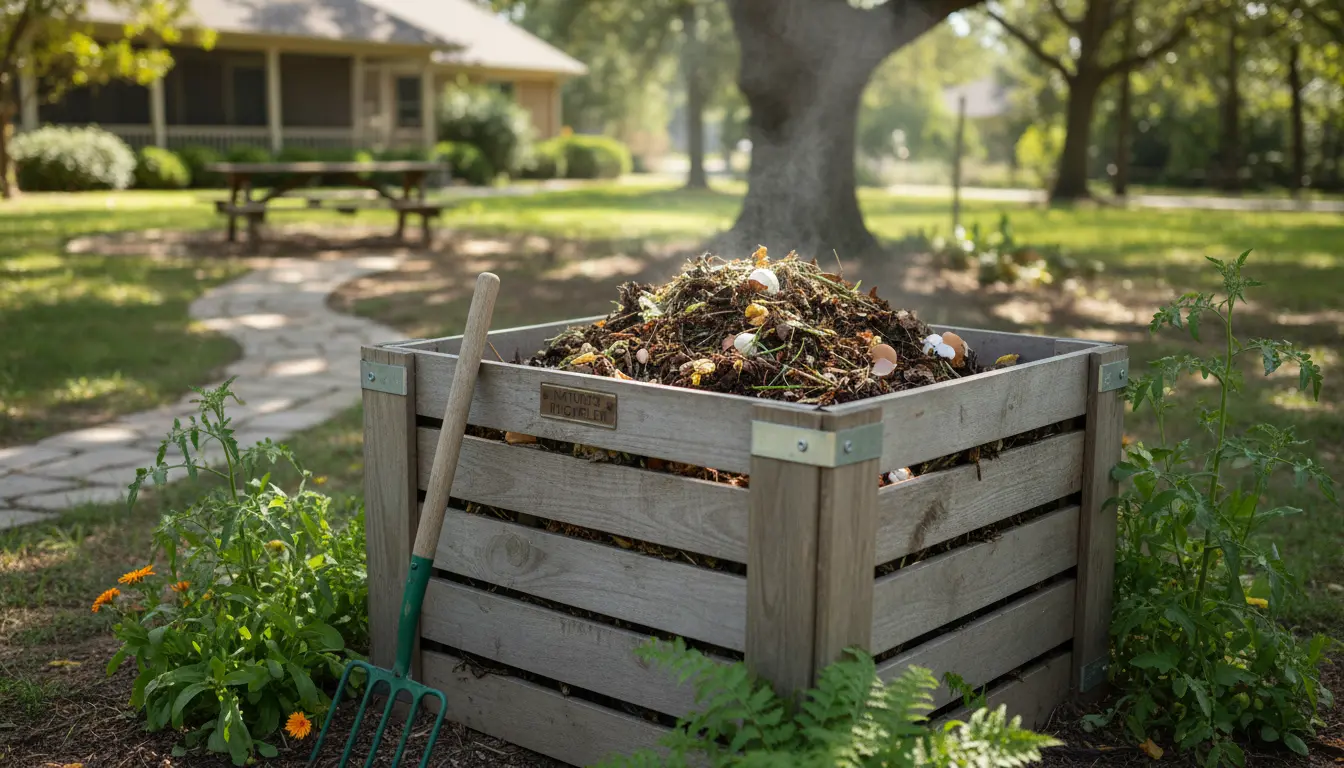
Why Start Home Composting
Home composting turns kitchen and yard waste into useful soil material. It reduces garbage, feeds plants, and lowers methane emissions from landfills.
This guide gives clear steps and practical tips to start home composting with minimal fuss.
Home Composting Basics

Compost is the result of organic materials breaking down by microbes and invertebrates. A good compost mix balances carbon-rich and nitrogen-rich ingredients, moisture, and airflow.
Key benefits include improved soil structure, nutrient-rich amendments for plants, and less household waste.
What You Need for Home Composting
- Bin or pile: a covered bin, tumbler, or simple heap in the garden.
- Brown materials (carbon): dry leaves, cardboard, paper, straw.
- Green materials (nitrogen): vegetable scraps, coffee grounds, grass clippings.
- Water and a garden fork or pitchfork for turning.
Setting Up Your Home Composting System
Choose a location that is convenient and partially shaded. Level the ground and ensure drainage to avoid waterlogging.

Select a bin size appropriate to your household. Small families can use a 60–120 liter bin; larger households may need multiple bins or a bigger enclosure.
Choosing a Bin for Home Composting
Options include stationary bins, tumblers, wire cages, or a simple open pile. Tumblers speed mixing but can dry out faster. Stationary bins are low maintenance.
Make sure the bin allows some airflow and can be accessed to add materials and remove finished compost.
Step-by-Step Home Composting Process
Follow these steps to build and maintain an active compost pile.
- Start with a base layer of coarse brown material for drainage.
- Add alternating layers of greens and browns. Aim for roughly 2–3 parts brown to 1 part green by volume.
- Keep the pile moist like a wrung-out sponge. Add water during dry periods, but avoid making it soggy.
- Turn the pile every 1–2 weeks to introduce air and speed decomposition.
- After a few months, once material is dark and crumbly, screen and use as finished compost.
Quick Troubleshooting for Home Composting
- Bad smell: Add more brown materials and turn the pile to increase airflow.
- Too dry: Add water and more greens to reactivate microbes.
- Pile not heating: Increase pile size, add more greens, and insulate the bin if cold.
Composting can cut household waste by up to 30 percent. Finished compost improves soil water retention and can reduce the need for chemical fertilizers.
Materials to Avoid in Home Composting
Some items slow decomposition or attract pests. Avoid meat, dairy, oils, diseased plants, and pet faeces in basic home compost systems.
Large woody branches take too long to break down; chip them first or reserve for a separate pile.
Using Finished Compost
Finished compost is dark, crumbly, and smells earthy. Use it as a soil amendment, top dressing, or in potting mixes.
Apply a 1–3 cm layer around garden beds, or mix 10–20% compost into planting soil to boost fertility.
Small Real-World Case Study
Case study: A two-person household in Portland started a 90-liter tumbling composter and followed a simple schedule of adding kitchen scraps and shredded cardboard. They turned the tumbler every 10 days.
In six months they produced about 120 liters of finished compost. Their weekly garbage volume dropped from 15 liters to 6 liters, reducing pickup costs and feeding a raised vegetable bed that yielded stronger tomato plants the next season.
Practical Tips to Keep Composting Simple
- Collect scraps in a countertop container and empty into the bin daily.
- Shred or chop large items to speed breakdown.
- Keep a mix of wet greens and dry browns ready to balance additions.
- Label layers or use a simple rotation system if managing multiple bins.
When to Upgrade Your Home Composting Setup
If you generate lots of yard waste, consider multiple bins or a larger static system. A backyard pile works well for leaves and woody trimmings.
For limited space, a worm bin (vermicomposting) is an efficient option for kitchen scraps and produces a rich liquid fertilizer and worm castings.
Final Checklist for Successful Home Composting
- Choose the right bin and location.
- Maintain a balance of brown and green materials.
- Keep the pile moist and aerated.
- Monitor and troubleshoot odors or pests quickly.
- Harvest finished compost and use it to improve soil health.
With a small effort and regular maintenance, home composting becomes a low-cost habit that benefits plants and the planet. Start small, observe, and adjust as you learn what works best for your home.