
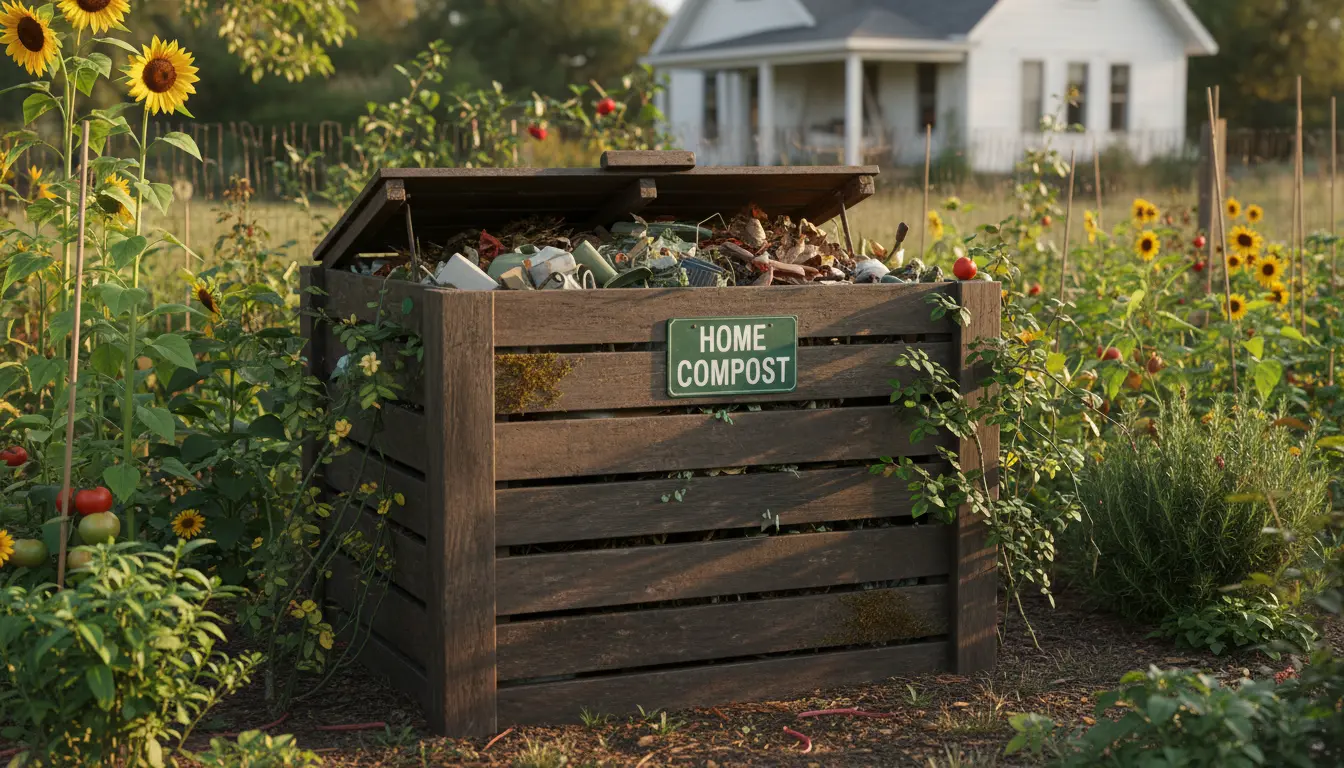
Home Composting Basics
Home composting turns kitchen scraps and yard waste into nutrient-rich soil. It reduces landfill waste and improves garden health.
This guide walks you through simple steps, equipment choices, and common problems. Follow practical tips to get consistent results.
Why Home Composting Matters
Composting lowers household waste and cuts methane emissions from landfills. It also provides free fertilizer for lawns and gardens.
For many households, composting is a low-cost, high-impact way to recycle organic material.
Getting Started with Home Composting
Choose a method that matches your space, time, and budget. The three most common options are backyard bins, tumbler composters, and vermicomposting (worms).
- Backyard Bin: Low cost, good for yard waste and food scraps.
- Tumbler Composter: Faster mixing and fewer pests, ideal for smaller yards.
- Vermicompost: Uses worms; great for apartments and indoor setups.
Choosing a Bin for Home Composting

Select a bin that fits your available space and volume of waste. Ensure it provides airflow and drainage to avoid anaerobic odors.
Plastic bins are inexpensive and rot-resistant. Wooden bins blend with landscaping but need durable construction.
Where to Place Your Compost Bin
Pick a level spot with partial sun and easy access. Too much shade slows decomposition, while full sun may dry the pile too fast.
Keep the bin near a water source or shed to make maintenance simpler.
Materials: What to Compost and What to Avoid
Balance carbon-rich “browns” and nitrogen-rich “greens” to maintain an active pile. Aim for roughly a 3:1 ratio of browns to greens by volume.
- Greens (nitrogen): vegetable scraps, fruit peels, coffee grounds, grass clippings.
- Browns (carbon): dry leaves, straw, shredded paper, cardboard.
- Avoid: meat, dairy, oils, diseased plants, and pet waste to prevent pests and pathogens.
Practical Mixing and Moisture Tips
Turn the pile every 1–2 weeks to add oxygen and speed decomposition. Use a pitchfork or tumbler to mix materials.
Keep the pile as damp as a wrung-out sponge. Add water during dry spells and add browns if it becomes too wet.
Troubleshooting Common Home Composting Issues
Smells usually indicate poor airflow or too many greens. Turn the pile and add more browns to restore balance.
Slow decomposition can be caused by compacting, low moisture, or too large particle size. Chop or shred materials and maintain moisture.
- Problem: Fruit flies — Cover fresh scraps with a layer of browns and close bin openings.
- Problem: Rodents — Use a closed tumbler or wire mesh around a bin; avoid meat and oily foods.
- Problem: Dry pile — Add water and greens; mix to distribute moisture.
Harvesting and Using Finished Compost
Compost is ready when it looks dark, crumbly, and smells earthy. This usually takes 2–6 months depending on conditions.
Use finished compost as a soil amendment, top dressing, or potting mix component. Mix 1–3 inches into garden beds or add 10–20% to potting soil.
Food scraps and yard waste make up nearly 30% of household trash. Composting these materials at home can significantly reduce your garbage output and improve soil health.
Home Composting Case Study
Example: A two-person household in a small suburban backyard started a 60-gallon tumbler. They added kitchen scraps and shredded leaves weekly.
After four months of regular turning and moisture checks, they harvested dark, crumbly compost. They used it to top-dress vegetable beds and reported healthier plants and reduced store-bought fertilizer use.
Step-by-Step Weekly Routine for Home Composting
- Collect kitchen scraps in a small covered container during the week.
- Once full, add scraps to the main bin and cover with a layer of browns.
- Turn or rotate the bin every 7–14 days to aerate the pile.
- Check moisture; add water or browns as needed.
- Monitor for pests or odors and adjust materials accordingly.
Tips to Make Home Composting Easier
- Chop or blend kitchen scraps to speed breakdown.
- Keep a supply of shredded paper or dry leaves nearby for quick brown additions.
- Consider a small worm bin for apartment composting of most food scraps.
- Use a kitchen catcher with a tight lid to reduce flies and smells indoors.
Conclusion: Start Small and Be Consistent
Home composting is a simple household habit with practical environmental and gardening benefits. Start with a manageable system and build confidence as you learn.
Consistency in balancing greens and browns, maintaining moisture, and turning the pile will deliver reliable results over time.