
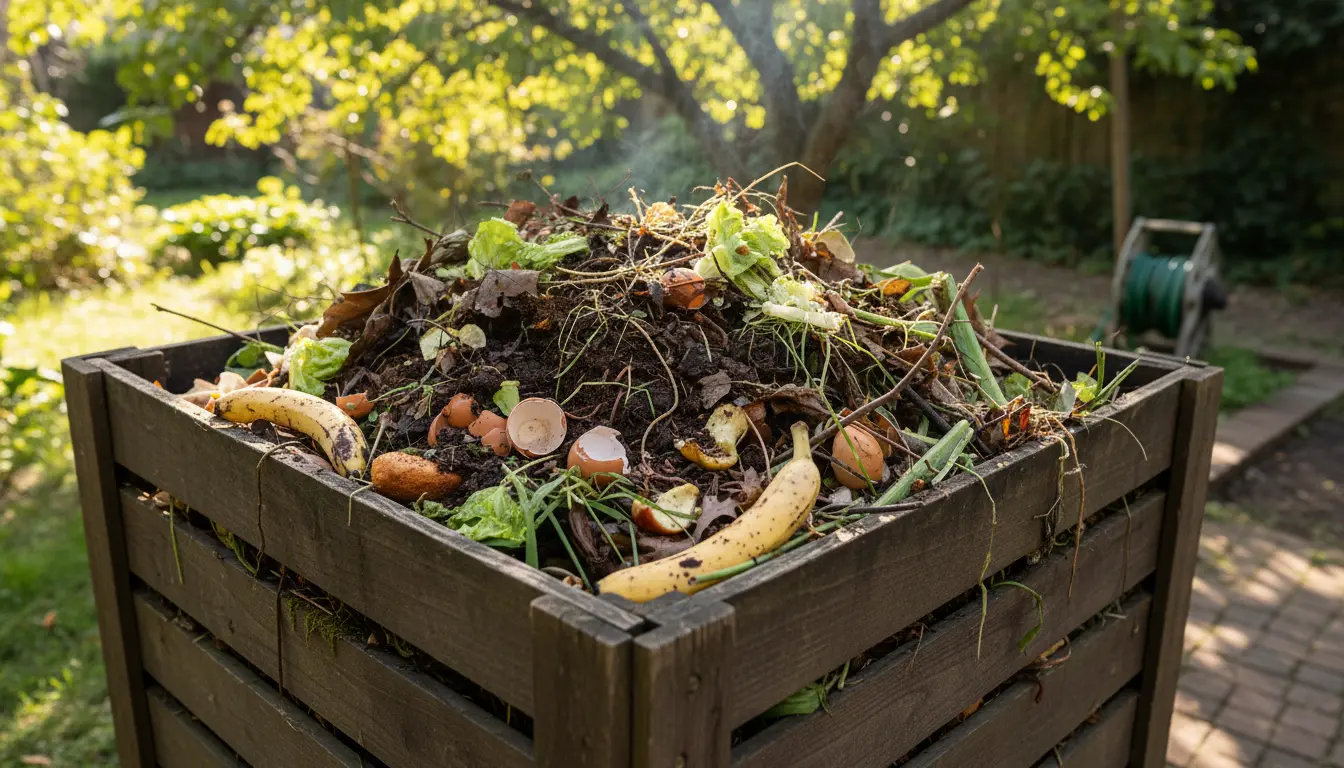
Why Home Composting Matters
Home composting reduces household waste and returns valuable nutrients to your garden. It lowers landfill contributions and can improve soil health for potted plants and beds.
Composting is a simple biological process anyone can manage with a little planning and regular attention. This guide explains practical steps for successful home composting.
Getting Started with Home Composting
Choose a convenient location with good drainage and partial shade. A level spot near your kitchen or garden saves time and encourages regular use.
Decide on a method that fits your space, time, and goals. Options range from simple piles to enclosed systems and worm bins.
Choose a Composting Method
Pick a method that matches your living situation and effort level. Each method has advantages for different living situations.
- Compost bin: Enclosed and tidy, good for yards and easier to manage heat and pests.
- Tumbler: Faster decomposition with easy turning, ideal for small to medium households.
- Open pile: Simple and cost-free for larger backyards, but requires more space and attention.
- Vermicomposting (worm bins): Excellent for apartments and kitchens; produces fast, rich castings using worms.
What to Compost and What to Avoid
Balance ‘greens’ and ‘browns’ for good decomposition. Greens supply nitrogen while browns add carbon and structure.
- Greens: fruit and vegetable scraps, coffee grounds, fresh grass clippings.
- Browns: dry leaves, straw, shredded paper, cardboard.
- Avoid: meat, dairy, oily foods, diseased plants, pet waste, and synthetic materials.
Layering, Moisture, and Turning
Start with a layer of coarse browns for airflow, then alternate greens and browns in 2–4 inch layers. Maintain a roughly 3:1 ratio of browns to greens by volume.
Keep the pile moist like a wrung-out sponge. If it’s too dry, add water and greens; if it’s soggy, add more browns and increase turning.

Turn the pile every 1–3 weeks to introduce oxygen and speed up decomposition. Tumblers make this easy; bins and piles need a garden fork or aerator.
Compost can reach temperatures of 130–160°F (55–70°C) in active systems, which kills many weed seeds and pathogens when properly managed.
Troubleshooting Common Home Composting Problems
Problems are usually fixable with simple adjustments to moisture, balance, or aeration. Identify the symptom and apply the right fix.
Bad Smell
A strong, unpleasant odor usually means too much moisture or too many greens. Add dry browns, mix the pile, and reduce watering.
Pests and Rodents
Avoid adding meat, dairy, and oily foods to prevent attracting animals. Use an enclosed bin or secure lid, and bury food scraps under browns.
Slow Decomposition
If decomposition stalls, check for low moisture, poor aeration, or lack of nitrogen. Turn the pile and add greens or a small amount of garden soil to reintroduce microbes.
How to Tell When Compost Is Ready
Finished compost is dark, crumbly, and smells earthy. Particles should be small and unrecognizable, although twigs and large pieces may remain.
For most home systems, compost is ready in 2–12 months depending on method, materials, and how often it’s turned.
Small Case Study: Apartment Gardener’s Compost Success
Marina lives in a city apartment and started vermicomposting with a small worm bin on her balcony. She added shredded paper, coffee grounds, and vegetable peels.
Within three months she harvested dark worm castings that she mixed with potting soil for her tomato and herb pots. Her plants produced more vigorously and needed fewer store-bought fertilizers.
Key takeaways: choose a compact method for limited space, monitor moisture closely, and feed the worms a consistent mix of greens and browns.
Practical Tips for Ongoing Home Composting
- Keep a small countertop scrap container to collect kitchen waste and transfer it daily.
- Shred or chop larger materials to speed decomposition.
- Mix different types of materials to maintain balance and structure.
- Use finished compost as a top dressing, soil amendment, or potting mix ingredient.
- Maintain simple records if you want faster results: note additions, turning dates, and temperatures.
Final Notes on Home Composting
Home composting is practical, affordable, and adaptable to most living situations. Small changes in material mix, moisture, and aeration deliver big improvements.
Start small, observe the process, and adjust. Over time you’ll produce nutrient-rich compost that improves plant health and reduces waste.