
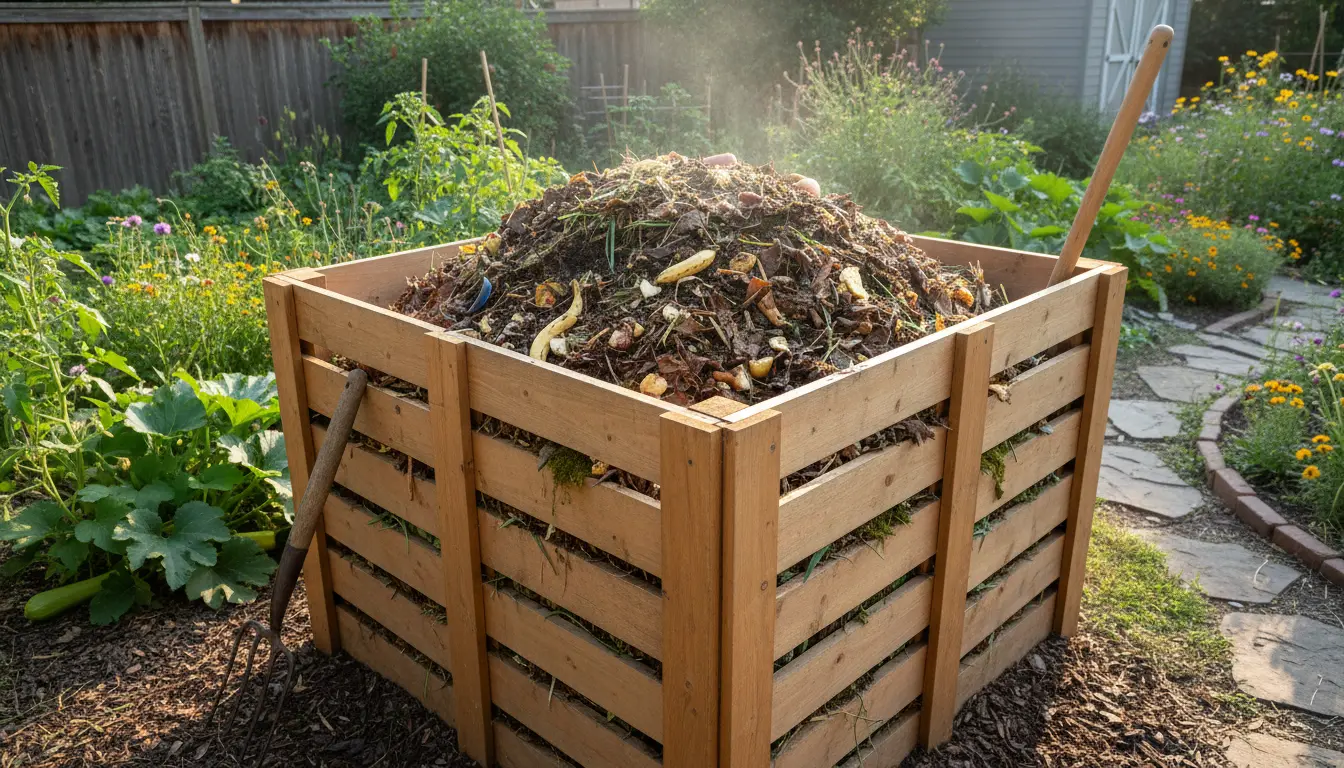
Why Home Composting Matters
Home composting turns kitchen and garden waste into a useful soil amendment. It reduces landfill waste and improves soil structure, water retention, and plant health.
Composting is simple to start and can be scaled for any living situation. This guide shows practical steps you can follow today.
Basic Principles of Home Composting
Compost needs three main things: carbon, nitrogen, and oxygen. Balancing these factors helps microbes break materials down efficiently.
Think of carbon-rich materials as browns and nitrogen-rich materials as greens. Aim for a mix that keeps the pile active without smells.
Carbon and Nitrogen Sources
- Browns (carbon): dry leaves, straw, shredded cardboard, paper.
- Greens (nitrogen): vegetable scraps, coffee grounds, fresh grass clippings.
Air and Moisture
Oxygen feeds the aerobic microbes that make compost quickly and without bad odors. Turn or aerate the pile every 1–2 weeks.
Moisture should feel like a wrung-out sponge. Too dry slows decomposition, while too wet creates anaerobic conditions and smells.
How to Start Home Composting
Choose a method that fits your space and time. Options range from simple bins to tumblers and worm composting (vermicomposting).
Follow these steps to begin your first pile or bin.
Step-by-step Starter Method
- Pick a container or spot. Use a commercial bin, build a wooden bin, or make a simple heap in a corner of the yard.
- Add a 6–8 inch base layer of coarse browns like twigs for drainage and airflow.
- Alternate layers: 2–3 inches of greens, then 4–6 inches of browns. Repeat until your bin is full.
- Moisten each layer lightly. Cover the pile to retain moisture and heat if needed.
- Turn the pile every 1–2 weeks with a pitchfork or aerator tool to speed composting.
Compost Bin Options
- Open pile: cheapest, works in gardens with space.
- Closed bin: neater, warms faster and deters pests.
- Tumbler: easy turning, faster results for small loads.
- Worm bin: best for indoor kitchens or apartments using red wigglers.
Common Problems and Solutions
Beginners often face a few repeatable issues. Troubleshooting is usually straightforward.
Bad Odor
Cause: Too much green material or poor aeration. Solution: Add more browns, turn the pile, and check moisture.
Pests
Cause: Exposed food scraps attract rodents. Solution: Use a closed bin, bury food in the pile, and avoid meat, dairy, and oily foods.
Slow Decomposition
Cause: Pile too dry, too cold, or lacking nitrogen. Solution: Moisten the pile, add greens, or insulate the bin to retain heat.
When Is Compost Ready?
Finished compost is dark, crumbly, and earthy-smelling. Most backyard systems create usable compost in 2–6 months depending on management.
Screen the compost to remove large pieces and return them to the bin to finish breaking down.
Using Your Compost
Use finished compost as a soil amendment, mulch, or potting mix ingredient. Apply a 1–3 inch layer around plants or mix it into garden beds.
Compost improves soil biology and slowly releases nutrients to plants. It is not a quick-release chemical fertilizer.
Small Real-World Case Study
Case: A two-person household started a 60-liter tumbler. They added kitchen scraps and yard trimmings, turning the tumbler twice a week.
Result: After 4 months they collected 25 liters of finished compost. They used it to top-dress vegetable beds and reported healthier tomato plants the next season.
Tips for Success
- Chop or shred larger materials to speed decomposition.
- Keep a small bin under the sink for daily scraps to reduce kitchen odors.
- Record additions and turning schedule to learn what works best for your system.
Composting can cut household organic waste by up to 30 percent. A well-managed compost pile can heat to 120–160°F, killing many weed seeds and pathogens.
Quick Checklist to Start Today
- Choose a bin or spot for your pile.
- Collect browns and greens in separate containers.
- Build alternating layers and maintain moisture.
- Turn the pile regularly and monitor for pests or odors.
- Harvest finished compost and apply it to your garden.
Final Notes on Home Composting
Home composting is low-cost and flexible. You can adapt methods to small balconies or large yards.
Start small, observe the process, and adjust your mix. Composting is as much a routine as it is a system—consistency brings results.