
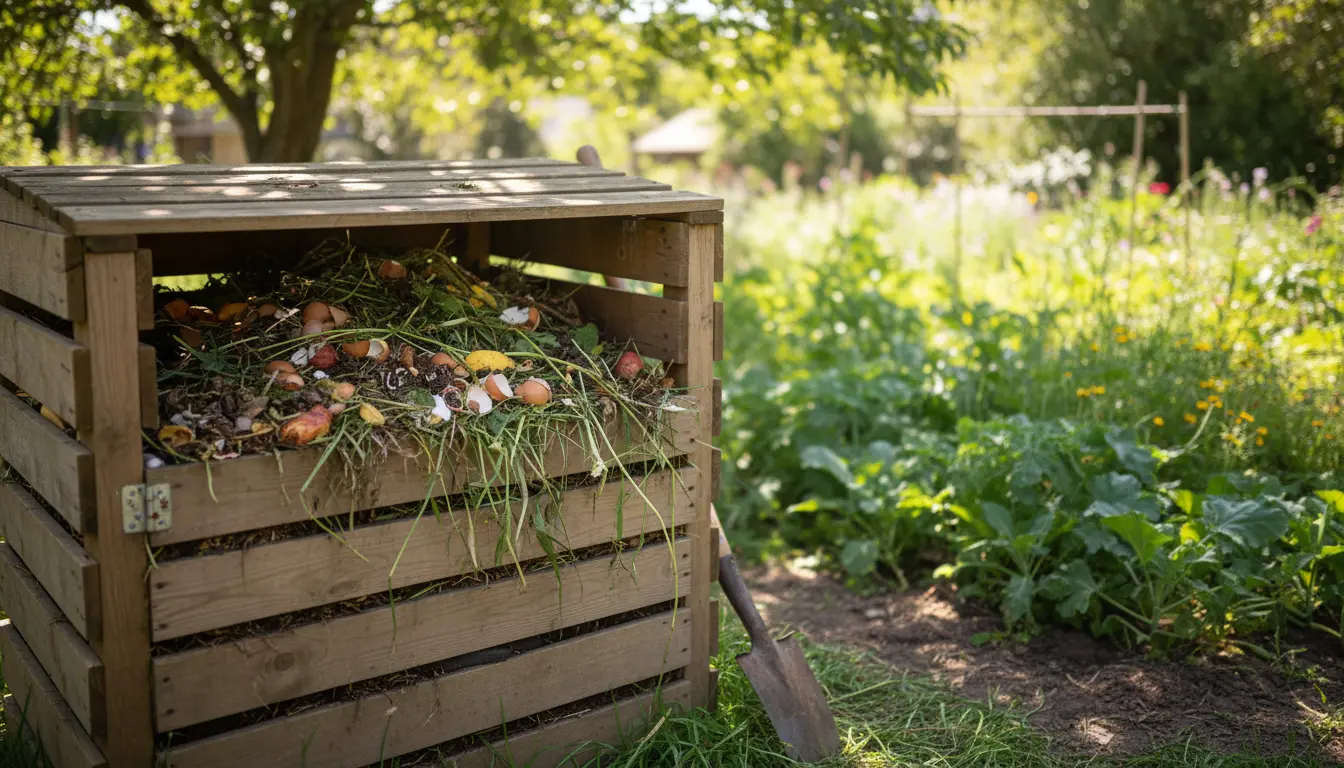
Why Home Composting Matters
Home composting turns kitchen scraps and yard waste into a valuable soil amendment. It reduces household waste, lowers methane emissions from landfills, and improves garden soil structure.
This guide explains the practical steps to start composting at home, whether you have a backyard, small yard, or balcony.
Basic Principles of Home Composting
Composting relies on microorganisms breaking down organic matter. To keep the process active and odor-free, balance three things: carbon, nitrogen, and air.
Carbon-rich materials are called “browns” and nitrogen-rich materials are “greens.” Mixing these in the right ratio creates heat and accelerates decomposition.
Key Materials for Home Composting
- Browns (carbon): dry leaves, shredded paper, cardboard, straw.
- Greens (nitrogen): vegetable peels, coffee grounds, grass clippings, fresh plant trimmings.
- Water: keep the pile moist like a wrung-out sponge.
- Air: oxygen is essential; turn or aerate the pile regularly.
How to Start Home Composting
Follow these simple steps to set up a basic backyard compost system.
1. Choose a Bin or Pile
Select a compost bin that fits your space. Options include open piles, tumbler bins, plastic bins, or wooden pallets. Even a simple container works for small households.
2. Layering and Ratios
A practical rule is 2–3 parts browns to 1 part greens by volume. Start with a layer of coarse browns at the bottom to help airflow, then add alternating layers of greens and browns.
3. Maintain Moisture and Air
Keep the compost damp but not waterlogged. Turn the pile every 1–2 weeks to supply oxygen and mix materials for consistent decomposition.
Troubleshooting Common Home Composting Issues
Many beginner composters run into a few predictable problems. Here are quick fixes.
- Bad smells: Usually from excess greens or poor aeration. Add more browns and turn the pile.
- Pile not heating: Might be too small, too dry, or too much browns. Add greens, water, and increase pile size if possible.
- Slow breakdown: Chop or shred materials and maintain a moist, warm environment.
- Pests: Avoid adding meat, dairy, oily foods, or pet waste. Use a closed bin or bury scraps in the pile.
Types of Home Composting Systems
Choose a method based on space and effort level. Each has trade-offs in speed, odor control, and maintenance.
- Open pile: Low cost, works for yards but can attract animals and odors if unmanaged.
- Bin system: Neater and easier to control; many commercial bins available.
- Tumbler: Faster decomposition with frequent turning; good for households that want quick results.
- Bokashi: Fermentation method for small spaces and kitchens; can handle cooked food but requires a secondary composting stage.
Using Finished Compost
Mature compost looks dark, crumbly, and earthy-smelling. It can be used immediately in planting beds, mixed into potting soil, or spread as mulch.
Apply a 1–3 inch layer to garden beds or mix 10–30% compost into soil for seedlings and transplants.
Compost can improve water retention in sandy soils and reduce compaction in clay soils, helping plants cope with drought and heavy rains.
Small Real-World Case Study: Balcony Composting
Maria lives in a third-floor apartment and started composting in a 10-liter countertop bin with weekly transfers to a sealed tumbler on her balcony. She balanced coffee grounds and vegetable scraps with shredded paper and dry leaves collected from a nearby park.
After six months she produced enough compost to enrich potting mix for herbs and tomatoes. Her system avoided pests by sealing food in the tumbler and turning it every 4–5 days.
Practical Tips and Examples
- Chop large items like corn cobs or thick stems before adding them.
- Keep a small kitchen caddy with a tight lid to store scraps until you add them to the bin.
- Use a pitchfork or compost aerator to turn large piles. For tumblers, rotate every few days.
- Use finished compost as a top dressing for lawns or as a planting soil amendment.
Quick Checklist to Start Home Composting
- Choose bin type based on space
- Gather browns and greens
- Layer and keep moist
- Turn regularly to aerate
- Harvest finished compost when dark and crumbly
Home composting is practical, low-cost, and adaptable. Start small, observe your pile, and adjust the balance of materials. With basic care you can convert household waste into a resource that benefits your plants and the environment.