
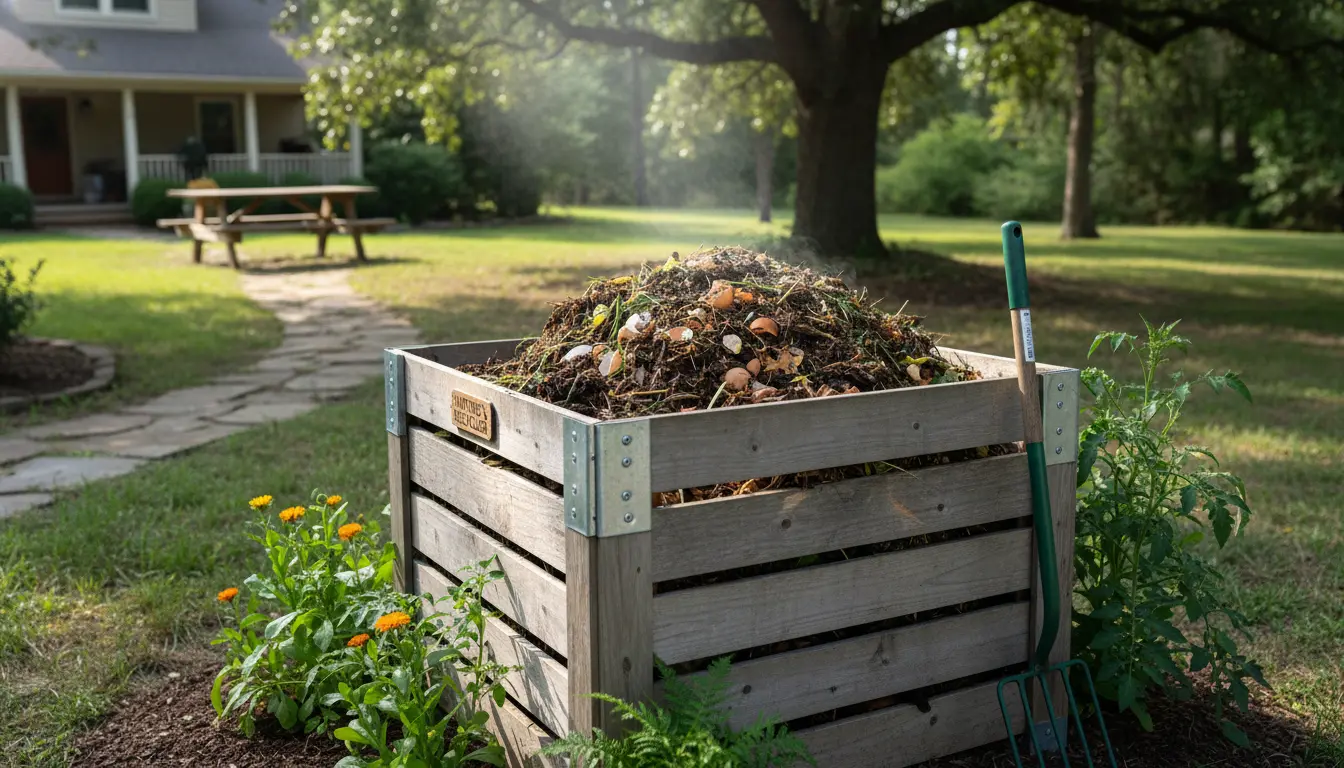
Composting at home is a simple way to reduce waste and create nutrient-rich soil. This guide explains clear steps you can follow to start and maintain a working compost system.
Why choose home composting
Home composting cuts landfill waste and lowers your carbon footprint. It also produces free soil amendment that improves garden health and saves money.
Types of home composting methods
Choose a method that fits your space, time and needs. Each method uses the same basic principles of balancing materials and airflow.
Bin composting
Bin composting uses a contained container or commercial compost bin. It works well in small yards and keeps pests out.
Pile composting
Pile composting is a simple heap in a corner of the garden. It is easy to start but needs more space and occasional turning.
Vermicomposting (worm composting)
Vermicomposting uses red worms to break down food scraps indoors or in a small bin. It is fast and excellent for apartment dwellers.
How to start home composting
Starting a compost system requires four practical steps: pick a spot, gather materials, build layers, and maintain balance. Follow these steps for consistent results.
Step 1: Pick a spot
Choose a dry, shaded location near a water source. If using an indoor worm bin, select a cool, dark corner of the house.
Step 2: Gather materials
Collect a mix of ‘greens’ and ‘browns’. Greens provide nitrogen and moisture. Browns add carbon and structure.
- Greens: kitchen vegetable scraps, coffee grounds, fresh lawn clippings
- Browns: dry leaves, shredded paper, cardboard, straw
Step 3: Build layers
Start with a layer of coarse material for airflow, then alternate greens and browns. Aim for roughly a 2:1 or 3:1 ratio of browns to greens by volume.
Step 4: Maintain balance
Keep the pile moist like a wrung-out sponge. Turn the pile every 1–2 weeks to add oxygen and speed decomposition.
Common problems and fixes for composting at home
Even simple compost systems can run into issues. Below are common problems with practical fixes that keep your compost healthy.
- Bad smell: Usually from too many greens or lack of air. Fix by adding browns and turning the pile.
- Pests: Avoid meat, dairy and oily foods. Use a closed bin or add a wire mesh base.
- Too dry: Add water and more greens. Cover the pile to retain moisture.
- Slow breakdown: Chop materials into smaller pieces, keep moisture and turn more often.
When is compost ready to use
Compost is ready when it looks dark, crumbly and smells earthy. This can take a few months in an active system or up to a year in a passive pile.
How to use finished compost
Use finished compost to improve soil structure, water retention and nutrient levels. Apply it to garden beds, mix with potting soil, or use as a top dressing.
- Vegetable beds: mix 1–2 inches into the topsoil before planting
- Flower beds: top-dress around plants to feed slowly
- Potted plants: blend one part compost with two parts potting mix
Simple tools and supplies for home composting
You don’t need fancy gear. A few basic items make the job easier and cleaner.
- Compost bin or sturdy container
- Garden fork or compost aerator
- Kitchen compost caddy or sealed container
- Optional: compost thermometer for active systems
Case study: Small backyard success
Sarah, a homeowner with a small backyard, started a 3-bin compost system. She used kitchen scraps, shredded cardboard and yard trimmings.
Within six months she produced two large buckets of dark compost. She mixed it into her vegetable beds and saw stronger seedlings and better moisture retention the following season.
Composting reduces methane emissions from landfills and returns nutrients to the soil. A household can divert hundreds of pounds of organic waste each year by composting.
Quick tips for composting at home
- Chop or shred large items to speed breakdown.
- Keep a balanced mix of browns and greens.
- Turn or mix the pile for faster results.
- Use a simple moisture test: it should feel like a wrung-out sponge.
Final checklist for beginners
Starting composting at home is low-cost and high-impact. Use this checklist to begin:
- Choose a method: bin, pile or worm bin
- Collect a steady supply of greens and browns
- Monitor moisture and turn regularly
- Harvest and apply finished compost to your garden
With a bit of attention, home composting becomes a reliable routine that benefits your garden and the environment. Start small and adjust your system as you learn what works best for your space.