
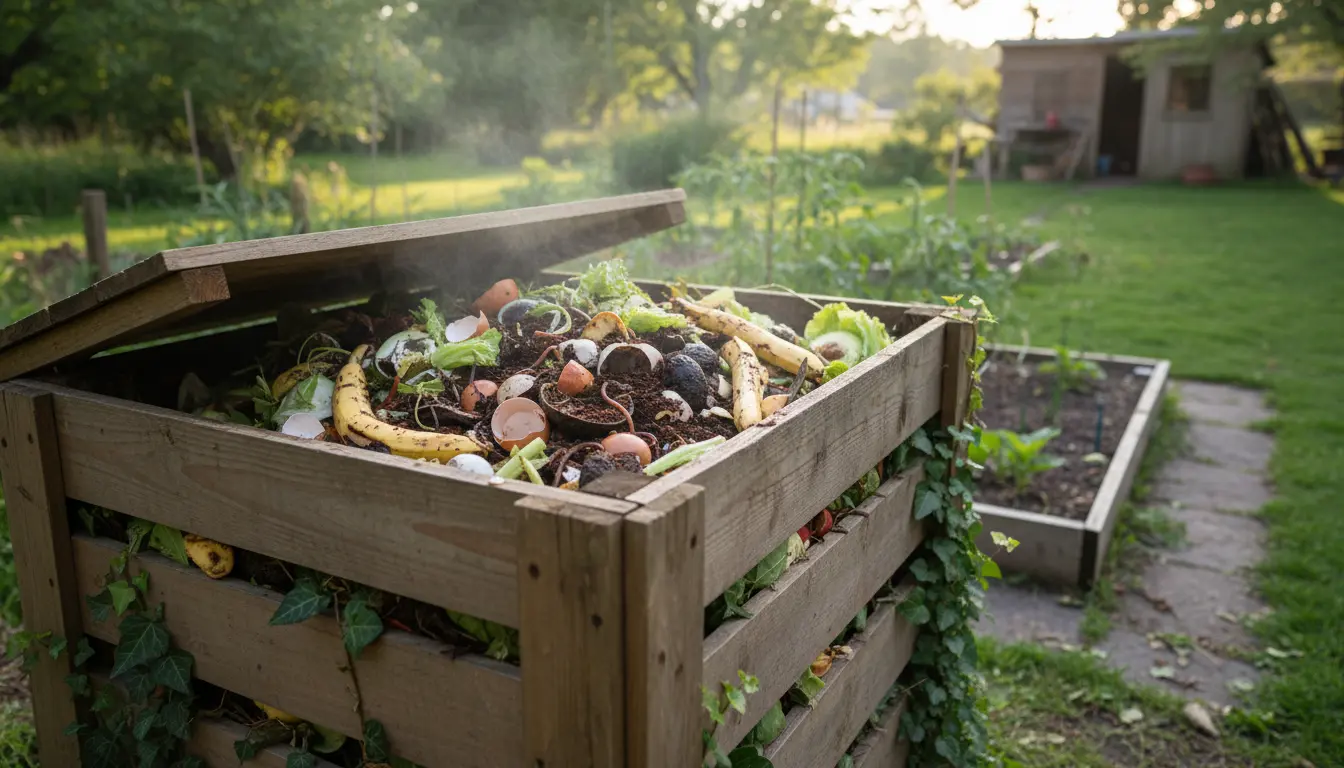
Home Composting Basics
Home composting is a simple way to turn kitchen and yard waste into nutrient-rich soil. It reduces household trash and improves garden health.
This guide explains the core ideas, necessary materials, and easy routines to get a working compost system at home.
Why Choose Home Composting
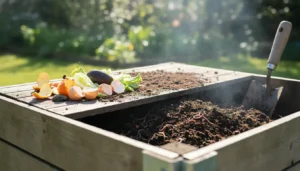
Composting cuts landfill waste and lowers methane emissions from organic matter. It also supplies free fertilizer for gardens and potted plants.
Beginners can start small and scale as they learn what works in their climate and living space.
How to Start Home Composting
Starting a compost pile needs only a plan for materials, a container or space, and a basic maintenance routine. Use the steps below to begin.
Step 1: Choose a Location
Pick a spot with good drainage and partial shade. A level surface near the kitchen or garden saves carrying time.
Options include a backyard bin, tumbler, or a small indoor worm composter for apartments.
Step 2: Select a System
Common home composting systems:
- Open pile: Simple and low-cost for yards with space.
- Bin or tumbler: Contains material, looks tidy, and speeds up decomposition.
- Vermicomposting: Uses worms indoors for apartments and small-scale needs.
Step 3: Gather Materials
Balance “greens” (nitrogen) and “browns” (carbon). A good ratio is about 2–3 parts brown to 1 part green by volume.
- Greens: vegetable scraps, coffee grounds, fresh grass clippings.
- Browns: dry leaves, shredded paper, straw, cardboard.
Maintaining Your Home Composting System
Routine checks take 10 minutes a week. Keep the pile moist like a wrung-out sponge and turn for aeration.
Aeration and Turning
Mixing oxygen into the pile keeps microbes active and reduces odors. Turn a bin or tumble weekly if possible.
Moisture and Temperature
Compost needs moisture but not saturation. If it smells sour, it is too wet or anaerobic; add browns and turn the pile.
Active hot composting reaches higher temperatures and breaks down faster, while cold composting requires less work but more time.
Troubleshooting Common Home Composting Problems
Most issues are simple to fix with a quick diagnosis.
- Bad odors: Add more brown materials and turn the pile for oxygen.
- Slow decomposition: Chop materials smaller and maintain moisture and heat.
- Pests: Avoid meat, dairy, and oily foods. Use a closed bin or bury food scraps deeper.
Materials to Compost and Avoid
Knowing what to add keeps the process healthy and fast.
- Good to compost: fruit and vegetable scraps, coffee filters, tea bags (no staples), eggshells, yard waste.
- Avoid: meat, dairy, pet waste, diseased plants, and large woody branches unless chipped.
Home Composting Tools and Supplies
Basic tools keep composting tidy and efficient. You don’t need fancy gear to start.
- Pitchfork or garden fork for turning
- Compost bin or tumbler
- Kitchen counter pail for collecting scraps
- Thermometer (optional) to monitor hot composting
Small Real-World Case Study: Suburban 3-Bin System
Jamie, a homeowner with a small yard, started a three-bin home composting setup. One bin collected fresh scraps, the second was active, and the third cured into finished compost.
Within nine months Jamie reduced weekly trash by 35% and used finished compost to improve garden beds, which increased vegetable yields. The routine took one short session weekly to turn active bins.
Examples and Practical Tips for Home Composting
Practical habits help keep compost working smoothly.
- Chop or shred large items before adding. Smaller pieces break down faster.
- Layer greens and browns rather than dumping all one type at once.
- Keep a small counter bucket lined with a compostable bag for convenience.
- Use finished compost as mulch or to mix into potting soil.
When Is Compost Ready?
Finished compost looks dark, crumbly, and earthy-smelling. It should no longer resemble original materials.
Depending on method and climate, compost can take 2 months (hot pile) to a year (cold pile).
Final Checklist for Successful Home Composting
- Pick a bin type that fits your space and schedule.
- Keep a balance of browns and greens.
- Monitor moisture and oxygen levels; turn regularly.
- Avoid adding problem items that attract pests or slow decomposition.
- Use finished compost to enrich soil and reduce fertilizer needs.
Start small, observe how your pile behaves, and adjust the ratio of materials. Home composting is low-cost and flexible, making it an effective practice for homes with yards or limited space.