
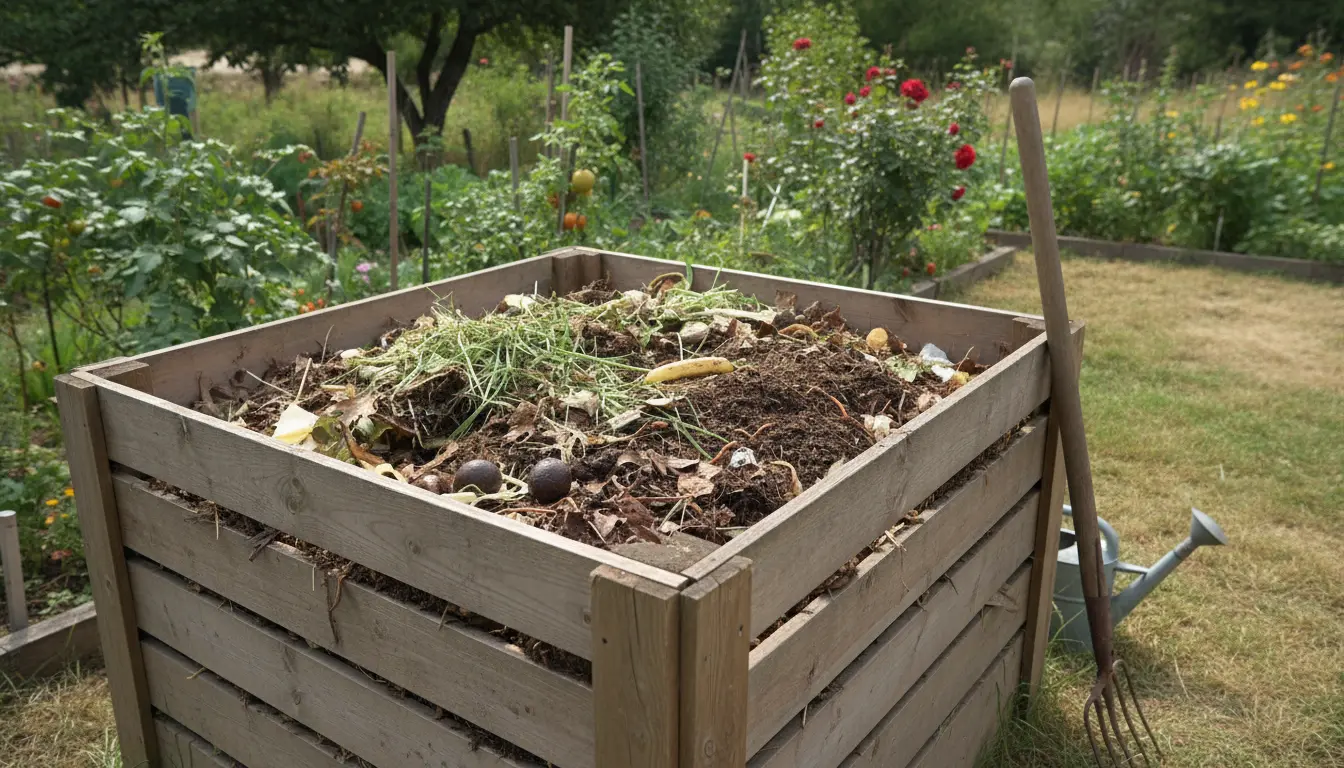
Composting at home turns kitchen scraps and yard waste into a nutrient-rich soil amendment. This guide gives clear, practical steps to start home composting and keep the process steady.
Why Home Composting Works
Home composting breaks down organic matter through microbial activity and natural decomposition. It reduces household waste and improves garden soil structure.
When managed correctly, a compost pile produces humus that stores moisture and nutrients for plants. Composting also lowers methane emissions compared with landfill disposal.
Getting Started with Home Composting
Before you begin composting at home, select a location that is convenient and has partial shade. Accessibility encourages regular maintenance such as turning and adding materials.
You need three basic inputs: brown materials, green materials, and moisture. Balancing these keeps the pile active and odor-free.
Choosing a Compost System for Home Composting

Select a system that fits your space and effort level. Options include open piles, tumblers, and enclosed bins. Each has trade-offs in speed, smell control, and maintenance.
- Open pile: Low cost, suitable for large yards, needs turning with a pitchfork.
- Tumbler: Easier to turn, faster composting, good for small yards or patios.
- Bin: Enclosed bins keep pests out and look tidy; many are stackable for limited space.
What to Compost and What to Avoid
Acceptable green materials: fruit and vegetable scraps, coffee grounds, grass clippings, and fresh garden waste. These supply nitrogen.
Acceptable brown materials: dried leaves, straw, shredded paper, and cardboard. These supply carbon and structure.

Avoid meat, dairy, oils, diseased plants, and pet waste to prevent pests and pathogens.
Basic Steps to Composting at Home
Follow a simple routine to keep home composting efficient. Small, consistent actions prevent common problems like bad odors or slow decomposition.
- Layer materials: Start with coarse browns for drainage, add greens, then more browns. Aim for a 2:1 or 3:1 ratio of browns to greens by volume.
- Moisture: The pile should feel like a wrung-out sponge. Add water if too dry, or add dry browns if too wet.
- Turn regularly: Every 1–3 weeks for active piles, or once a month for slower systems. Turning introduces oxygen to maintain aerobic decomposition.
- Monitor temperature: A warm internal temperature (40–60°C or 104–140°F) indicates active composting. Low temps mean add greens or smaller pieces to boost activity.
Troubleshooting Common Issues in Home Composting
Problems usually stem from imbalance or poor aeration. Diagnosing early keeps the pile healthy.
- Bad smells: Often due to anaerobic conditions. Turn the pile and add dry browns to restore balance.
- Slow breakdown: Increase surface area by chopping materials and add greens to provide nitrogen.
- Pests: Use enclosed bins, avoid meat and oily foods, and bury scraps within the pile.
Using Finished Compost in Your Garden
Finished compost looks dark, crumbly, and earthy-smelling. Use it as a top dressing, mix into potting soil, or blend into garden beds.
Typical application rates: a 1-inch layer over lawns or a 10–20% mix by volume for planting beds. Compost improves structure, water retention, and nutrient availability.
Composting one ton of food scraps can reduce greenhouse gas emissions roughly equivalent to taking a car off the road for several months. Home composting scales that benefit across households.
Small Case Study: A Household Composting Success
Example: The Rivera family in a suburban home started a 200-liter tumbler. They began with a base of shredded leaves and added daily food scraps and weekly yard trimmings.
Within four months they produced 40 liters of finished compost. Their weekly trash volume dropped by 30%, and their vegetable bed yields improved the following season.
Practical Tips for Consistent Home Composting
- Keep a small countertop bin with a tight lid for ease of collection and to reduce trips to the main pile.
- Chop or shred larger materials to speed decomposition.
- Use a compost thermometer if you want to track pile health precisely.
- Balance additions: if you add many greens, follow with a bulk addition of browns like shredded cardboard.
Seasonal Considerations for Composting at Home
In winter, activity slows. Insulate the pile with straw or extra browns, or move a tumbler to a sheltered spot. In hot, dry summers, monitor moisture closely to prevent drying out.
Final Thoughts on Home Composting
Home composting is a low-cost practice that reduces waste and supports healthier soil. Start simple, observe the pile, and adjust inputs until you find a steady routine.
With basic maintenance you can turn household scraps into valuable compost and make a measurable environmental impact.