
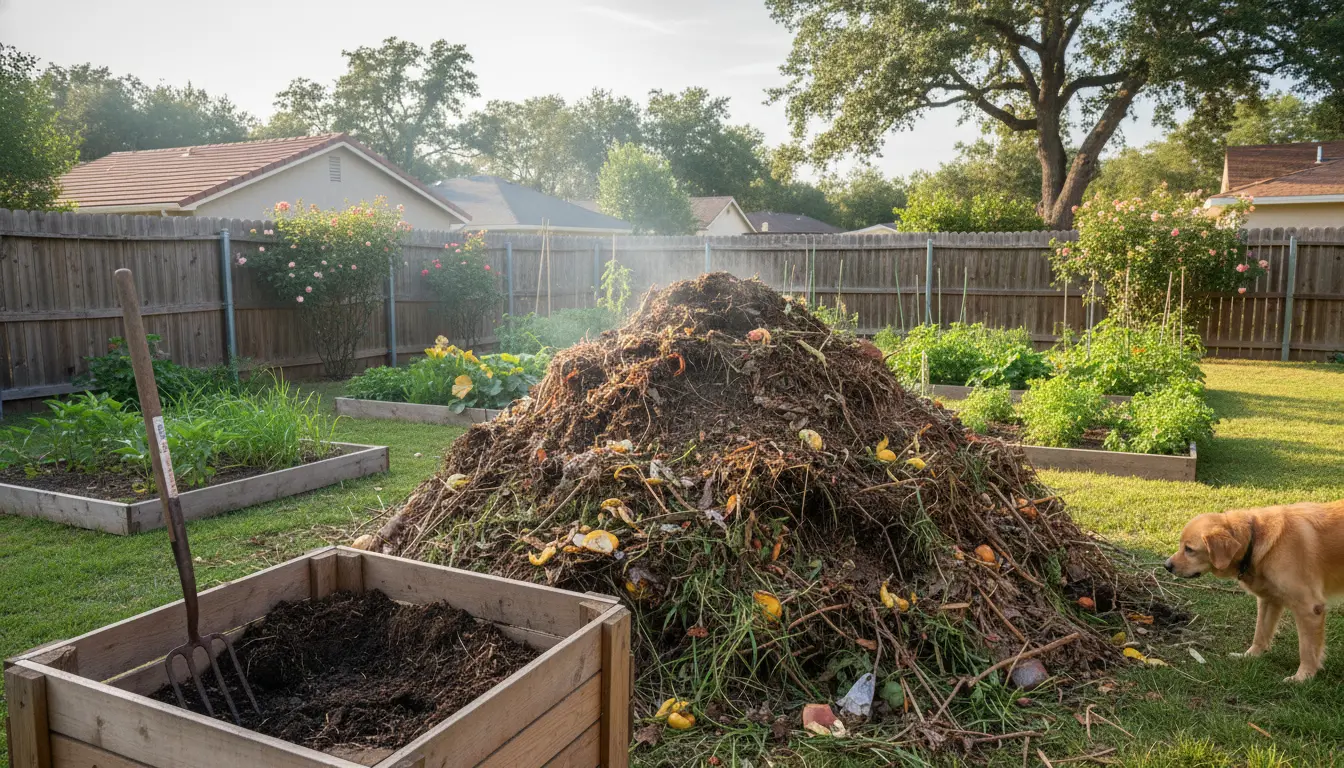
Why Choose Home Composting
Home composting is an easy way to reduce food waste and produce nutrient-rich material for gardens. It lowers trash volume and saves money on soil amendments.
Composting at home also improves soil structure and helps retain moisture. These benefits support healthier plants and reduce need for chemical fertilizers.
Basic Principles of Home Composting
Compost is a mix of “greens” and “browns.” Greens are nitrogen-rich materials like vegetable scraps and fresh grass clippings. Browns are carbon-rich items like leaves, straw and shredded paper.
A balanced mix and regular airflow let microbes break down material into stable compost. Temperature, moisture, and particle size affect how quickly compost forms.
Key Inputs for Composting at Home
- Greens: kitchen scraps, coffee grounds, fresh garden cuttings.
- Browns: dry leaves, cardboard, shredded paper, straw.
- Water: keep the pile as damp as a wrung-out sponge.
- Air: turn or aerate to prevent bad odors and help microbes.
How To Start Home Composting: Step-by-Step
Choose a location that is convenient and partly shaded. A spot on bare soil speeds decomposition and lets worms move in.
Select a container type that fits your space. Options range from open piles to tumblers and enclosed bins.
Step 1: Set Up the Bin
Place a layer of coarse material like twigs at the base to improve drainage and airflow. This reduces compaction and sogginess.
Use a bin with ventilation if possible. Tumblers are low-maintenance but may be smaller and warmer.
Step 2: Add Materials in Layers
Start with a thin layer of brown material, add greens, then cover with more browns. Repeat in layers about 2–6 inches thick.
Chop large items to speed decomposition. Smaller pieces increase surface area for microbes.
Step 3: Maintain the Pile
- Turn every 1–2 weeks to add oxygen and mix materials.
- Keep moisture like a wrung-out sponge: not too wet, not bone dry.
- Add more browns if the pile smells or is very wet.
- Add greens if decomposition seems slow and pile is dry or brown.
Troubleshooting Common Home Composting Problems
Bad smells usually mean poor airflow or too many greens. Turn the pile and add dry browns to fix it.
Slow decomposition may result from large pieces, cold temperatures, or low moisture. Chop materials, insulate the bin, and water lightly.
Pests and How To Avoid Them
- Avoid meat, dairy, oily foods and bones in home compost to prevent pests.
- Bury food scraps under a layer of browns to reduce odors.
- Use a closed bin if rodents are a problem in your area.
Properly managed home compost can reach 120 to 160°F (49 to 71°C), killing many weed seeds and pathogens. Regular turning keeps the pile hot.
Finished Compost and How To Use It
Finished compost is dark, crumbly and smells earthy. It should be uniform with no recognizable food scraps.
Use finished compost as a soil top dressing, mix it into potting mixes, or apply to garden beds at a 1–3 inch layer.
Benefits of Using Compost in the Garden
- Improves soil structure and nutrient retention.
- Supports beneficial microbes and earthworms.
- Reduces need for synthetic fertilizers and helps retain water.
Small Real-World Case Study
Example: A two-person household in a city started a 50-gallon compost bin. They added kitchen scraps and yard waste.
After six months of regular turning and layering, they produced about 40 liters of finished compost. They used it on a vegetable bed and saw improved soil moisture retention and healthier plants the next season.
Practical Tips for Successful Composting at Home
- Keep a countertop pail and empty it into the bin daily to avoid odors indoors.
- Balance greens and browns roughly 1:2 by volume for steady decomposition.
- Use a compost thermometer for large bins to monitor activity.
- Save shredded paper and fall leaves as a steady supply of browns.
Conclusion: Start Small and Learn
Home composting is flexible. Start with a small bin and learn your local climate and material mix.
With a little attention, you can turn household waste into valuable compost and support a healthier garden and planet.