
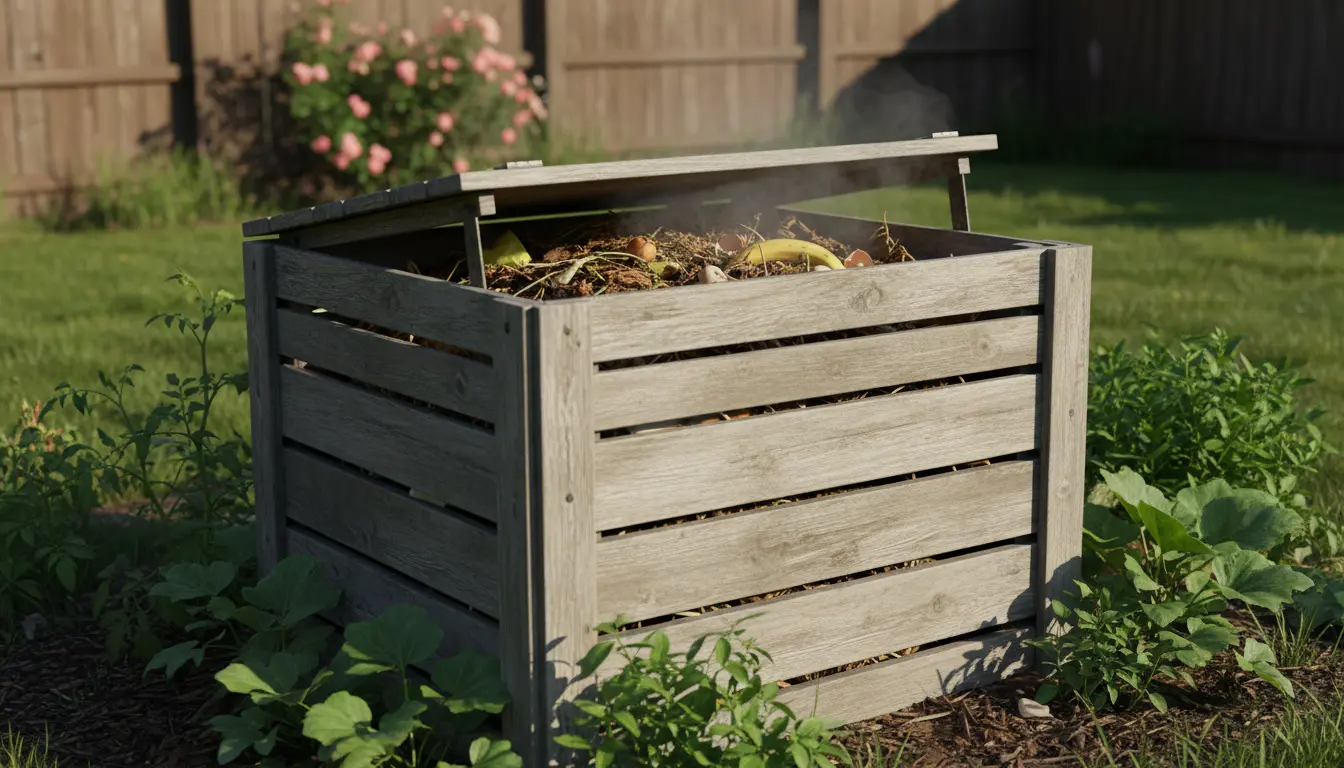
What Is Home Composting?
Home composting is the controlled breakdown of organic waste into a nutrient-rich soil amendment. It reduces household trash and creates material you can add to gardens and potted plants.
Compost forms when microorganisms, moisture, oxygen, and carbon and nitrogen materials interact. You can manage these factors to speed up decomposition and avoid pests or odors.
How to Start a Compost Bin
Choose a container that fits your space and household waste volume. Options include a simple pile, tumblers, or a closed bin.
Place the bin on soil or a well-draining spot so microbes and worms can access it. Avoid concrete surfaces when possible.
Step-by-Step Setup
- Pick a 3x3x3 foot space or a 40–60 gallon bin for average households.
- Start with a 4–6 inch base of coarse brown material to help airflow.
- Add layers of greens (nitrogen) and browns (carbon), keeping the ratio about 1:3 by volume.
- Keep the pile moist like a wrung-out sponge and turn every 1–2 weeks.
Materials to Compost and Avoid
Knowing what to add keeps the system balanced and pest-free. Use a mix of green and brown materials for steady decomposition.
Good Compost Materials
- Greens: vegetable scraps, fruit peels, coffee grounds, fresh grass clippings.
- Browns: dry leaves, shredded paper, cardboard, straw, wood chips.
- Small amounts of garden waste: dead annual plants, small prunings.
Materials to Avoid
- Meat, fish, dairy — attract pests and cause odors.
- Oily foods and greasy paper products — slow decomposition and repel water.
- Diseased plants, persistent weeds, or treated wood — risk spreading problems.
- Pet waste from carnivores — contains pathogens unsafe for garden use.
Managing Your Compost
Active compost needs three things: air, moisture, and the right particle mix. A few simple habits keep the process efficient.
Air and Turning
Turning introduces oxygen that aerobic microbes need. Use a pitchfork or tumbler to mix the pile every 1–2 weeks.
If using a static pile, create airflow with coarse material layers and poke holes through the pile occasionally.
Moisture and Temperature
Keep the pile moist but not saturated. Squeeze test: it should feel like a damp sponge.
Temperatures between 120–160°F (50–70°C) speed up decomposition and kill weed seeds. Smaller piles may not heat as much but still break down slowly.
Troubleshooting Common Problems
Even with care, issues can arise. Identifying the cause usually means a quick fix.
Smelly Compost
Cause: too many wet greens or poor aeration. Fix by adding dry browns and turning the pile to reintroduce air.
Pests and Rodents
Cause: food scraps like meat or lack of a closed bin. Fix by removing offending items and switching to a sealed bin or bokashi system for kitchens.
Slow Decomposition
Cause: pile too dry, too cold, or lacking nitrogen. Fix by moistening, adding fresh greens, and chopping larger pieces.
Benefits of Home Composting
Composting lowers landfill waste and creates free soil amendment for lawns and gardens. It improves soil structure, water retention, and plant health.
Home composting also reduces greenhouse gas emissions from organic waste in landfills and cuts municipal waste costs.
Composting one ton of organic waste can prevent the release of about 0.5 to 1 ton of CO2 equivalent compared to landfilling. Small household efforts add up at community scale.
Small Case Study: Apartment Compost Success
Maria, an apartment gardener, started with a 20‑liter kitchen bokashi bin and a small outdoor tumbler. She diverted fruit and vegetable scraps to bokashi and added the fermented material to her tumbler every two weeks.
After six months she produced enough compost to top-dress three large balcony planters. Her trash volume dropped by a third, and her tomato plants yielded heavier fruit the following season.
Tips for Long-Term Success
- Chop or shred large items to speed decomposition.
- Balance greens and browns rather than aiming for perfect ratios.
- Keep a small covered kitchen container for scraps to reduce trips outside.
- Use finished compost as a soil topper or mix it into potting mixes at 10–30%.
Home composting is simple to start and scales to fit any living situation. With basic setup and a few routine checks, you can turn household organics into valuable soil and reduce waste at the same time.