
What is Home Composting?
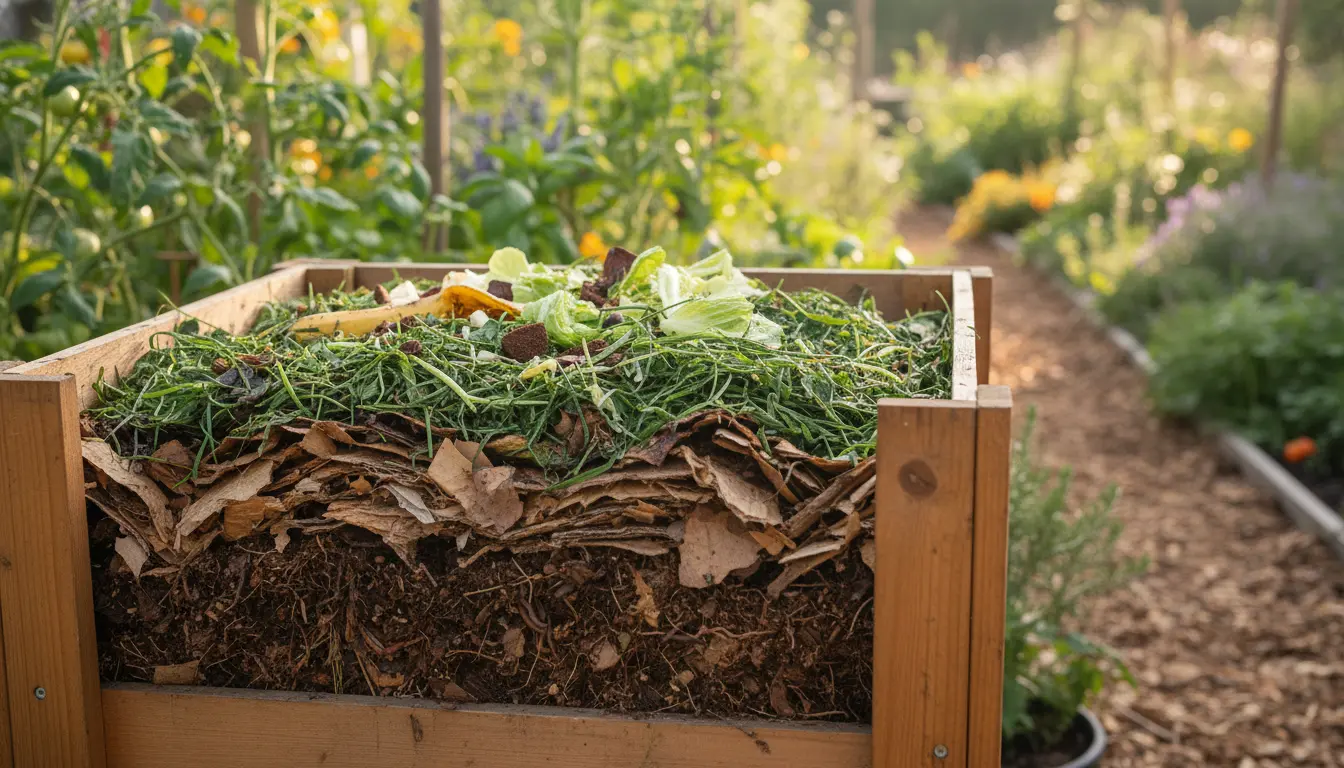
Home composting is the controlled decomposition of organic household and yard waste into a nutrient-rich soil amendment. It uses microorganisms, oxygen, moisture, and time to turn scraps and garden waste into useful compost.
This process reduces landfill waste, supports healthy soil, and closes the nutrient loop in a household or small garden.
Benefits of Home Composting
Home composting offers environmental and practical benefits. It reduces trash volume, lowers methane emissions from landfills, and produces free soil conditioner for gardens and potted plants.
Compost improves soil structure, increases water retention, and feeds beneficial microbes. For many households, it also lowers waste collection costs and promotes sustainable habits.
How to Start Home Composting
Starting home composting is straightforward if you follow a simple setup and routine. You need four basic things: the right container, a mix of materials, air, and moisture.
Choose the Right Bin for Home Composting
Select a bin that fits your space and needs. Options include open piles, tumblers, and stationary enclosed bins. Tumblers speed up turning, while stationary bins are lower cost and easier to build.
Place the bin on soil or grass to allow worms and microbes to enter. Ensure some shade or partial cover to prevent drying out or overheating in full sun.
Gather Materials for Home Composting
Balance brown (carbon) and green (nitrogen) materials for an active compost. Browns provide structure and carbon; greens supply nitrogen and moisture.
- Greens: fruit and vegetable scraps, coffee grounds, fresh grass clippings, plant trimmings.
- Browns: dry leaves, shredded cardboard, paper, straw, small wood chips.
A good starting ratio is roughly 2–3 parts brown to 1 part green by volume. Chop larger items to speed decomposition.
Maintaining Your Home Composting System
Maintenance keeps compost active and odor-free. Aim for regular turning, balanced moisture, and adequate particle size.
Turning and Aeration
Aeration supports the aerobic microbes that do most of the work. Turn or mix the pile every 1–2 weeks to add oxygen and speed decomposition.
Tumblers simplify turning; for bins or piles, a pitchfork or compost aerator works well.
Moisture and Temperature
Compost should be as damp as a wrung-out sponge. Too dry slows activity; too wet creates odors. Add water during dry spells and more browns if it’s soggy.
Active compost generates heat. A warm interior (110–160°F or 43–71°C) indicates strong microbial activity. Small backyard piles may be cooler but still effective over a longer time.
Troubleshooting Common Home Composting Issues
Problems are usually easy to fix if you check a few conditions. Use a quick checklist to diagnose and remedy issues.
- Bad smells: Add more brown material and increase turning to introduce oxygen.
- Slow breakdown: Chop materials finer, increase greens for nitrogen, and turn more often.
- Pests: Avoid meat, dairy, and oily foods. Bury food scraps in the pile center and use a closed bin with a secure lid.
- Excess moisture: Add dry browns and increase aeration to restore balance.
Did You Know?
Small Real-World Example: Neighborhood Compost Trial
A family of four started a 3-bin home composting system in spring. They used cardboard, yard leaves, and kitchen scraps with a 3:1 brown-to-green ratio. They turned the middle bin weekly and rotated materials through the three bins.
Within six months they had finished compost for their vegetable beds and reduced weekly garbage by one bag. They used the finished compost to improve tomato yields and soil water retention.
Advanced Tips for Home Composting
Once you are comfortable, refine your process with simple techniques. Each change can speed composting or increase nutrient quality.
- Layering: Alternate thin layers of greens and browns to maintain balance without measuring.
- Compost starters: Use finished compost or garden soil to introduce microbes and jumpstart breakdown.
- Shredding: Run cardboard or larger yard waste through a shredder to increase surface area and speed decomposition.
- Vermicomposting: Use a dedicated worm bin for kitchens scraps if space is limited or you want faster results indoors.
How to Use Finished Compost
Finished compost is dark, crumbly, and smells earthy. Use it as a top dressing, soil amendment, or potting mix ingredient. Mix compost into garden beds at 1–3 inches depth or blend 20–30% compost into potting soil for containers.
Compost feeds plants slowly, improves soil structure, and supports beneficial microbes rather than acting as a quick-release fertilizer.
Conclusion: Start Small and Learn
Home composting is a low-cost, practical way to reduce waste and improve garden health. Start with a simple bin, follow a basic browns-to-greens approach, and adjust by observing moisture, smell, and decomposition speed.
With minimal effort and regular checks, most households can produce valuable compost within a few months and integrate sustainable practices into daily life.