
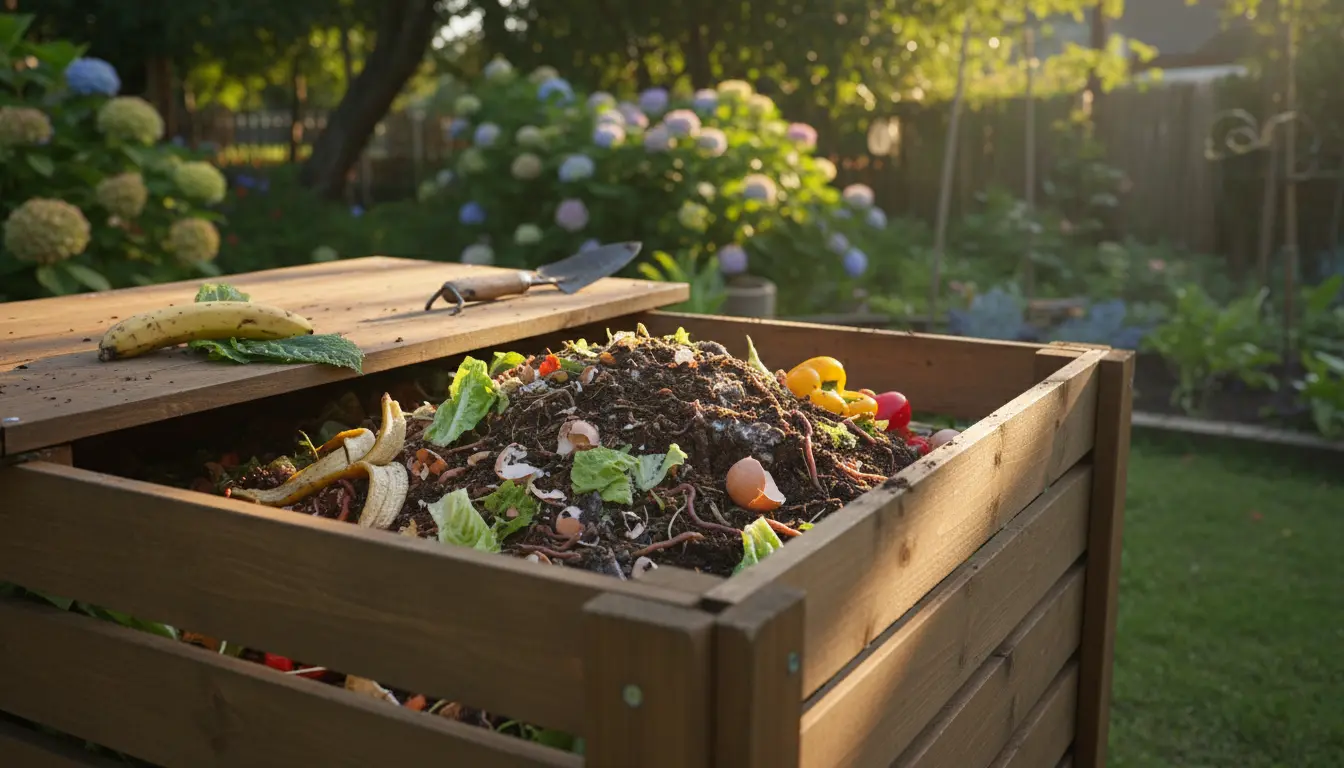
Why Home Composting for Beginners Matters
Composting turns kitchen scraps and yard waste into nutrient-rich soil. It reduces landfill waste and feeds your garden naturally.
This guide covers the basics for beginners and gives step-by-step advice to start and maintain a compost bin at home.
Choose the Right Composting Method
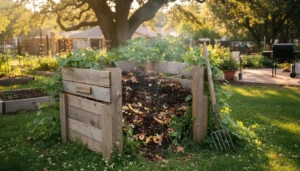
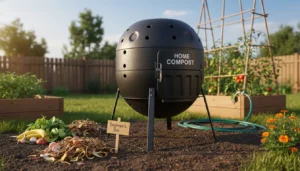
There are several simple methods suited to beginners. Pick one based on space, time, and how much waste you produce.
Bin Composting
Bin composting uses a closed container to hold materials. It’s tidy and works well in small yards or patios.
Pile Composting
Pile composting is a loose heap in a corner of the yard. It’s low cost and can handle large volumes of yard waste.
Worm Composting (Vermicomposting)
Vermicomposting uses worms to break down food scraps quickly. It works indoors or in small spaces and produces rich castings.
Set Up Your First Compost Bin
Location and container matter. Place the bin on bare soil to allow drainage and worm access. Choose a bin size that matches your waste output.
Basic supplies include a bin with a lid, a pitchfork or turning tool, and a moisture meter or simple intuition.
Balance Greens and Browns
Proper mixing of green and brown materials is the core of successful composting. Greens provide nitrogen; browns supply carbon.
- Greens: vegetable scraps, coffee grounds, fresh grass clippings.
- Browns: dry leaves, shredded paper, straw, small wood chips.
A good rule is roughly 2–3 parts browns to 1 part greens by volume. Adjust if the pile smells or is too dry.
How to Build a Compost Layer
Start with a layer of coarse browns to help airflow. Add a layer of greens, then a thin layer of garden soil or finished compost to introduce microbes.
Repeat layers until the bin is full. Keep layers small enough to mix easily when turning the pile.
Maintaining Your Compost Bin
Maintenance is simple: monitor moisture, aerate, and add the right materials. These steps speed decomposition and prevent odors.
- Moisture: Compost should feel like a wrung-out sponge. Add water if dry or more browns if too wet.
- Aeration: Turn the pile every 1–2 weeks with a fork to add oxygen.
- Feeding: Keep a steady input of kitchen scraps and yard waste. Avoid meat, dairy, and oily foods.
Troubleshooting Common Problems in Home Composting for Beginners
New composters often face problems that are easy to fix. Identify the issue and adjust using the balance rules.
Problem: Foul Odor
Cause: Too many greens or poor aeration. Solution: Add browns, turn the pile, and ensure drainage.
Problem: Slow Decomposition
Cause: Pile too dry, too cold, or lacking nitrogen. Solution: Moisten, add fresh greens, and consider a smaller particle size to increase surface area.
Problem: Fruit Flies or Pests
Cause: Exposed food scraps or meat. Solution: Bury scraps under browns, use a closed bin, and avoid animal products.
How to Know When Compost Is Ready
Finished compost is dark, crumbly, and smells earthy. Most home compost piles are ready in 3–12 months depending on method and maintenance.
Use finished compost as a top dressing, potting mix component, or soil amendment in garden beds.
Small Real-World Example
Case Study: The Martinez Family began composting in a 120-liter bin in their suburban backyard. They added kitchen scraps and yard trimmings, keeping a 3:1 browns-to-greens ratio.
After six months of turning every two weeks and monitoring moisture, they produced enough compost to top-dress vegetable beds and reduce their trash by a third.
Practical Tips for Long-Term Success
- Keep a small countertop bin for daily scraps and empty it into the outdoor bin every few days.
- Chop large items into smaller pieces to speed breakdown.
- Save fall leaves to use as browns during the rest of the year.
- Label sections if using multiple bins to manage different stages of composting.
Benefits of Home Composting for Beginners
Composting saves money on soil amendments and reduces landfill methane emissions. It also strengthens garden soil and plant health.
Starting small and learning by doing is the best way to gain confidence and see real, measurable results.
Quick Starter Checklist
- Choose a composting method: bin, pile, or worm bin.
- Select a location with good drainage and partial shade.
- Gather browns and greens and maintain a 2–3:1 ratio.
- Turn your pile regularly and monitor moisture.
- Harvest and use finished compost in your garden.
With these steps, home composting for beginners becomes a manageable, rewarding habit. Start small, stay consistent, and your soil—and waste footprint—will thank you.