
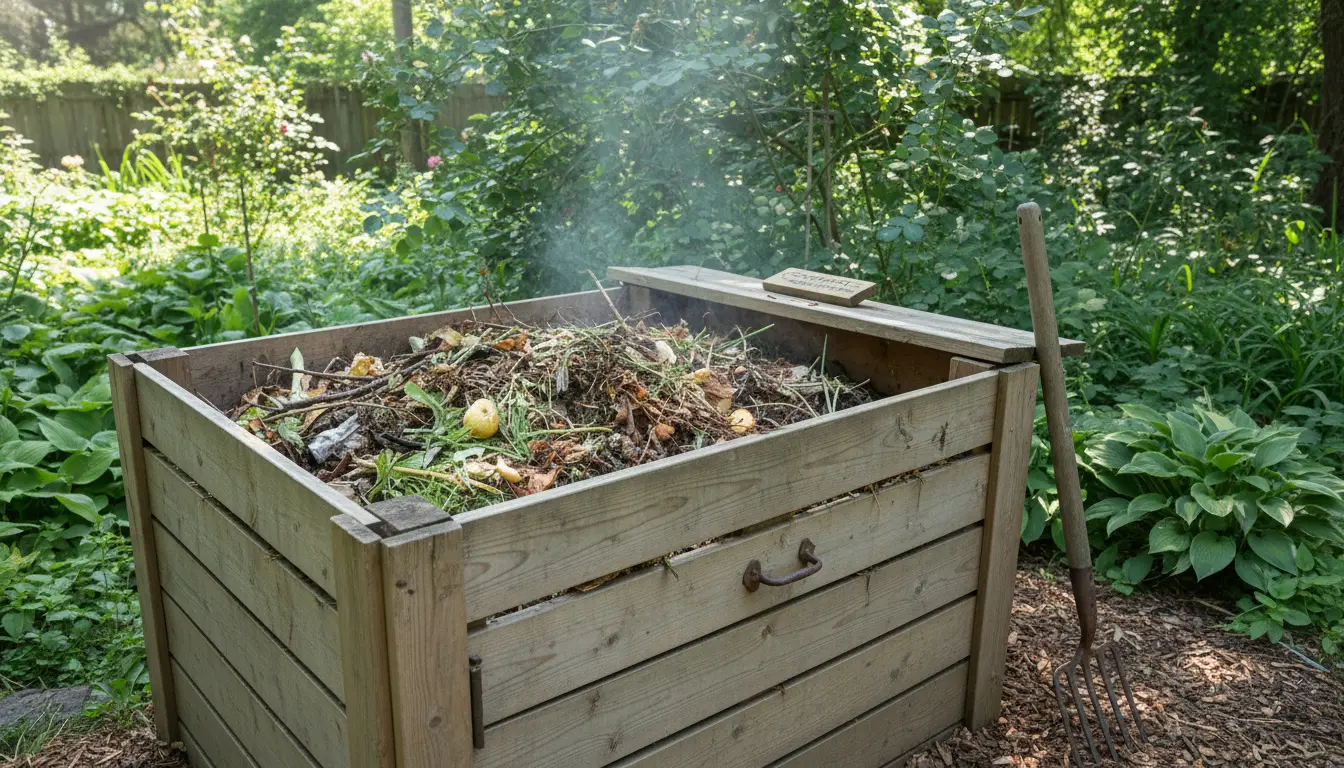
Why Choose Home Composting for Beginners
Home composting turns kitchen and yard waste into a useful soil amendment. It reduces household trash and improves garden soil without chemical fertilizers.
This practical guide explains simple methods you can start today, whether you have a backyard, balcony, or small urban space.
Home Composting for Beginners: Basic Concepts

Composting is the controlled breakdown of organic materials by microorganisms. The two key concepts are carbon to nitrogen balance and airflow.
Carbon rich materials (browns) and nitrogen rich materials (greens) must be mixed so microbes can work efficiently. Proper moisture and occasional turning speed decomposition.
Essential Tools for Home Composting
You don’t need expensive equipment to start. Choose tools based on space, budget, and how quickly you want results.
- A compost bin or tumbler for containment
- Kitchen scrap container with a lid for collecting food waste
- Pitchfork or compost aerator for turning material
- Gardening gloves and a small shovel
Adding crushed eggshells contributes calcium to compost and can reduce slug damage when applied to soil.
Types of Bins for Home Composting
Select a bin that fits your lifestyle. Simple options work well for beginners.
- Open pile: Best for large yards and mixed yard waste.
- Closed bin: Keeps pests out and retains heat; good for most backyards.
- Tumbler: Easy to turn and speeds composting in small spaces.
- Worm bin (vermicompost): Ideal for indoor or balcony composting of food scraps.
What to Compost and What to Avoid
Knowing what to add keeps your compost healthy. Use these simple guidelines.
- Greens (nitrogen): vegetable peels, fruit scraps, coffee grounds, fresh grass clippings.
- Browns (carbon): dried leaves, straw, shredded paper, cardboard (no glossy ink).
Avoid meat, dairy, oily foods, diseased plants, and pet waste; these attract pests or slow breakdown.
How to Start Home Composting: Step by Step
Follow these actionable steps to build your first compost pile or bin.
- Choose a spot with partial shade and good drainage. Near a garden or patio is convenient.
- Place a 4–6 inch base of coarse browns (twigs or straw) to encourage airflow.
- Add alternating layers of greens and browns. Aim for roughly 2 to 3 parts browns to 1 part greens by volume.
- Keep the pile moist like a wrung-out sponge. Water occasionally during dry periods.
- Turn the pile every 1–2 weeks with a pitchfork or rotate a tumbler to add air and speed decomposition.
Expect a basic cold compost to take 6–12 months. Hot composting with frequent turning can yield finished compost in 2–3 months.
Troubleshooting Common Problems in Home Composting
Most issues are easy to fix with small adjustments to moisture, materials, or aeration.
Problem: Bad Odor
Smelly compost usually means too much nitrogen or poor airflow. Add more browns and turn the pile to let air in.
Problem: Pests
Avoid meat, dairy, and oily scraps. Use a closed bin or bury food scraps within the pile to reduce rodent attraction.
Problem: Slow Decomposition
When decomposition is slow, add more greens or finely chop materials to increase surface area. Ensure the pile is moist and aerated.
Using Finished Compost
Finished compost is dark, crumbly, and smells earthy. Use it to improve soil structure, retain moisture, and add nutrients.
Apply compost as a top dressing around plants, mix into potting soil, or add to vegetable beds at planting time.
Small Real-World Example
Case study: A city gardener named Maria started a 100-liter tumbler on her balcony. She collected vegetable scraps and coffee grounds in a small kitchen caddy and added shredded cardboard as brown material.
After three months of turning the tumbler twice a week, the mix had become dark and crumbly. Maria used two buckets of finished compost in her herb pots and noted improved plant vigor and reduced need for store-bought fertilizer.
Quick Tips for Home Composting for Beginners
- Chop scraps into small pieces to speed composting.
- Balance greens and browns; if in doubt, add more browns.
- Keep a small kitchen bin with a tight-fitting lid to control odors.
- Use finished compost sparingly at first to see how plants respond.
Start Today
Home composting is a low-cost, effective way to reduce waste and improve your garden soil. Begin with simple steps and adjust as you learn what works in your space.
With a little attention to balance, moisture, and airflow, even beginners can produce rich compost in months rather than years.