
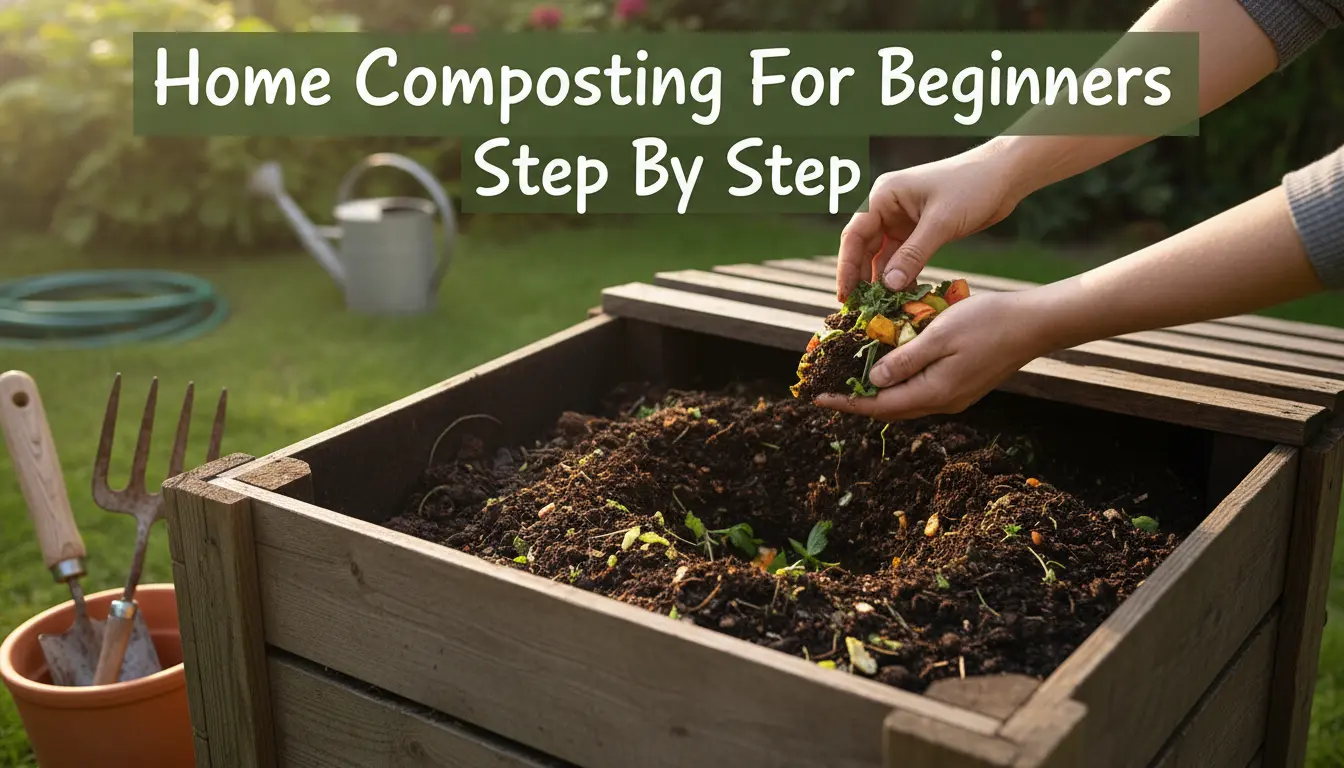
Why Choose Home Composting
Home composting turns kitchen and yard waste into nutrient-rich soil. It reduces landfill trash, lowers household waste costs, and supports plant health.
This guide shows clear steps for beginners so you can start composting with confidence and avoid common mistakes.
How to Start Home Composting
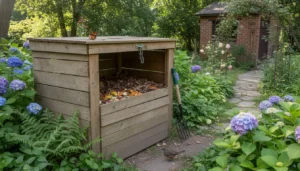
Choose a method that fits your space: a backyard bin, a tumbler, or an indoor bokashi or worm (vermicompost) system. Each is suitable for different living situations and waste types.
Follow these first steps to get started quickly and practically.
Select a Composting Method
- Backyard bin: Good for yards and larger volumes of yard waste.
- Compost tumbler: Faster decomposition and easier turning.
- Vermicomposting: Uses worms; ideal for apartments and small kitchens.
- Bokashi: Fermentation method that handles cooked food and meat scraps.
Gather Tools and Materials
Basic tools include a garden fork or turning tool, a bin or container, and a kitchen scrap bucket. Keep the system simple to maintain regular use.
Good materials and balance matter. Use the carbon-to-nitrogen approach to keep microbes active and odors away.
Materials for Home Composting
Compost inputs fall into ‘greens’ (nitrogen) and ‘browns’ (carbon). Aim for a mix close to 25–30 parts carbon to 1 part nitrogen by weight, which is roughly a 3:1 or 4:1 volume ratio of browns to greens.
Examples of Greens and Browns
- Greens: Vegetable peels, fruit scraps, coffee grounds, fresh grass clippings.
- Browns: Dry leaves, shredded paper, cardboard, straw, sawdust (small amounts).
Step-by-Step Composting Process
Follow these practical steps to maintain a healthy home compost pile or bin.
- Layer browns and greens: Start with a base of coarse browns, add greens, and repeat.
- Maintain moisture: Keep the pile as damp as a wrung-out sponge. Add water or dry browns as needed.
- Turn regularly: Every 1–2 weeks for hot compost piles; less often for slower systems.
- Monitor temperature: A hot pile (130–150°F or 55–66°C) speeds breakdown. Worm and bokashi systems do not need high temps.
- Harvest finished compost: After a few months to a year, sift and use finished compost in garden beds or pots.
Troubleshooting Common Problems in Home Composting
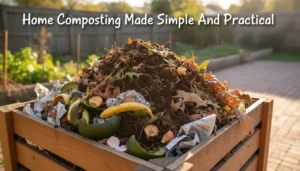
Even simple systems can hit snags. Here are common problems and easy fixes to keep your compost working.
Problem: Bad Odor
Cause: Too many greens or lack of air. Fix: Add dry browns, aerate the pile, and ensure drainage.
Problem: Slow Decomposition
Cause: Not enough nitrogen, moisture, or surface area. Fix: Chop materials into smaller pieces, add a handful of greens, and turn to increase aeration.
Problem: Fruit Flies or Pests
Cause: Exposed food scraps. Fix: Bury food under browns, use secure lids, or switch to bokashi or worm bins for indoor scraps.
Composting reduces household methane emissions because organic waste that rots in landfills produces methane, a potent greenhouse gas.
Small Real-World Case Study
Case study: A two-person household adopted a backyard bin and kitchen scrap routine. They started with a 60-liter bin and a small kitchen pail for scraps.
After six months they reported a 60% reduction in weekly trash volume and produced roughly 40 liters of usable compost. They used it in container tomatoes and a small vegetable patch, noting improved plant vigor and reduced need for store-bought fertilizer.
Tips to Succeed with Home Composting
- Keep a small sealed kitchen pail for scraps to encourage collection and avoid odors.
- Shred or chop large items to speed decomposition.
- Rotate materials and avoid adding diseased plants or persistent weeds in seed stage.
- Record layers or simple maintenance in a notebook for the first few months.
Using Finished Compost
Finished compost is dark, crumbly, and smells earthy. Use it as a soil amendment, top dressing, or mix it into potting soil.
Apply a thin layer to garden beds, or blend one part compost with three parts topsoil for potting mixes.
Final Checklist for Home Composting Beginners
- Choose a method that fits your space and lifestyle.
- Balance greens and browns and maintain moisture and airflow.
- Turn the pile or manage your system on a regular schedule.
- Troubleshoot odors, pests, and slow breakdown quickly with simple fixes.
Home composting is a practical way to close the loop on organic waste and support healthier soil and plants. Start small, keep it simple, and adjust as you gain experience.