
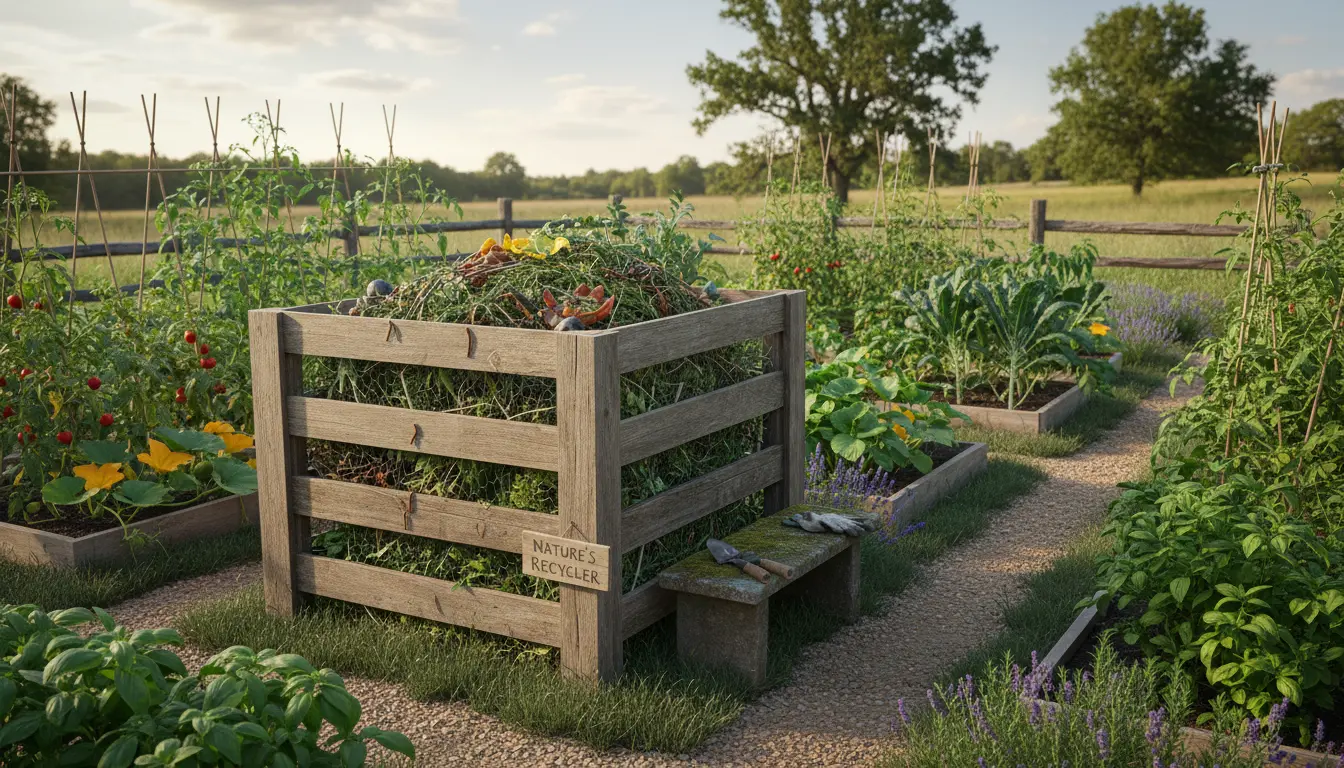
Home Composting for Beginners: Why Compost at Home
Composting reduces household waste and creates nutrient-rich soil for gardens and pots. It saves money on fertilizers and lowers your environmental footprint.
Beginners can start with small steps and still see results within a few months. This guide gives practical, step-by-step instructions for reliable composting at home.
Home Composting for Beginners: Choosing a System
Pick a compost system that matches your space and needs, such as a closed tumbler, stationary bin, or simple heap. Each system has trade-offs in odor control and maintenance.
Small balconies do well with worm bins or bokashi systems, while yards can support tumblers or multi-bin setups. Consider access, aesthetics, and how often you will turn the pile.
Home Composting for Beginners: Tools and Initial Setup
Gather basic tools: a garden fork or turning tool, a thermometer (optional), and a bin or container. These tools make management easier and speed decomposition.
Place the bin on bare soil or a breathable base to allow worms and microbes in. Ensure partial shade and easy access to kitchen scraps and yard waste.
Home Composting for Beginners: What to Compost
Compost needs a balance of ‘greens’ (nitrogen) and ‘browns’ (carbon). Greens include fruit and vegetable scraps, coffee grounds, and fresh grass clippings.
Browns include dry leaves, straw, shredded cardboard, and paper. Aim for roughly a 2:1 to 3:1 ratio of browns to greens by volume for steady breakdown.
Home Composting for Beginners: What Not to Compost
Avoid meat, dairy, oily foods, and diseased plants in open composts to prevent pests and odors. Also avoid pet waste and treated wood products.
Small amounts of cooked food can go into a closed tumbler or bokashi system, but monitor for pests. When in doubt, leave questionable items out.
Home Composting for Beginners: How to Build a Compost Pile
Start with a base layer of coarse material like small branches or straw to aid airflow. Add alternating layers of greens and browns about 4 inches thick each.
Moisten layers so the pile feels like a wrung-out sponge. Too dry slows decomposition; too wet creates odors. Maintain moisture with occasional watering or dry browns.
Home Composting for Beginners: Turning and Maintenance
Turn the pile every 1–2 weeks to introduce oxygen and speed decomposition. Tumblers simplify turning; stationary piles need a fork or pitchfork for mixing.
Check temperature: active compost heats to 120–150°F (50–65°C) in the center when breaking down quickly. If temperatures fall, add greens and turn to reactivate microbes.
Home Composting for Beginners: Troubleshooting Common Problems
Bad odors often mean too much green or excess moisture. Add more browns, mix, and increase aeration to resolve smells quickly.
Pests are attracted to meat or oily scraps. Remove problem materials and use a closed bin or secure lid to deter animals. For slugs or flies, cover fresh food with a thin brown layer.
Home Composting for Beginners: Using Finished Compost
Finished compost looks dark, crumbly, and earthy with no recognizable food bits. It typically takes 2–12 months depending on method and management.
Mix finished compost into garden beds, use as top dressing for lawns, or blend with potting soil for containers. Aim for up to 25% compost in pot mixes for best results.
Home Composting for Beginners: Quick Weekly Checklist
- Add daily kitchen scraps to a covered bucket or bokashi bin to prevent pests.
- Layer or mix in browns weekly to maintain balance and absorb moisture.
- Turn or tumble the pile every 1–2 weeks to maintain oxygen levels.
- Monitor moisture and temperature and adjust with dry browns or water.
Home Composting for Beginners: Small Case Study
Case study: A two-person urban household used a 60-liter tumbler and a kitchen caddy for one year. They diverted 300 kg of organic waste from landfill during that period.
By turning the tumbler twice weekly and adding shredded cardboard, they produced enough compost to refresh two container vegetable beds. Their tomato yields improved in year two.
Composting keeps methane-producing food waste out of landfills and can cut household waste volumes by up to 30 percent. Backyard compost enriches soil and reduces the need for chemical fertilizers.
Home Composting for Beginners: Examples of Compost Recipes
Simple recipe for a backyard bin: 3 parts dry leaves, 1 part kitchen scraps, 1 part grass clippings. Mix and maintain moisture at a wrung-out sponge level.
Worm bin recipe: Bedding of shredded paper, a thin layer of soil, and daily small amounts of vegetable scraps. Avoid citrus overload and maintain cool, moist conditions.
Home Composting for Beginners: Final Tips
Start small and learn by doing; you can scale up as confidence grows. Keep a small counter caddy to collect scraps and empty it regularly into your main compost system.
Record what you add and how often you turn the pile for better results. Over time you will tune the greens-to-browns ratio for faster, odor-free composting.
Following these practical steps makes home composting accessible for beginners and rewarding for gardens. With routine care you can convert most kitchen and yard waste into valuable soil amendment.