
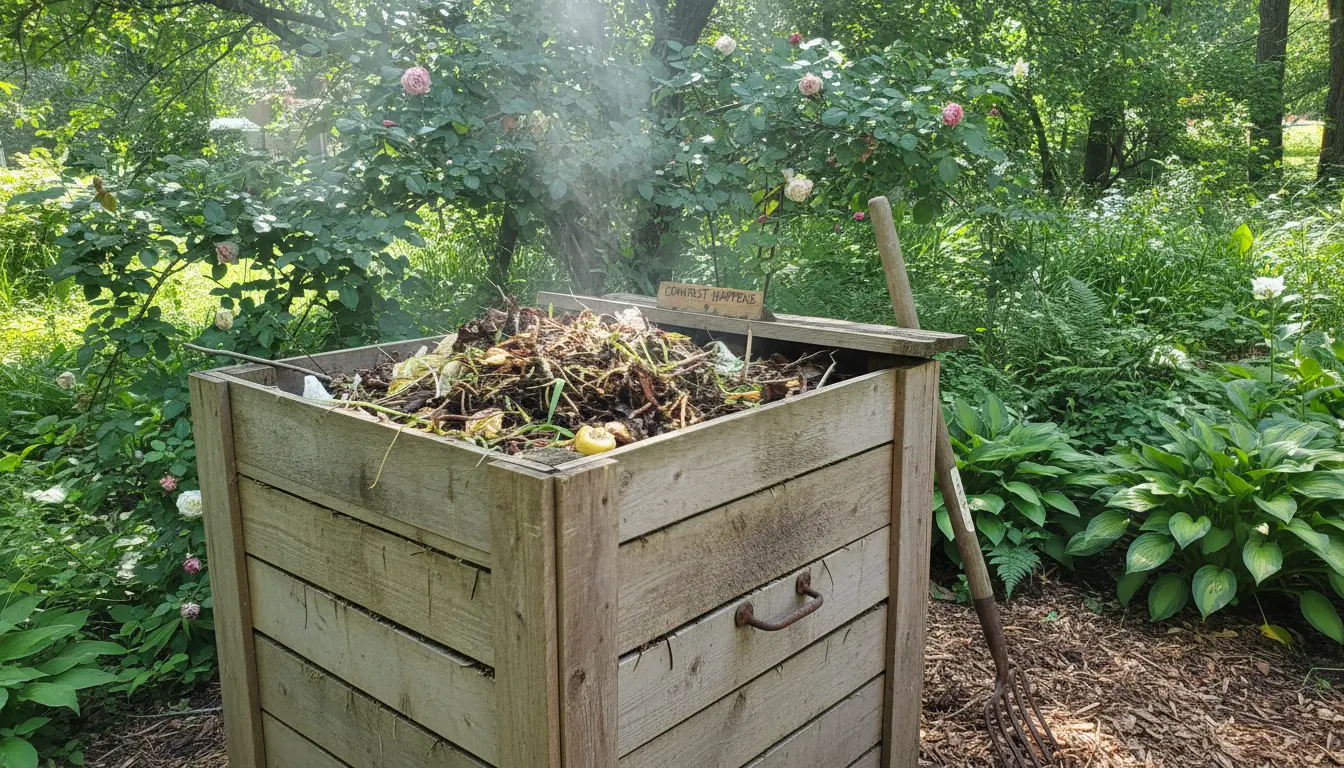
Why Home Composting for Beginners Matters
Composting at home reduces household waste and creates nutrient-rich soil for gardens. For beginners, it is an accessible way to cut trash and improve plant health with minimal cost.
Simple Steps to Start Home Composting for Beginners
Start small and learn by doing; that reduces mistakes and lowers initial effort. These steps will give you a reliable routine and faster results.
1. Choose the Right Location and Bin
Select a spot with partial shade and good drainage to keep the pile active without drying out. Choose a bin sized for your household—tumbler bins for speed or open bins for larger volumes.
2. Balance Greens and Browns for Home Composting for Beginners
Compost needs a mix of nitrogen-rich greens and carbon-rich browns. A good rule is about 2–3 parts browns to 1 part greens by volume.
- Greens: vegetable scraps, coffee grounds, fresh grass clippings
- Browns: dry leaves, shredded paper, cardboard
3. Prepare and Layer Materials
Chop larger items and layer materials to help airflow and microbe activity. Aim for layers about 3–4 inches thick for each type, then moisten lightly.
4. Maintain Moisture and Airflow
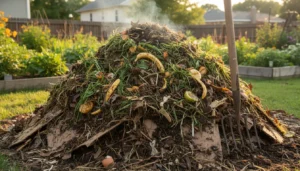
The pile should feel like a wrung-out sponge—moist but not soggy. Turn the pile every 1–2 weeks to add oxygen and speed decomposition.
Tools and Supplies for Home Composting for Beginners
You don’t need many tools to get started. Basic supplies make the process cleaner and easier to manage.
- Compost bin or tumbler
- Pitchfork or turning tool
- Kitchen scrap container with a lid
- Garden gloves and a watering can
Common Problems and Troubleshooting
Beginners often encounter a few predictable issues. Addressing them quickly keeps compost active and odor-free.
- Bad smell: Add more browns and turn the pile to introduce air.
- Too dry: Moisten the pile and add more greens or kitchen scraps.
- Slow breakdown: Chop materials smaller and turn more often; consider a compost accelerator like finished compost.
What Not to Add
Avoid adding meat, dairy, diseased plants, or pet waste to your home compost. These items attract pests and can introduce pathogens.
Microbes in a healthy compost pile can raise temperatures to 130–160°F, which helps break down material quickly and kills many weed seeds.
How Long Until Compost Is Ready
Decomposition time depends on materials, size, and care. With regular turning and a good mix, expect usable compost in 2–3 months. Slower, unmanaged piles can take 6–12 months.
Using Finished Compost
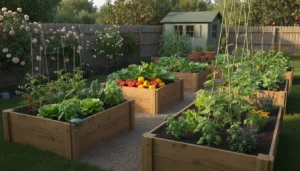
Finished compost should be dark, crumbly, and smell earthy. Use it as a soil conditioner, mix it into potting soil, or top-dress garden beds to improve structure and fertility.
Application Ideas
- Mix 1 part compost with 3 parts potting soil for container plants.
- Spread a 1–2 inch layer over garden beds in spring or fall and work it in lightly.
- Use as mulch around trees and shrubs, keeping it a few inches from stems.
Small Real-World Case Study
Example: A three-person household in Portland started composting in a 50-gallon bin. They collected kitchen scraps in a small lidded container and added dry leaves weekly. By following a 3:1 brown-to-green ratio and turning the bin every two weeks, they produced several buckets of finished compost in four months.
The family reduced weekly trash by nearly 40 percent and used the compost to boost vegetable beds, increasing tomato yields in the first season.
Quick Checklist for Home Composting for Beginners
- Choose a bin and location with easy access.
- Collect kitchen scraps and dry browns separately.
- Build layers and keep the pile moist but not wet.
- Turn the pile regularly and monitor for odors.
- Harvest finished compost and apply to soil.
Starting home composting is a low-cost practice with big environmental benefits. With a simple routine and a little patience, beginners can convert everyday waste into valuable soil in a matter of months.