
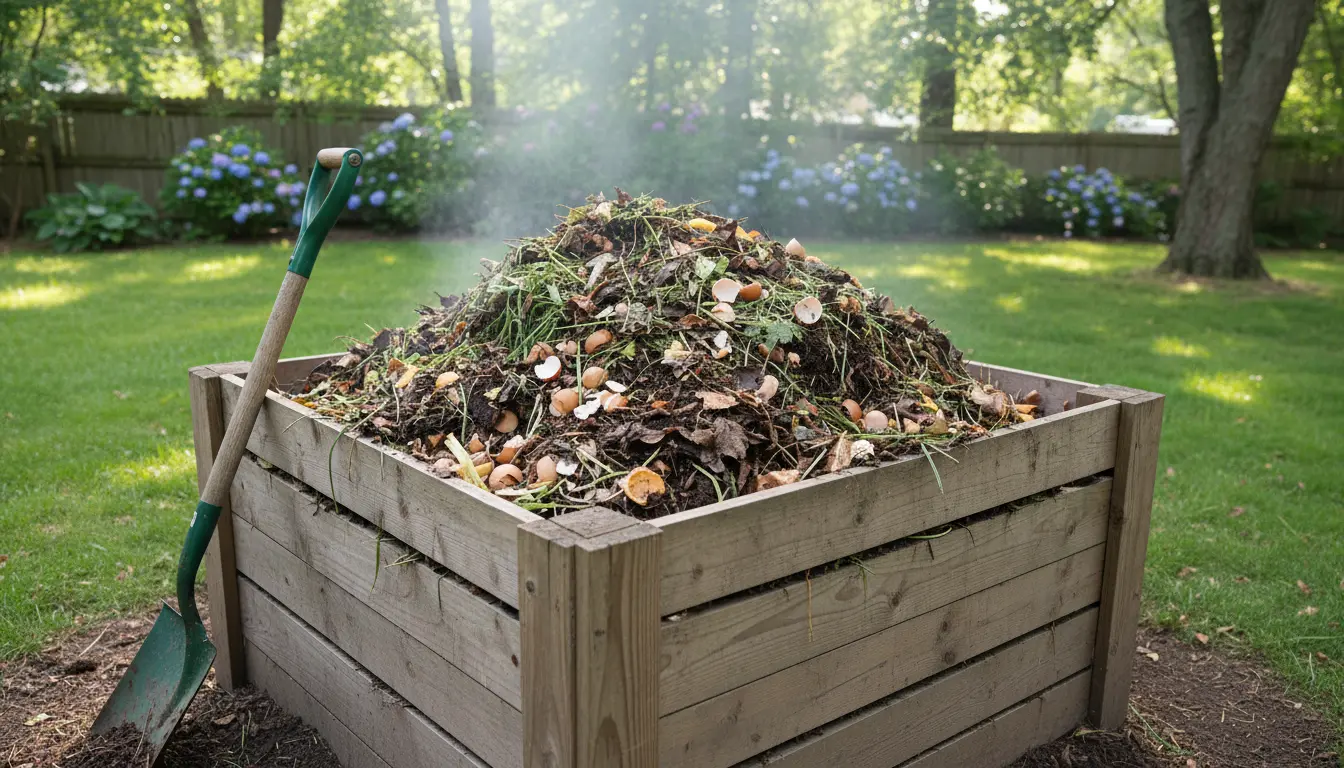
What Is Home Composting and Why It Matters
Home composting is the controlled breakdown of organic waste into nutrient-rich material you can use in gardens and potted plants. It reduces garbage, lowers methane from landfills, and improves soil structure for healthier plants.
This guide explains practical steps any beginner can follow to start composting at home, whether you have a yard or a small balcony.
Basic Materials for Home Composting
Successful compost needs a balance of carbon and nitrogen. Think of carbon as the bulk dry materials and nitrogen as the green, moist items.
- Carbon (brown): dry leaves, shredded paper, cardboard, straw
- Nitrogen (green): vegetable scraps, coffee grounds, fresh grass clippings
- A little soil or finished compost: adds microbes to speed decomposition
Choosing a Compost System for Beginners
Pick a system that fits your space and desired level of effort. Options range from simple piles to enclosed bins and tumblers.
- Open pile: Cheapest, needs space and more maintenance
- Compost bin: Keeps pests out and looks tidy
- Tumbler: Faster, convenient turning, good for small yards
Where to Place Your Compost
Choose a shaded, level spot with good drainage. Close access to your kitchen encourages regular use, but keep the pile at least a few feet from structures for airflow and pest control.
Step by Step: Start Your First Compost
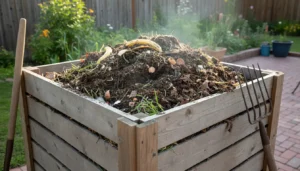
Follow these steps to start a balanced compost that breaks down efficiently.
- Layer a base of coarse brown material for airflow, like small branches or straw.
- Add alternating layers of greens (kitchen scraps) and browns (leaves, shredded paper).
- Moisten each layer as you add it; the pile should feel like a wrung-out sponge.
- Include a handful of garden soil or finished compost to introduce microbes.
- Turn or mix every 1–2 weeks to introduce oxygen and speed decomposition.
How Much to Add and When
Don’t add large quantities at once; small regular additions are easier to manage. Chop or chop up large pieces to speed breakdown.
A rule of thumb: aim for a roughly 3:1 ratio of browns to greens by volume over time.
Adding coffee grounds helps add nitrogen and can improve compost structure, but avoid adding large amounts of citrus peels from commercial use at once.
Basic Troubleshooting for Home Composting
Compost problems are common and usually easy to fix with a small change in balance or care.
- Bad smell: Usually too wet or too many greens. Add more browns and turn the pile.
- Slow decomposition: Add moisture and nitrogen, increase turning frequency, or chop materials smaller.
- Pests: Use a closed bin or bury food scraps under brown layers. Avoid meat, dairy, and oily foods.
Managing Moisture and Temperature
Moisture is key. The pile should be damp but not dripping. In dry climates, add water when turning. In rainy seasons, cover the pile or use a bin to prevent excess water.
Temperatures in an active pile can rise to 130–150°F (55–65°C). High heat kills weed seeds and pathogens. If your pile never warms, add more nitrogen and turn to introduce oxygen.
Using Finished Compost
Finished compost looks, smells, and feels like dark, crumbly soil. Use it as a top dressing, mix into potting soil, or work into garden beds to improve structure and nutrients.
- Seed starting: Mix 10–20% compost into potting mix.
- Vegetable beds: Add 1–2 inches of compost and lightly work into the topsoil each season.
- Mulch: Apply a 1-inch layer around established plants to conserve moisture.
Small Real-World Case Study
Case study: A two-person household in a city apartment used a small rotating kitchen composter for six months. They collected vegetable scraps and coffee grounds and added shredded newspaper each week.
Result: They diverted about 100 lbs of organic waste from landfill in one year and produced enough compost to refresh three large potted herbs. Maintenance took 10 minutes per week and odor was minimal due to regular turning.
Practical Tips for Beginners
- Keep a small countertop bin with a tight lid to collect scraps and empty into the outdoor bin every few days.
- Chop or shred large items to speed decomposition.
- Record what you add and how often you turn to learn what works in your climate.
- Use a thermometer if you want to monitor pile temperature precisely.
Final Checklist to Start Home Composting
- Choose a compost system (bin, pile, or tumbler).
- Gather brown and green materials and a bit of soil.
- Layer, keep moist, and turn regularly.
- Use finished compost to improve soil and reduce waste.
Home composting is a low-cost, high-impact way to cut household waste and build healthier soil. With a simple system and regular attention you can convert kitchen scraps into a valuable resource for plants and gardens.