
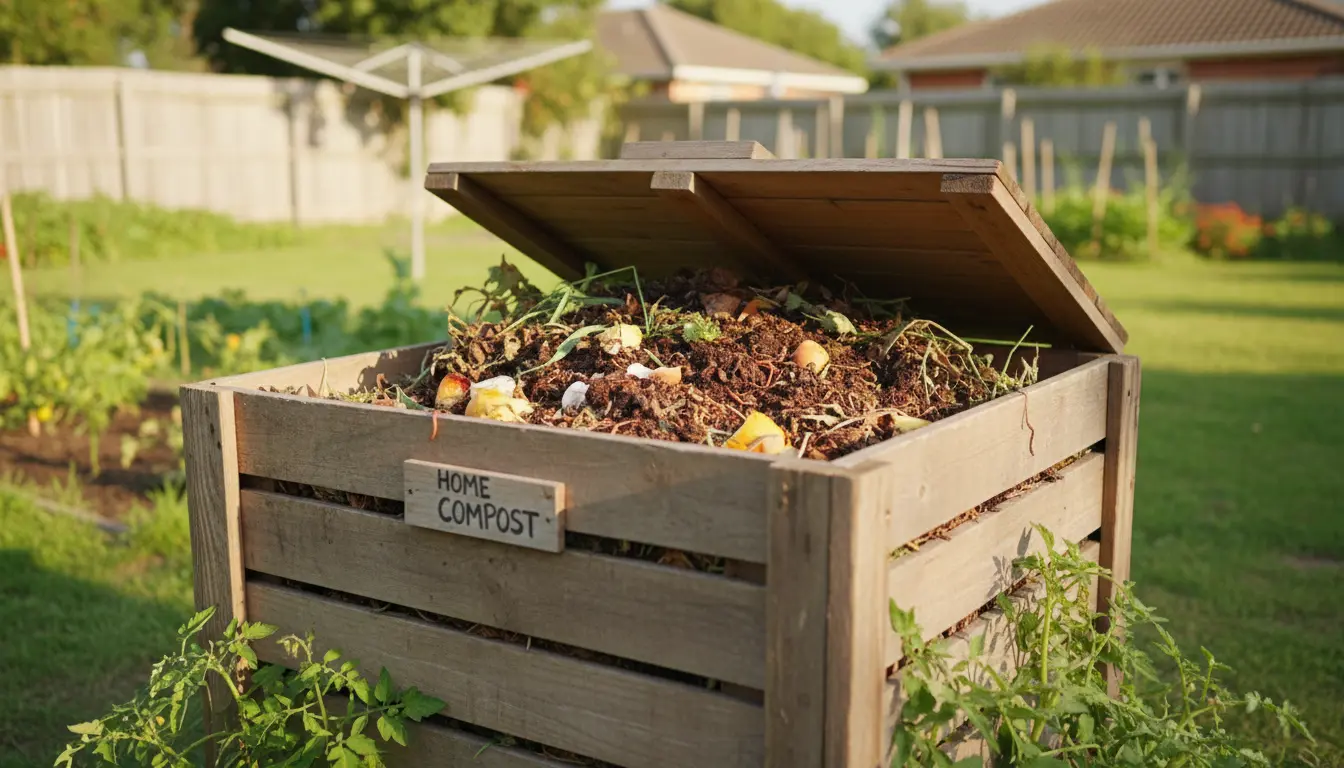
Home Composting for Beginners: Getting Started
Home composting for beginners is a practical way to turn kitchen waste into rich soil. This guide focuses on simple steps, common mistakes, and clear actions so you can start composting this week.
Composting reduces waste and improves garden health. You do not need fancy equipment or advanced knowledge to begin.
Why Choose Home Composting for Beginners
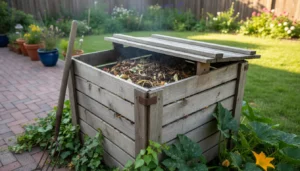
Starting at home helps you learn the process on a small scale. It saves money on soil amendments and lowers landfill waste.
For beginners, key goals are keeping the pile balanced, aerated, and moist. These factors determine how fast your compost breaks down.
Choosing a Compost Bin for Home Composting for Beginners
Pick a bin type that matches your living situation. Options include tumblers, stationary bins, and simple open piles.
- Tumbler bins are easy to turn and stay tidy. They suit small yards and busy schedules.
- Stationary bins hold more volume and are cheaper. They work well for gardens where space allows.
- Open piles are low cost but need more attention to keep pests away.
Location and Size
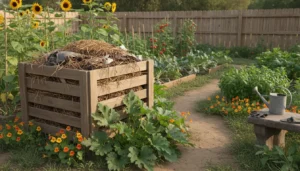
Place the bin on bare soil if possible to allow worms and microbes to enter. Choose a shaded spot to keep moisture steady.
For beginners, a 3x3x3 foot pile or a 40 to 60 gallon bin is a manageable starting point.
What to Compost: Home Composting for Beginners Checklist
Compost needs a mix of carbon rich materials and nitrogen rich materials. The right balance speeds decomposition.
- Greens (nitrogen): fruit and vegetable scraps, coffee grounds, fresh grass clippings
- Browns (carbon): dry leaves, cardboard, shredded newspaper, straw
- Avoid: meat, dairy, oils, diseased plants, and pet waste
Simple Ratio
A useful rule for beginners is about 2 to 3 parts browns to 1 part greens by volume. If the pile smells, add more browns. If it is dry and slow, add greens and water.
Step-by-Step Process for Home Composting for Beginners
Follow these steps to build and maintain a successful compost pile.
- Layer a base of coarse browns like twigs for airflow.
- Add alternating layers of greens and browns, keeping each layer a few inches thick.
- Moisten each layer; aim for the texture of a wrung-out sponge.
- Turn the pile every 1 to 2 weeks with a pitchfork or tumbler to add oxygen.
- Monitor temperature: active piles are warm inside. Cooling indicates slower decomposition.
How Long Until Compost Is Ready?
With regular turning and a good mix, compost can be ready in 2 to 6 months. Cooler, less attended piles may take a year or more.
Adding a handful of garden soil to your compost introduces microbes that speed up decomposition. Earthworms will often move in through contact with soil too.
Troubleshooting for Home Composting for Beginners
Common problems are easy to fix once you know the signs. Watch odor, moisture, and pests.
- Smelly pile: add dry browns, aerate by turning, and check for meat or dairy in the mix.
- Too dry: add water and more greens. Cover the pile to retain moisture.
- Slow decomposition: increase surface area by shredding materials and turn the pile more often.
- Pests: avoid food scraps like meat and manage access with a closed bin or fine mesh.
Using Finished Compost
Finished compost looks dark, crumbly, and earthy. Use it as a soil amendment, mulch, or potting mix component.
Mix compost into garden beds at a rate of 1 to 3 inches on the surface or work into the topsoil for new beds.
Case Study: Small Apartment Balcony Composting
Maria, an apartment dweller, started a 20 gallon tumbler on her balcony. She added coffee grounds and vegetable scraps, and shredded cardboard as the brown layer.
By turning the tumbler once per week and checking moisture, she produced usable compost in five months. She used the compost in balcony planters and reduced kitchen waste by 60 percent.
Key success points: a sealed tumbler to deter pests, regular turning, and balanced greens and browns.
Quick Tips for Home Composting for Beginners
- Chop or shred larger items to speed decomposition.
- Keep a small counter bin with a tight lid to collect kitchen scraps and reduce odor.
- Use a garden fork or a compost thermometer to monitor progress.
- Be patient; composting is a process and improves with practice.
Home composting for beginners is low cost and high reward. Start small, follow simple rules for balance and aeration, and you will produce healthy soil for your plants while cutting waste.