
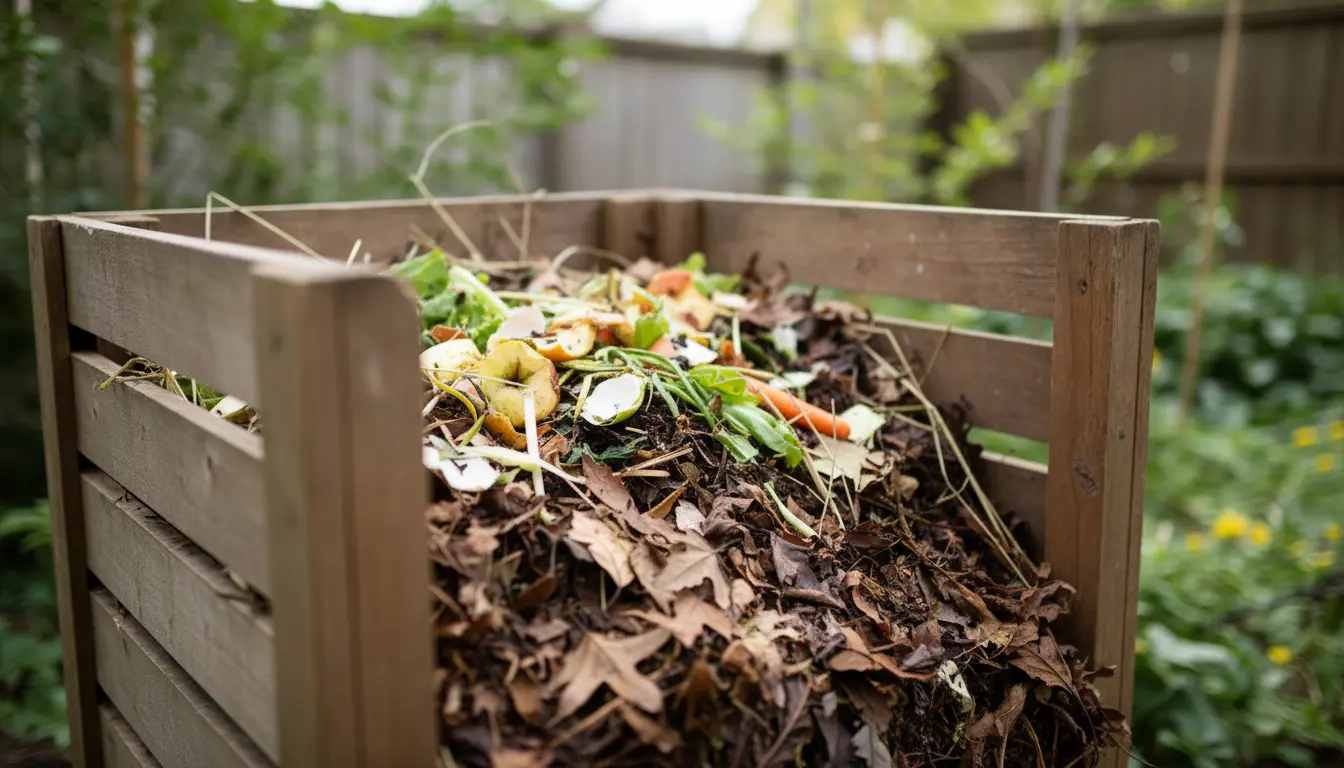
Why Home Composting for Beginners Matters
Home composting for beginners is an easy way to reduce kitchen waste and create nutrient-rich soil for gardens. It lowers landfill contributions and cuts household waste costs.
For a beginner, composting can seem technical, but basic setups work well. This guide gives clear, practical steps to start composting at home today.
Choose a Composting Method for Home Composting
Pick a method that fits your space and effort level. Small balconies, backyards, and community gardens each need different setups.
Common methods for composting at home
- Cold bin: Low maintenance, slower decomposition, good for beginners.
- Hot compost pile: Faster breakdown, needs mixing and temperature monitoring.
- Compost tumbler: Convenient and neat, ideal for small yards.
- Vermicomposting (worms): Great for indoor setups, produces fine compost quickly.
What to Put in Your Home Composting Bin
Understanding what materials to add helps maintain balance and avoid odors. Aim for a mix of carbon-rich and nitrogen-rich items.
- Greens (nitrogen): Fruit and vegetable scraps, coffee grounds, fresh grass clippings.
- Browns (carbon): Dry leaves, shredded paper, cardboard, straw.
- Avoid: Meat, dairy, oils, diseased plants, and pet waste.
Steps to Start Composting at Home
Follow these simple steps to start and maintain a home composting system that works for beginners.
- Choose a container or area that fits your space and odor tolerance.
- Start with a base layer of coarse browns for airflow.
- Add alternating layers of greens and browns, keeping them roughly balanced.
- Moisten materials so they feel like a wrung-out sponge, not soaking wet.
- Turn or aerate weekly for faster decomposition, or less often for cold composting.
Troubleshooting Common Home Composting Problems
Beginners often run into the same issues. Simple adjustments fix most problems quickly.
Bad smells
Bad odors usually mean too much moisture or too many greens. Add more dry browns and mix the pile to add air.
Pests
Keep compost covered, bury food scraps deeper, and avoid meat or oily foods. Use a closed container or tumbler to deter animals.
Slow breakdown
Increase surface area by chopping materials, add nitrogen-rich greens, and turn the pile to speed decomposition.
How to Use Finished Compost from Home Composting
Finished compost looks dark, crumbly, and earthy. It’s ready to use in gardens, pots, and as a lawn top dressing.
- Mix into garden beds at a ratio of 1 part compost to 3 parts soil.
- Top-dress potted plants with a thin layer to improve moisture retention.
- Use as a seed starting mix component when finely screened and blended.
Small Real-World Case Study
The Rivera family started home composting for beginners in their suburban backyard using a tumbling bin. They balanced kitchen scraps with shredded cardboard and garden trimmings.
After four months, they had enough compost to improve two raised beds. Their weekly waste to landfill dropped by almost half, and their tomatoes were noticeably healthier the following season.
Composting can divert up to 30% of household waste from landfills. Properly maintained compost also reduces greenhouse gas emissions compared with mixed organic waste.
Tips for Long-Term Success with Home Composting for Beginners
Small habits make composting sustainable over time. Keep the system simple and consistent.
- Collect scraps in a countertop container and empty them daily into the bin.
- Keep a stash of browns like shredded paper or dry leaves nearby.
- Label bins and set a weekly reminder to turn or check moisture.
Quick Checklist for Starting Home Composting
- Choose method: bin, tumbler, pile, or worms.
- Gather basic tools: pitchfork or aerator, watering can, thermometer (optional).
- Maintain balance: alternate greens and browns and keep moisture right.
- Monitor and adjust: fix smells, pests, or slow breakdown quickly.
Final Notes on Home Composting for Beginners
Home composting for beginners is low-cost, flexible, and effective. Start simple and refine your process as you learn.
With regular attention and the right balance, anyone can turn kitchen scraps into valuable compost and reduce household waste.