
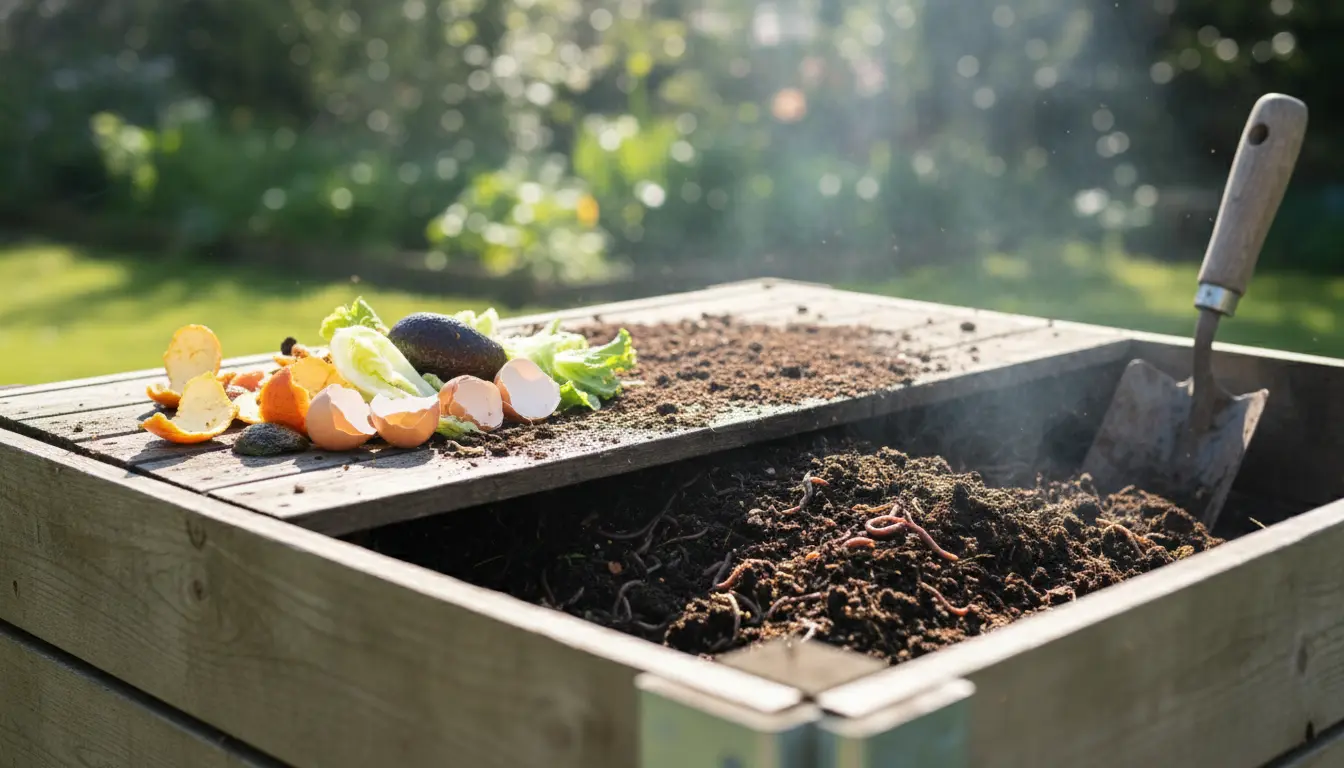
Start Here: What Is Home Composting for Beginners
Home composting turns kitchen and yard waste into nutrient-rich soil amendment. It reduces landfill trash and improves garden health with minimal effort.
This guide explains simple methods, what to add, and how to avoid common mistakes. Follow these steps to create stable, usable compost in months.
Benefits of Home Composting for Beginners
Composting at home saves money on waste disposal and fertilizer. It also supports soil structure, water retention, and microbial life in your garden.
For newcomers, the key advantages are low cost, easy setup, and visible results within a season.
Choosing a Method for Home Composting for Beginners
Select a composting method that fits your space and time. Popular beginner options include a simple backyard bin, a tumbling composter, or a countertop compost pail for kitchen scraps.
- Backyard bin: Good for yards, low maintenance.
- Tumbler: Faster decomposition, requires turning.
- Bokashi or worm bin: Indoor-friendly and compact.
Setting Up Your Compost Bin

Place your bin in a semi-shaded area with decent drainage. Keep it accessible to encourage regular use.
Ensure airflow by choosing a bin with vents or by leaving gaps between stacked materials. A 3:1 ratio of browns to greens is a reliable starting point.
Materials to Use in Home Composting for Beginners
Divide inputs into greens (nitrogen) and browns (carbon). Balance these for efficient decomposition.
- Greens: fruit and vegetable scraps, coffee grounds, fresh grass clippings.
- Browns: dry leaves, cardboard, shredded paper, straw.
- Avoid: meat, dairy, oils, diseased plants, and pet waste.
How to Build a Compost Layer
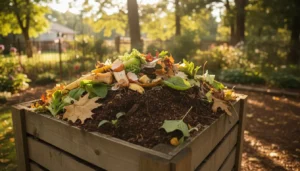
Start with coarse browns like small branches or straw to aid drainage. Alternate thin layers of greens and browns to avoid clumps and odors.
Moisten each green layer as you add it; the pile should feel like a wrung-out sponge. Turning every 1–2 weeks speeds breakdown but is not strictly necessary.
Troubleshooting Common Problems
Beginners often face odors, slow decomposition, or pests. Most issues have simple fixes.
- Bad smell: Add more browns and turn the pile to increase aeration.
- Too dry: Add water and more greens; cover the bin to retain moisture.
- Pests: Avoid adding meat or oily foods; use a closed bin or bury new additions under brown material.
Compost can boost garden water retention by up to 30% and gradually improve soil structure, reducing the need for frequent watering.
When Is Compost Ready to Use?
Finished compost is dark, crumbly, and earthy-smelling. Most home systems produce usable compost in 3–9 months, depending on method and effort.
Screen or sift before using in seed mixes. Use as a top dressing, soil amendment, or potting mix ingredient.
Using Finished Compost
Mix compost into garden beds at a rate of 1–2 inches over the soil, or add 10–20% compost to potting mixes for seedlings and transplants.
Compost improves fertility slowly and consistently, so use it annually rather than in large single doses.
Small-Scale Case Study: Sarah’s Kitchen Compost
Sarah, a homeowner with a small yard, started a 60-liter tumbler and a countertop pail. She added kitchen scraps daily and yard trimmings weekly.
Within four months she had about 30 liters of finished compost. She used it to top-dress three vegetable beds and reported healthier leaves and better soil moisture retention.
Key takeaways from Sarah’s case: consistent layering, regular turning, and avoiding meat scraps made composting simple and effective.
Practical Tips for Home Composting for Beginners
- Keep a small kitchen pail with a lid for daily scraps to reduce trips outside.
- Chop larger items to speed decomposition.
- Record additions and turns in a simple notebook to track progress.
- Start small; expand your system as you gain confidence.
Quick Checklist Before You Start
- Choose a bin type that fits your space.
- Gather a mix of browns and greens.
- Set the bin on soil or a permeable surface for beneficial organisms to access it.
- Plan a routine for adding scraps and occasional turning.
Home composting is an accessible way for beginners to reduce waste and improve garden health. With simple materials and a small routine, most households can produce quality compost within a few months.