
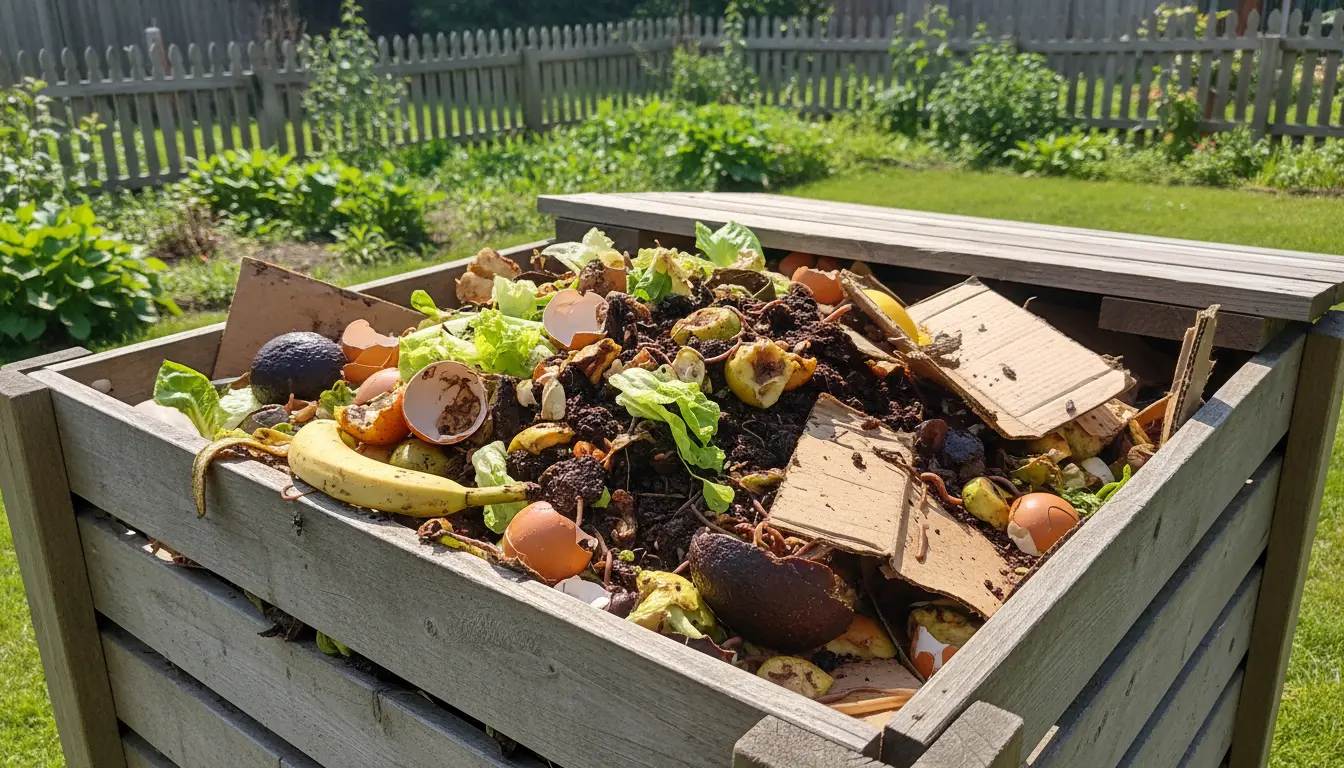
Home composting turns kitchen and yard waste into nutrient-rich soil amendment. This guide on home composting for beginners gives clear, practical steps you can follow today.
Why Home Composting Matters
Home composting for beginners reduces landfill waste and returns nutrients to soil. It cuts household garbage, lowers methane emissions, and improves garden health when used correctly.
Getting Started with Home Composting for Beginners
Start by choosing a container and location. You can compost in a bin, tumbler, open pile, or indoor worm bin depending on space and lifestyle.
Follow these initial steps:
- Pick a site with good drainage and partial shade.
- Decide on the system: stationary bin for yards, tumbler for faster turning, worm bin for small spaces.
- Collect both green (nitrogen) and brown (carbon) materials.
- Layer materials and keep the pile moist like a wrung-out sponge.
Choosing a Composting Method
Choose a method that matches your space and time:
- Outdoor bin: Low maintenance, suitable for yards.
- Tumbler: Easier turning, faster breakdown.
- Worm composting (vermicompost): Great for apartments, processes food scraps quickly.
- Bokashi: Fermentation system for all food waste including meat and dairy, needs secondary composting.
Key Materials for Home Composting for Beginners
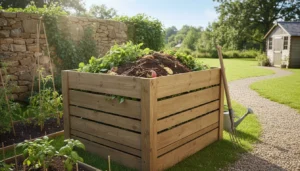
Balance is important. Aim for roughly a 2:1 or 3:1 ratio of browns to greens by volume for most systems.
- Greens (nitrogen): Fruit and vegetable scraps, coffee grounds, fresh grass clippings.
- Browns (carbon): Dry leaves, shredded paper, cardboard, straw.
- Avoid: Meat, dairy, oily foods, diseased plants, pet waste in most systems (except bokashi and properly managed vermicompost).
Maintaining Your Compost
Regular attention keeps your compost active. Turn or aerate the pile every 1–2 weeks for faster decomposition in bins or piles.
Key maintenance tasks:
- Monitor moisture: Add water if dry, add browns if too wet.
- Turn to add oxygen: Helps microbes and reduces odors.
- Chop or shred larger pieces: Smaller pieces break down faster.
- Keep a mix of particle sizes to maintain airflow.
When Is Compost Ready and How to Use It
Finished compost is dark, crumbly, and smells earthy. It typically takes 2–12 months depending on method and management.
How to use finished compost:
- Top-dress garden beds with a 1–3 inch layer.
- Mix into potting soil or planting holes for new plants.
- Use as mulch around shrubs and trees to conserve moisture.
Composting one household’s food scraps for a year can prevent hundreds of pounds of waste from entering the landfill. Properly managed composting also helps reduce greenhouse gas emissions from organic waste.
Simple Troubleshooting for Home Composting for Beginners
Problems happen, but they’re fixable. Here are common issues and quick solutions.
- Bad smells: Add more browns and turn the pile to introduce oxygen.
- Pile too dry: Add water and fresh greens; cover during dry spells.
- Pile too wet or slimy: Mix in dry browns and improve drainage.
- Slow decomposition: Chop materials finer, increase turning frequency, check moisture and temperature.
- Fruit flies: Bury food scraps under browns or use closed tumblers or worm bins with lids.
Real-World Example: A Small Household Case Study
Case study: A two-person household in Portland started a 50-gallon tumbler and a small worm bin. They collected kitchen scraps in a countertop pail and emptied it into the tumbler three times a week. Within six months they produced compost to top-dress container plants and mixed potting soil.
Results: Their weekly trash volume dropped by about 30 percent and they avoided buying bagged compost. Troubles they solved included occasional odors, fixed by adding more shredded cardboard and turning the tumbler weekly.
Practical Tips to Keep Going
Make composting easy to maintain with these habits:
- Keep a small countertop bin for scraps to reduce friction.
- Shred or chop yard waste before adding to speed breakdown.
- Schedule a weekly check to turn and adjust moisture.
- Label a small bag for dry browns near your compost area for quick access.
Home composting for beginners is practical and scalable. Start small, learn by doing, and adjust your system as you gain experience. Within months you’ll convert waste into a valuable soil resource for your garden or houseplants.