
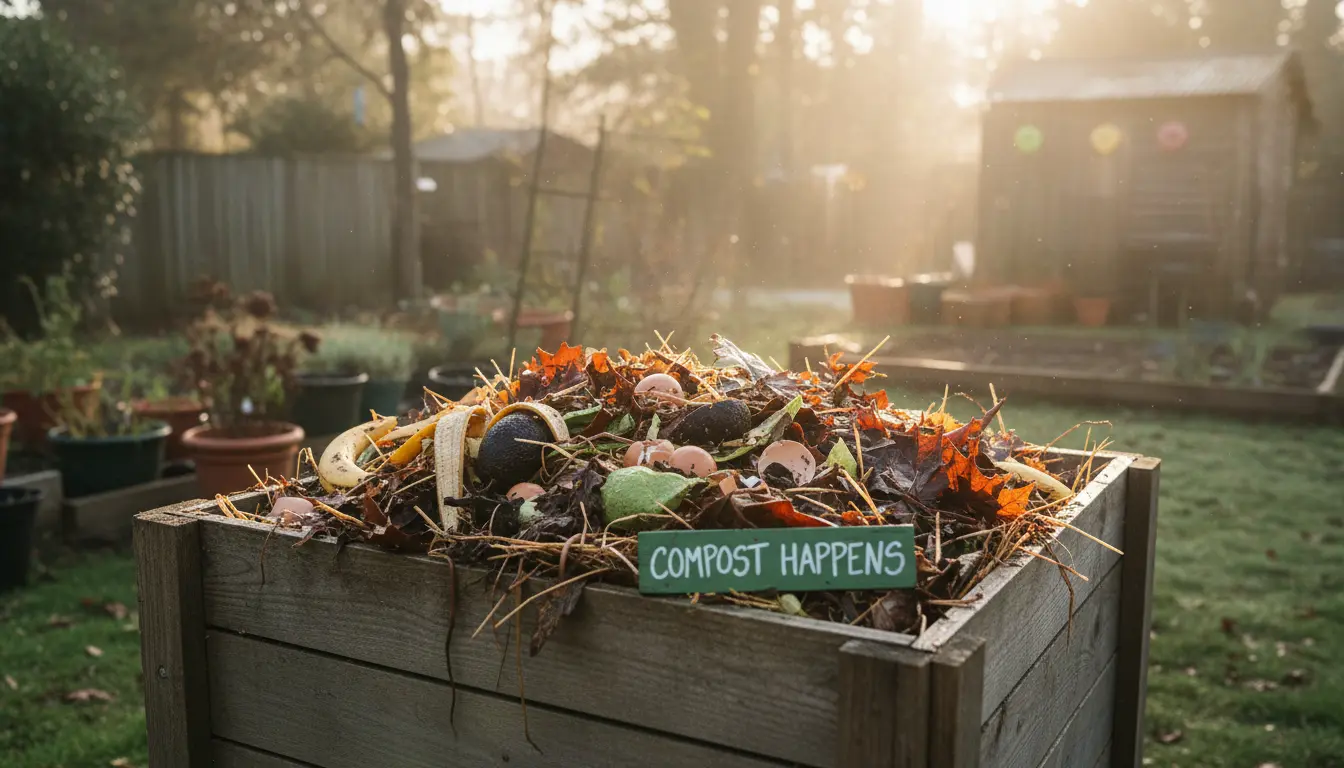
Why Home Composting Matters
Home composting turns kitchen scraps and yard waste into rich soil. It reduces landfill waste and creates a nutrient source for gardens and potted plants.
For beginners, composting can feel technical, but basic rules deliver reliable results. This guide focuses on simple steps you can follow today.
Choose a System for Home Composting
Selecting the right system depends on space, budget, and how fast you want compost. Common options work well for most homes.
- Open pile: Low cost, requires space and regular turning.
- Compost bin: Controlled, compact, and good for small yards.
- Tumbler: Faster decomposition with easy turning, higher cost.
- Bokashi or worm bins: Best for indoor or apartment composting.
Quick selection tips for home composting
If you have a small yard, a compact bin or tumbler is ideal. For apartments, try a worm bin or Bokashi system. Choose a system you will maintain.
Basic Principles: Greens, Browns, and Air
Compost needs three things: a balance of nitrogen-rich “greens”, carbon-rich “browns”, and oxygen. Maintaining these gives steady decomposition.
- Greens: Vegetable scraps, coffee grounds, fresh grass clippings.
- Browns: Dry leaves, cardboard, paper, straw.
- Air: Turn or aerate the pile every 1–2 weeks.
Target ratios and moisture
A common guideline is about 2 to 3 parts browns to 1 part greens by volume. Keep the pile as damp as a wrung-out sponge. Too wet or too dry slows the process.
Step-by-Step Setup for Home Composting
Follow these steps to start a simple, effective compost bin.
- Pick a shady spot with good drainage, close to your kitchen if possible.
- Place a layer of coarse browns (twigs or straw) at the bottom for airflow.
- Add alternating layers of greens and browns, aiming for the suggested ratio.
- Keep the pile moist and turn it every 1–2 weeks with a pitchfork or aerator tool.
- Harvest finished compost when it is dark, crumbly, and smells earthy.
Troubleshooting Common Home Composting Problems
Beginners commonly run into a few issues. Most are easy to fix with small adjustments.
- Bad smell: Usually too wet or too many greens. Add browns and turn the pile.
- Slow decomposition: Add more greens or chop materials into smaller pieces.
- Pests or rodents: Avoid meat, dairy, and oily foods. Use a closed bin or bury scraps in the pile.
- Too dry: Add water and more greens to restore moisture.
Using Finished Compost

Finished compost enriches soil, improves water retention, and feeds plants. Use it as a top dressing or mix it into potting soil.
- Vegetable beds: Mix 1–2 inches into the topsoil before planting.
- Potted plants: Replace 10–20% of potting mix with compost.
- Lawn: Spread a thin layer and rake it in to improve turf health.
Small Real-World Case Study
Case Study: A small urban family of four started a 150-liter tumbler in their backyard. They collected kitchen scraps daily and added dry leaves weekly.
Within six months they produced about 40 liters of finished compost. The family reduced their kitchen waste by roughly 55 percent and used the compost on balcony planters and a small vegetable patch.
Key changes that worked: regular turning, chopping larger scraps, and maintaining moisture. Their success shows that consistent, simple habits matter more than complex setups.
Practical Tips to Keep Composting Simple
- Keep a small countertop container with a lid for scraps to make collection easy.
- Chop or blend tougher scraps to speed decomposition.
- Store extra browns like shredded cardboard or dry leaves near the bin.
- Label your bin with a start date and check every two weeks.
Simple Checklist Before You Start Home Composting
- Choose the right system for your space.
- Gather brown materials and a small container for greens.
- Place the bin in a convenient, shaded spot.
- Monitor moisture and turn the pile regularly.
Final Thoughts on Home Composting
Home composting is a low-cost, effective way to reduce waste and improve garden soil. Start with one simple system and refine your process as you learn.
With basic attention to balance, moisture, and aeration, beginners can reliably produce compost and see tangible environmental and gardening benefits.