
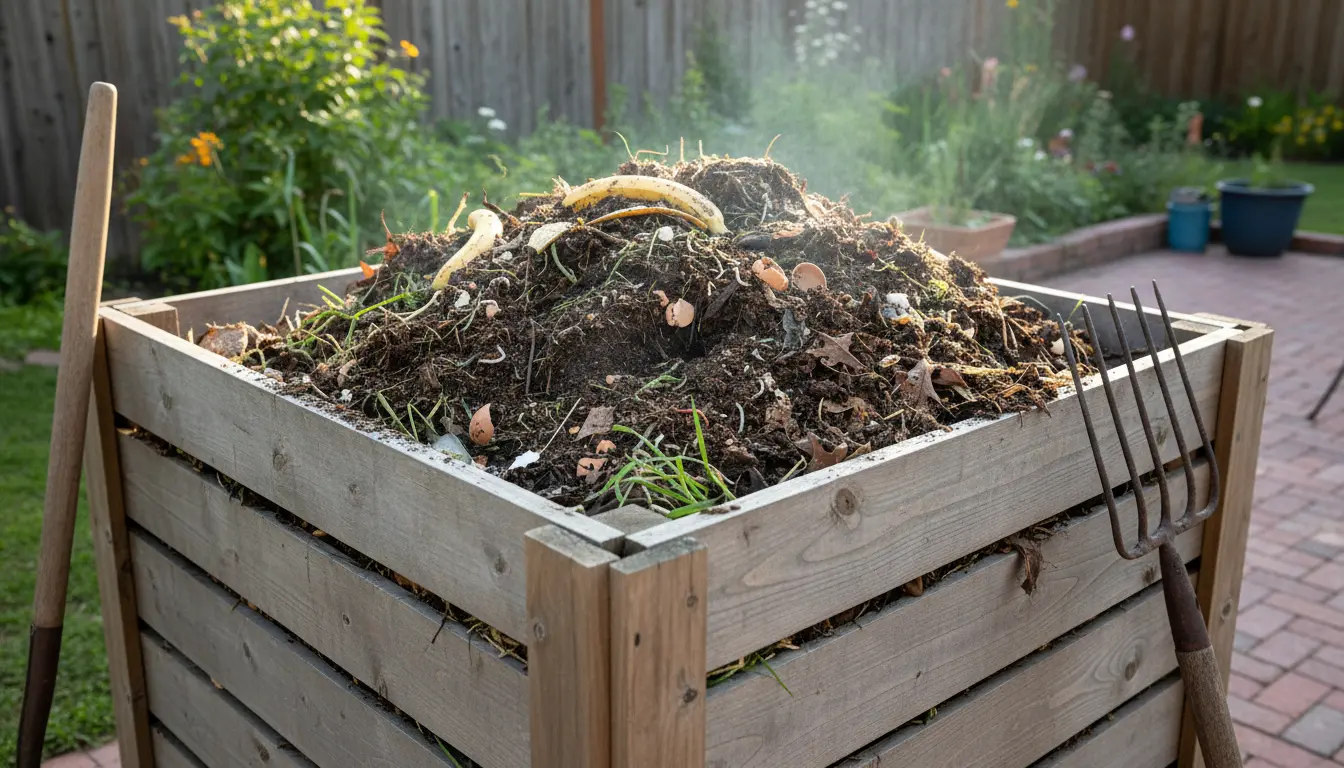
Why start home composting
Composting turns kitchen and yard waste into valuable soil. It reduces landfill waste and improves garden health with natural nutrients.
This guide explains easy methods, what to add, common problems, and a short case study so beginners can start with confidence.
Home Composting for Beginners: Basic principles

Compost relies on three main ingredients: carbon, nitrogen, and oxygen. Balance these elements and provide moisture to keep microbes active.
Think of carbon as brown material and nitrogen as green material. A rough balance of 3:1 browns to greens works for most setups.
What to compost
- Greens (nitrogen): fruit and vegetable scraps, coffee grounds, fresh grass clippings.
- Browns (carbon): dry leaves, shredded paper, cardboard, straw.
- Extras: crushed eggshells, small amounts of hair or pet fur.
Avoid meat, dairy, oils, diseased plants, and pet waste for home compost unless using a specialist system.
How compost breaks down
Microbes and small invertebrates consume organic matter and produce a dark, crumbly material. Temperature, moisture, and particle size affect speed.
Shredding or chopping materials and keeping the pile moist speeds decomposition.
Choosing a composting method
Pick a method that fits your space, time, and effort. Beginners should start with simple systems and upgrade later if needed.
Compost bin options
- Open pile: low cost, needs space, works well for yards.
- Stationary bin: tidy, retains heat, low maintenance.
- Tumbler: faster turning and aeration, good for small gardens.
- Vermicompost (worm bin): ideal for small kitchens and produces nutrient-rich castings.
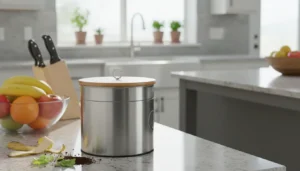
Choose a bin based on how much waste you produce and how quickly you want finished compost.
Location and setup
Place your bin on bare soil if possible to allow organisms to move in. Partial shade helps maintain moisture without drying out.
Ensure easy access for adding material and removing finished compost.
Step-by-step starter routine
- Start with a layer of coarse browns (twigs, straw) to aid drainage.
- Add a 2-4 inch layer of greens and then a thicker layer of browns.
- Water lightly so the pile is as damp as a wrung-out sponge.
- Turn or mix the pile every 1-2 weeks for faster results; less frequent turning still works.
- Harvest finished compost at the bottom after a few months to a year, depending on conditions.
Adjust the ratio if the pile smells (add more browns) or seems too slow (add greens and turn).
Troubleshooting common problems
Smells of rot usually mean too much moisture or not enough air. Add dry browns and turn the pile.
Slow decomposition can be caused by large pieces or a lack of nitrogen. Chop materials and add fresh greens.
Fruit flies can be reduced by burying food scraps in the pile or using a closed bin or worm bin with a lid.
Tips for success
- Chop or shred large items to speed breakdown.
- Keep a small supply of browns handy for quick balancing.
- Monitor moisture: too dry stalls activity, too wet creates odors.
- Be patient: backyard composting is low-cost and low-effort but not instant.
Composting can reduce household waste by up to 30 percent and cut methane emissions from landfills. Even small kitchens can produce valuable compost with a worm bin.
Small case study: A townhouse herb garden
Maria, a townhouse resident, started a 50-liter tumbler after moving to a smaller yard. She added kitchen scraps and shredded cardboard, turning the tumbler weekly.
Within four months she harvested dark compost and used it to repot herbs. Her plants showed better growth and required less fertilizer, and she cut her trash output noticeably.
Using finished compost
Finished compost mixes into potting soil, improves garden beds, and top-dresses lawns. Use it as a soil amendment rather than a replacement for potting mixes.
Apply a 1-2 inch layer to beds or mix a 1:3 ratio of compost to native soil for planting holes.
Final checklist for home composting beginners
- Choose a bin or system that fits your space.
- Maintain a balance of browns and greens.
- Keep the pile moist but not waterlogged.
- Turn or aerate periodically for faster results.
- Watch common issues and adjust as needed.
Starting small and learning by doing is the best approach. With basic care, most beginners see good results in a few months.