
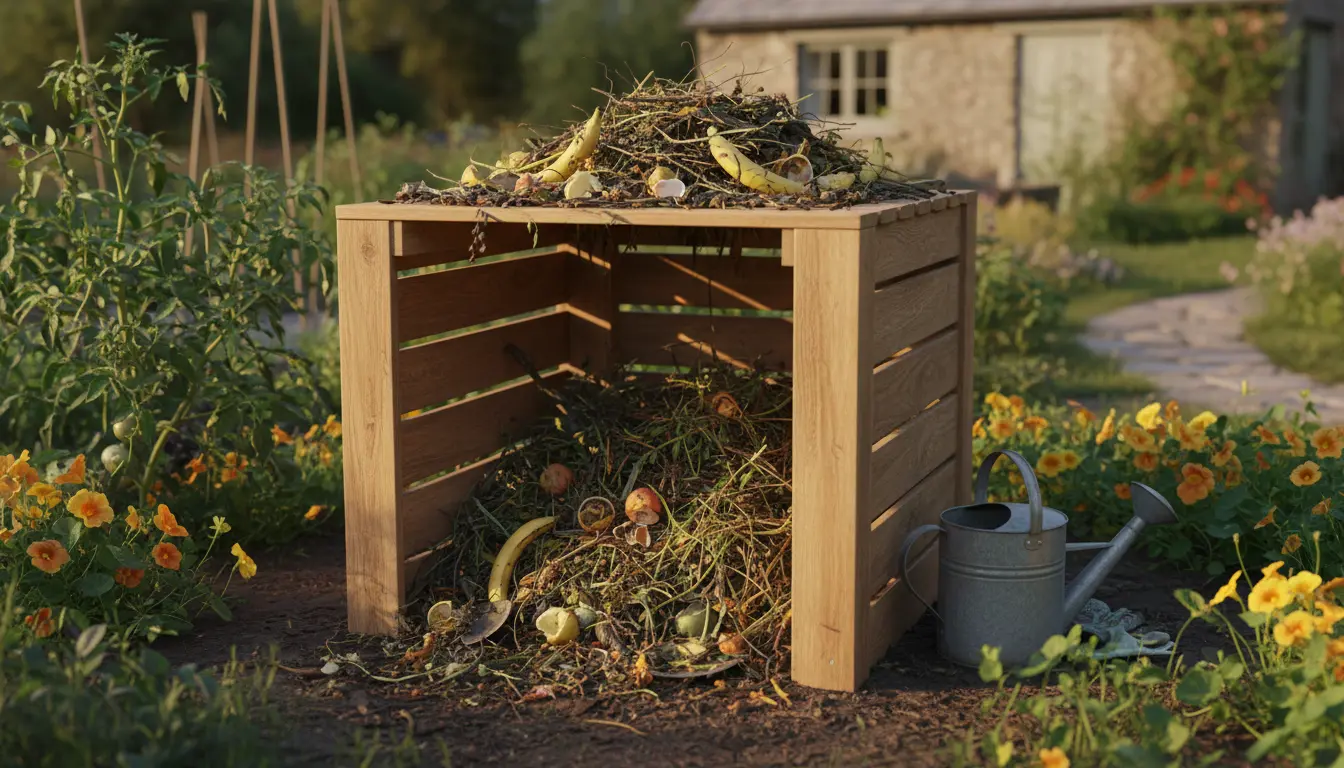
Home Composting for Beginners: Clear First Steps
Home composting turns kitchen scraps and yard waste into a useful soil amendment. This guide explains simple, practical steps you can follow today.
Why choose home composting for beginners
Composting reduces household waste and improves garden soil without special equipment. Beginners can start with low-cost methods and scale up as they learn.
Basic components: What you need to start
Compost needs three main things: organic materials, air, and moisture. You do not need a complex system to begin.
- Greens: fruit and vegetable scraps, coffee grounds, fresh grass clippings.
- Browns: dry leaves, shredded paper, straw, cardboard.
- A bin or pile, a pitchfork or aerator, and basic patience.
Choosing a method for home composting for beginners
Pick a method that fits your space and time. Popular beginner options are a simple backyard pile, a compost bin, or a kitchen bokashi or worm bin.
- Backyard pile: Minimal setup, needs space and occasional turning.
- Compost bin: Contained, neater, and easier to manage for odors.
- Worm bin: Great for small spaces and produces rich vermicompost fast.
Step-by-step process for home composting for beginners
Follow these steps to establish a reliable compost routine. Each step requires little time and simple materials.
- Choose a location: A shaded, level spot with good drainage works best.
- Layer materials: Start with coarse browns, then alternate greens and browns in 4–6 inch layers.
- Keep it moist: Compost should feel like a wrung-out sponge. Water if too dry.
- Aerate regularly: Turn the pile every 1–2 weeks for faster decomposition.
- Harvest finished compost: When dark and crumbly, sift and use in garden beds.
Troubleshooting common issues when home composting for beginners
Problems are usually easy to fix. Adjust the balance of greens and browns, and check moisture and airflow.
- Smelly pile: Add more browns, mix the pile, and ensure good airflow.
- Slow decomposition: Chop materials smaller and turn more often.
- Pests: Use a closed bin or bury food scraps under browns to discourage animals.
Composting can reduce household waste by up to 30 percent and returns valuable nutrients to the soil, improving plant health and water retention.
Practical tips to speed success
Small habits make composting easier and more reliable. Set aside a counter container or use compostable bags for your greening routine.
- Chop kitchen scraps before adding them to speed breakdown.
- Mix eggshells and coffee grounds with dry browns to avoid clumping.
- Use a mesh screen when harvesting to remove unfinished pieces for the next batch.
What not to add

Avoid meat, dairy, oily foods, diseased plants, and pet waste. These items attract pests and can cause odors or pathogens.
Case study: A small household success
Example: Sarah lives in a townhouse with a small backyard and two roommates. They started a 3×3 foot compost bin and followed a simple routine of adding scraps and turning weekly.
After four months, they produced about 25 liters of usable compost. They used it to top-dress potted herbs and saw better leaf color and water retention.
- Initial investment: $40 for a basic bin and garden fork.
- Time commitment: 10 minutes per week for turning and monitoring.
- Result: Less trash, healthier plants, and a ready supply of compost for gardening.
How to use finished compost
Finished compost is versatile and easy to use around the home. Incorporate it into your garden soil or use as a potting mix ingredient.
- Top dressing: Spread 1–2 inches around plants and gently work into the soil.
- Potting mix: Mix one part compost with two parts existing potting soil for nutrient boost.
- Seed starting: Use a light mix to improve germination and early growth.
Final checklist for home composting for beginners
Keep this simple checklist to maintain steady progress. Composting becomes easier once it fits your routine.
- Select a compost method that suits your space.
- Collect greens and browns separately to balance layers.
- Monitor moisture and turn the pile regularly.
- Use finished compost in your garden or potted plants.
With a small investment of time and a little practice, home composting for beginners becomes a low-effort habit that reduces waste and improves your soil. Start small, learn from each batch, and expand your system as you gain confidence.