
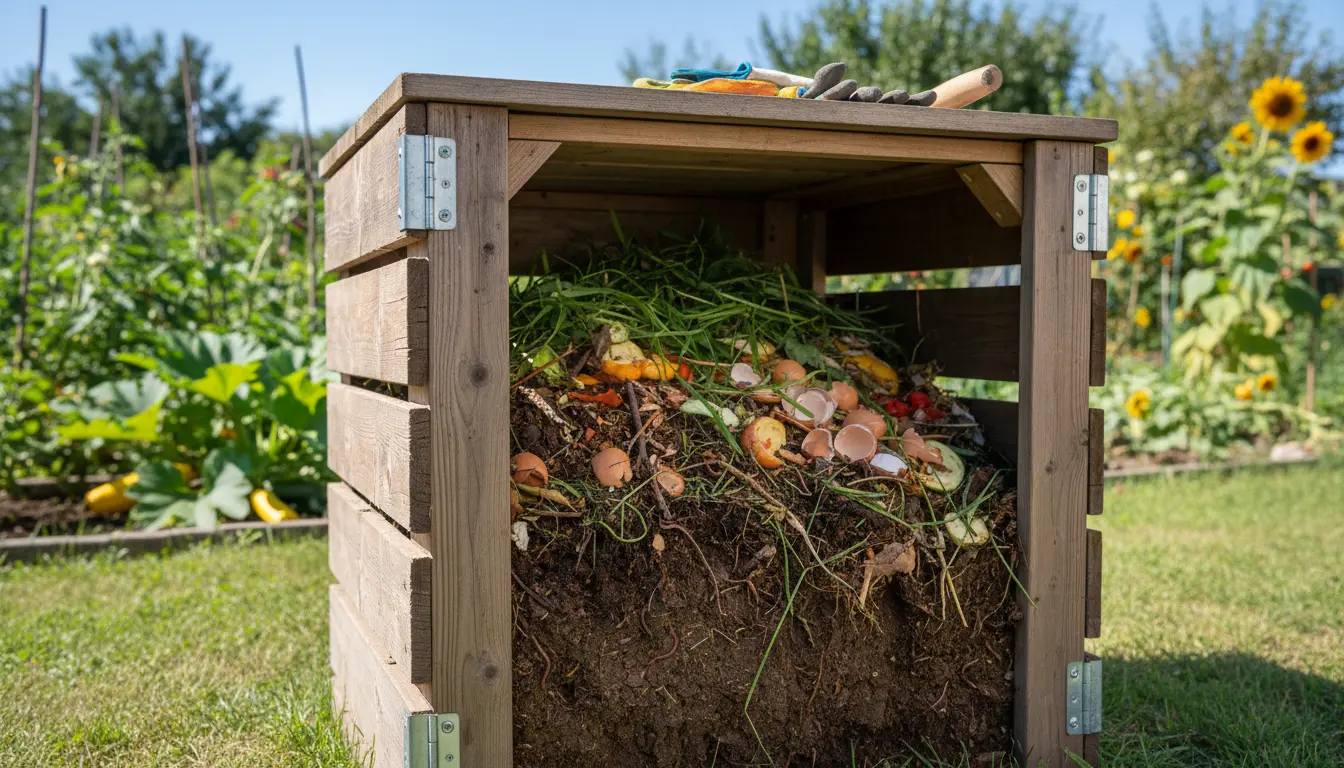
Why Home Composting Matters
Composting returns kitchen and yard waste to the soil, reducing landfill trash and creating nutrient-rich material for plants. It helps water retention, reduces the need for chemical fertilizers, and lowers household waste costs.
Home composting works in most spaces, from small balconies to large yards. With simple tools and regular attention, anyone can build healthy compost in weeks or months.
Basic Principles of Home Composting
Compost needs three things: carbon, nitrogen, and air. Carbon-rich materials are “browns” and include dry leaves, cardboard, and paper. Nitrogen-rich materials are “greens” like vegetable scraps, coffee grounds, and fresh grass clippings.
Balance, moisture, and aeration are the keys. Aim for a mix that looks like a damp sponge, with good airflow to keep microbes active.
How to Start a Compost Bin
Choose the right container. Options include plastic bins, tumblers, or a simple open pile. For small spaces, a sealed compost bin or worm bin (vermicomposting) is ideal.
Location matters: place the bin on bare soil when possible to allow beneficial organisms to move in. A partially shaded spot reduces drying.
Step-by-step Setup for a Home Compost Bin
- Pick a bin size that fits your space and waste volume.
- Start with a 2–4 inch layer of coarse brown material for drainage.
- Add alternating layers of greens and browns, aiming for roughly 2–3 parts brown to 1 part green by volume.
- Keep the pile moist but not waterlogged; add water if it feels dry.
- Turn or mix the pile every 1–2 weeks to add oxygen and speed decomposition.
Materials to Use and Avoid in Home Composting
Good materials:
- Kitchen scraps (fruit and vegetable peels)
- Coffee grounds and tea leaves
- Dry leaves, straw, cardboard, and paper
- Yard trimmings and shredded small branches
Avoid:
- Meat, dairy, and oily foods (they attract pests)
- Pet waste from carnivores
- Diseased plants or invasive weeds with seeds
- Large logs that decompose very slowly
Troubleshooting Common Problems
Bad smells
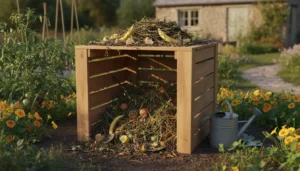
Smells usually mean too much nitrogen or poor airflow. Add more brown materials and turn the pile to introduce oxygen.
Pile too dry or slow
If decomposition stalls, add water and some green materials to restore microbial activity. Shredding bulky items speeds breakdown.
Pests or flies
Cover fresh food scraps with a layer of browns or finished compost. Use a closed bin or secure lid if rodents are a concern.
How to Speed Up Composting
Faster compost needs good balance and small particle size. Chop or shred materials before adding them, and turn the pile more often.
- Use a compost thermometer; 131–160°F (55–70°C) indicates active thermophilic breakdown.
- Maintain moisture like a wrung-out sponge.
- Add a handful of garden soil or finished compost to introduce microbes.
Using Finished Compost
Finished compost is dark, crumbly, and earthy-smelling. Use it as a top dressing for garden beds, mix into potting soil, or work into lawn soil to improve structure.
Apply a 1–2 inch layer to beds or mix 10–20% compost into soil when planting.
Composting can reduce household waste volume by up to 30 percent. Even small-scale composting like vermicomposting (worm bins) can recycle most kitchen scraps in apartments.
Small Case Study: Apartment Composting Success
Sarah, a city apartment dweller, started vermicomposting in a 10-liter bin under her sink. She used red worms and added only vegetable scraps and shredded paper.
Within three months she produced two liters of compost and reduced weekly trash by half. She used the compost for her balcony herb pots and reported healthier growth and less need for store-bought fertilizer.
Practical Tips for Ongoing Success
- Keep a small counter container with a lid for kitchen scraps to reduce trips outdoors.
- Chop or blend tougher scraps to speed decomposition.
- Record turning schedule and materials to learn what balance works best for your climate.
- Learn seasonal adjustments: more greens in winter, more browns in summer.
Final Checklist for Home Composting
- Select the right bin and location
- Maintain a balance of browns and greens
- Keep moisture and aerate regularly
- Use finished compost to enrich soil
Home composting is low-cost and practical. Start small, observe, and adjust. Within weeks you can turn everyday waste into a valuable resource for your plants.