
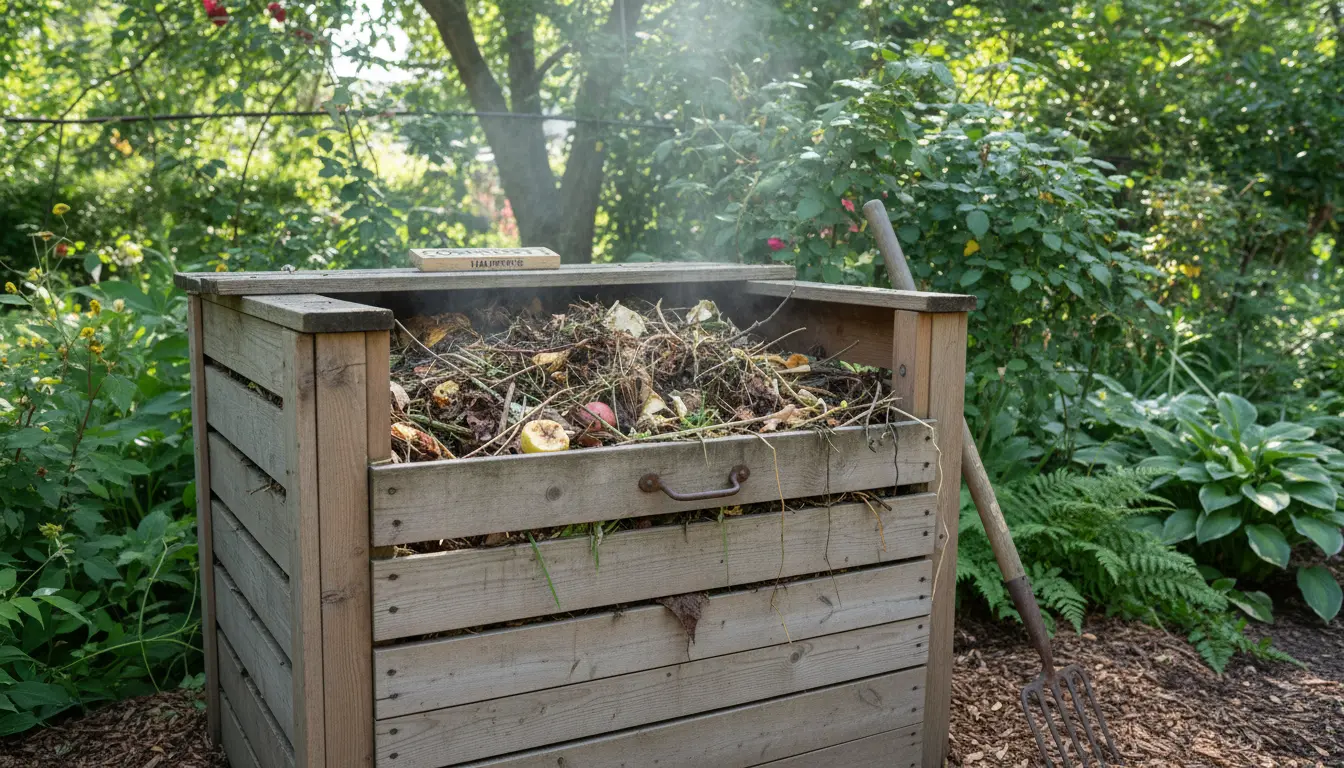
Composting at home turns kitchen scraps and yard waste into rich soil amendment. This guide covers simple systems, materials to include and avoid, and practical maintenance tips for beginners.
Why Choose Home Composting
Home composting reduces household waste and improves soil structure for gardens and potted plants. It also saves money on store-bought soil and reduces greenhouse gas emissions from landfills.
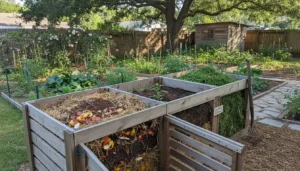
The process is natural and can fit different lifestyles, from apartment dwellers to homeowners with yards.
Choosing a Home Composting System
Select a system that matches your space and effort level. Common options include backyard bins, tumblers, vermicompost (worm bins), and bokashi for indoor fermenting.
- Backyard compost bin: Low cost, good for larger volumes.
- Tumbler: Faster mixing, cleaner, good for small yards.
- Worm bin (vermicompost): Excellent for kitchens and apartments, produces nutrient-rich castings.
- Bokashi: Fermentation method, works indoors and handles meat and dairy when followed by burial or composting.
Home Composting Materials: What to Add
Compost needs a balance of carbon-rich ‘browns’ and nitrogen-rich ‘greens.’ Proper layering and ratios speed decomposition and reduce odors.
- Greens (nitrogen): Fruit and vegetable scraps, coffee grounds, fresh grass clippings.
- Browns (carbon): Dry leaves, shredded paper, cardboard, straw.
- Water: Keep the pile moist like a wrung-out sponge.
Materials to Avoid in Home Composting
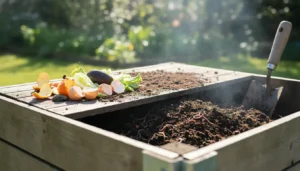
Avoid meat, dairy, oily foods, and diseased plants in open bins; these attract pests or spread pathogens. If using bokashi, fermented residues can be handled differently.
Also avoid treated wood, large branches, and synthetic materials.
Step-by-Step Home Composting Setup
Follow these steps for a simple backyard or bin compost setup.
- Pick a dry, shady spot near a water source for an outdoor bin.
- Start with a layer of coarse browns or small twigs for aeration.
- Add alternating layers of greens and browns, aiming for about 2:1 browns to greens by volume.
- Turn the pile every 1–2 weeks to add oxygen; tumblers simplify this step.
- Monitor moisture and temperature. Active piles warm up; cool, slow piles need more greens or turning.
Common Problems and Fixes in Home Composting
Beginners often face odors, pests, or slow breakdown. These are usually easy to fix with small changes.
- Bad smell: Add browns, mix the pile, and check moisture — it should not be soggy.
- Pests: Stop adding meats/dairy, use a closed bin, or bury new food scrap layers deep in the pile.
- Slow decomposition: Chop materials smaller, add nitrogen-rich greens, and turn more often.
Speeding Up Home Composting
To accelerate composting, shred materials, maintain a 30:1 carbon to nitrogen ratio by weight, and keep the pile warm and moist. Adding a handful of finished compost or garden soil introduces helpful microbes.
Tumblers and hot composting methods can produce usable compost in a few months when managed actively.
Household food scraps and yard waste make up about 30 percent of typical municipal solid waste. Composting at home can divert a large share of that from landfills.
Using Finished Home Compost
Finished compost is dark, crumbly, and earthy smelling. Use it as a top dressing, mix into potting soil, or blend into garden beds to improve soil structure and nutrient content.
A general recommendation is to mix 20 to 30 percent compost into garden soil for vegetables and flowers.
Small Case Study: Apartment Composting Success
Case: A two-person household in a third-floor apartment used a worm bin under the kitchen sink and a small outdoor cold bin on their balcony. They collected food scraps in a sealed container and fed the worms 3 times per week.
Results: After six months, they diverted roughly 150 kg of food waste from the trash and produced enough worm castings to pot houseplants and amend a few balcony planters. The key changes were consistent feeding, keeping bedding moist, and harvesting castings every three months.
Quick Checklist to Start Home Composting
- Choose a system (bin, tumbler, worm bin, or bokashi).
- Gather brown materials and a small supply of greens.
- Find a suitable location with reasonable access.
- Monitor moisture and oxygen, and adjust if problems appear.
- Use finished compost to improve soil or potting mixes.
Home composting is flexible and low-cost. Start small, observe your pile, and adjust as needed. With a little routine and simple tools, most households can convert food and yard waste into valuable compost within months.