
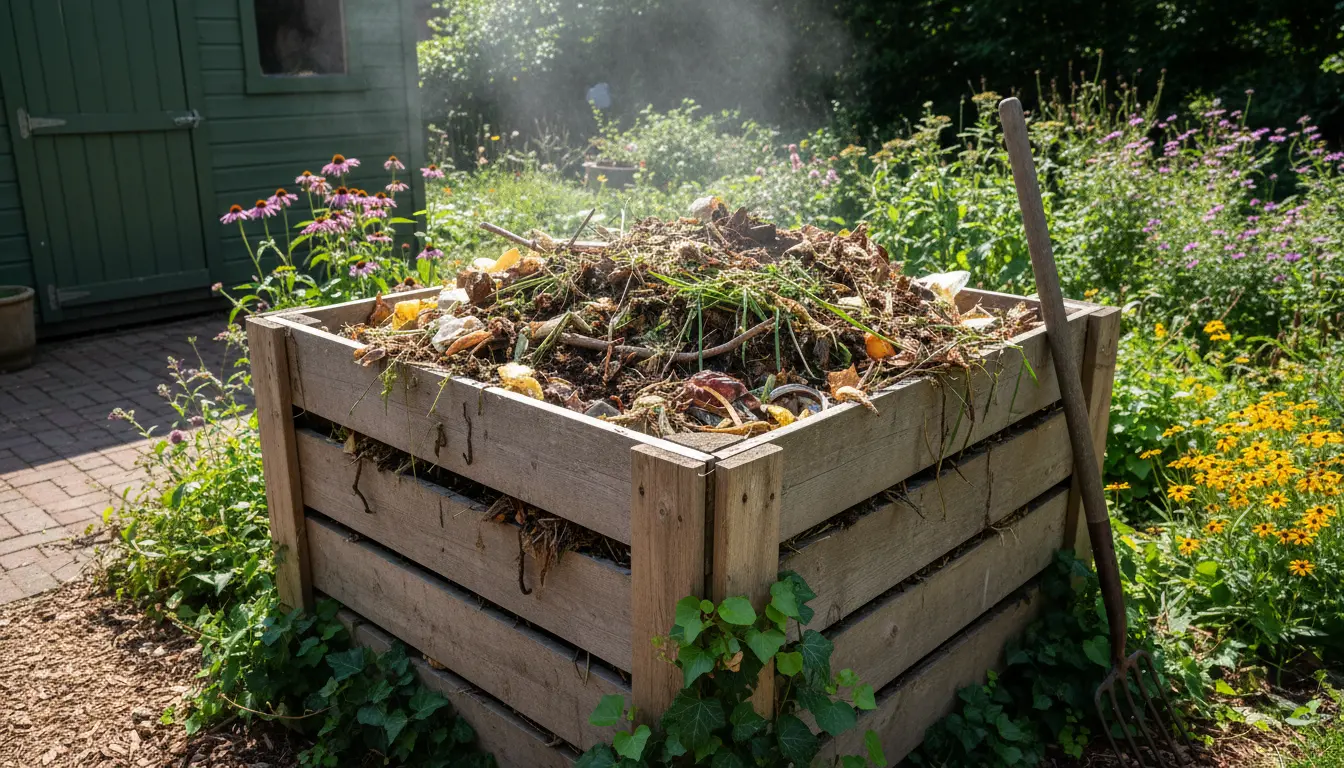
Start Composting at Home: What You Need to Know
Home composting turns kitchen scraps and yard waste into nutrient-rich soil. It reduces trash and improves garden soil without complex equipment.
This guide explains home composting for beginners with clear steps, lists of materials, and common fixes you can use right away.
Why Home Composting for Beginners Works

Composting is a natural decomposition process that breaks organic matter into humus. This is done by microbes, worms, and small organisms that thrive in the right conditions.
For beginners, the key is balancing carbon and nitrogen, maintaining moisture, and providing air. These three factors speed up decomposition and prevent odors.
Benefits of Home Composting for Beginners
- Reduces household waste and garbage costs.
- Improves soil structure, water retention, and nutrient content.
- Supports a healthy garden without chemical fertilizers.
Key Materials for Home Composting for Beginners
Collect two types of materials: brown (carbon-rich) and green (nitrogen-rich). Aim for a mix rather than just one type.
Common Brown Materials
- Dry leaves, straw, shredded cardboard, paper
- Wood chips and small branches
Common Green Materials
- Vegetable scraps, fruit peels, coffee grounds
- Fresh grass clippings and plant trimmings
Good rule: try a 3:1 ratio of browns to greens by volume. If the pile smells, add browns. If decomposition stalls, add greens and water.
How to Start a Compost Pile Step by Step
Choose a container or spot for a pile. Options include a simple bin, a tumbler, or an open pile in the yard. Location should be level and have some shade.
Step-by-Step Setup
- Base: Lay coarse material like small branches to aid drainage and airflow.
- Layer: Alternate thin layers of greens and browns. Sprinkle water to keep layers moist but not soggy.
- Size: Aim for a pile at least 3 feet wide by 3 feet tall for heat retention, but smaller bins work too for slower composting.
- Turn: Every 1–2 weeks, mix the pile to add oxygen and speed decomposition. Use a pitchfork or turning tool.
- Harvest: After 2–6 months (depending on conditions), finished compost will be dark, crumbly, and smell earthy.
Tools and Supplies
- Pitchfork or compost aerator
- Compost bin or tumbler (optional)
- Garden gloves and a watering can or hose
Troubleshooting Common Problems in Home Composting for Beginners
Problems usually stem from imbalance of moisture, air, or materials. Identify the symptom and adjust accordingly.
Common Issues and Fixes
- Bad smell: Add dry browns and turn the pile to increase oxygen.
- Too dry: Add water and more greens. Cover the pile to retain moisture.
- Slow breakdown: Chop materials smaller, add more greens, and increase turning frequency.
- Fruit flies: Bury fruit scraps under a brown layer or use a closed bin.
What to Avoid in Home Composting for Beginners
Not all organic matter is safe or practical for a home compost pile. Avoid these items to keep compost healthy.
- Dairy, meat, and oily foods (attract pests and cause odor)
- Diseased plants or invasive weeds with mature seeds
- Pet waste from carnivores (risk of pathogens)
Small Real-World Example: Backyard Family Case Study
Case study: A family of four in a small urban yard started composting in a 55-gallon bin. They collected kitchen scraps and mixed them with shredded cardboard and dry leaves.
After six months of weekly turning and occasional watering, they produced enough compost to top-dress their vegetable beds. Their household trash volume dropped by about 30%.
Simple Maintenance Plan for Home Composting for Beginners
Use a weekly routine to keep compost active and healthy. Consistency matters more than constant effort.
- Weekly: Add kitchen scraps and a handful of shredded brown material.
- Every 1–2 weeks: Turn or rotate the pile to aerate.
- Monthly: Check moisture and balance. Add water or dry material as needed.
- Every 3–6 months: Harvest finished compost and mix into soil.
Final Tips for Success
Start small and learn by doing. Keep a short log of what you add and how often you turn the pile; this helps identify patterns when things go wrong.
Composting is forgiving. Slightly off batches still become useful soil over time. Focus on balance, moisture, and airflow to succeed.