
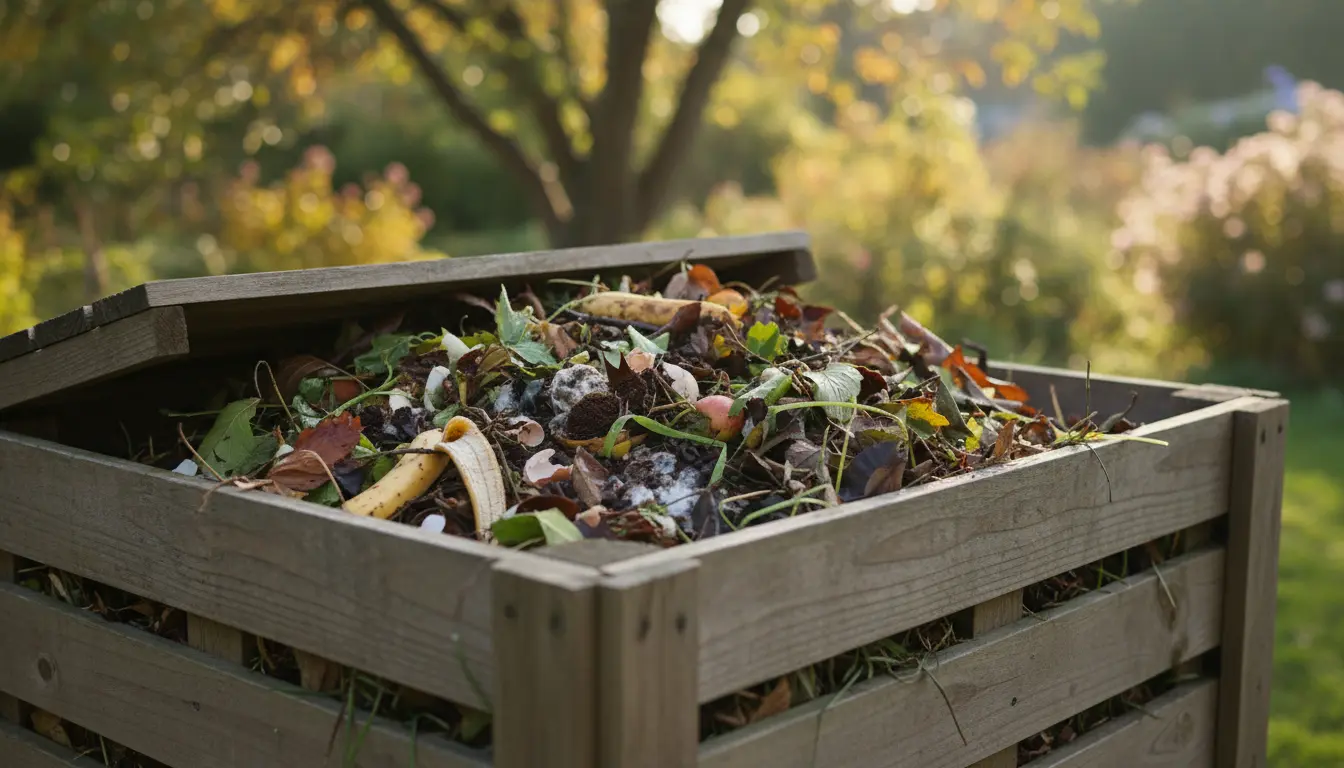
Why Home Composting Matters
Home composting turns organic waste into nutrient-rich soil. It reduces garbage, lowers methane from landfills, and supports healthy gardens.
This guide gives clear, practical steps you can use today. No special tools are required to start.
What Is Home Composting
Home composting is the controlled decomposition of organic materials. Microbes, worms, and insects break down food scraps and yard waste into compost.
Compost improves soil structure and water retention. It also returns nutrients to plants in a slow-release form.
Basic Materials for Home Composting
Compost needs a balance of carbon and nitrogen. Think of carbon as brown materials and nitrogen as green materials.
- Brown materials (carbon): dry leaves, straw, shredded paper, cardboard.
- Green materials (nitrogen): vegetable scraps, coffee grounds, fresh grass clippings.
- Other: water to keep moisture, air for oxygen, and time for decomposition.
Quick Ratio Rule for Home Composting
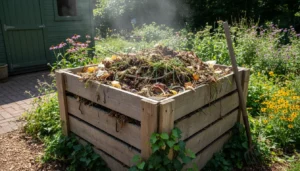
A simple guideline is 3 parts brown to 1 part green by volume. This helps the pile heat up and decompose efficiently.
If the pile smells, add more browns. If it’s dry and slow, add greens and water.
Choosing a Composting Method
Choose a method that fits your space and schedule. Common options work for small yards and apartments.
- Open pile: Easy and low-cost, needs space and occasional turning.
- Compost bin: Contained, neater, and helps retain heat.
- Worm composting (vermicompost): Great for apartments; uses red worms to process kitchen scraps.
- Tumbler: Convenience for regular turning; faster but costlier.
Setting Up a Simple Backyard Bin
- Place the bin on soil or grass for drainage and to allow organisms to enter.
- Start with a layer of coarse browns like small branches to help airflow.
- Add alternating layers of greens and browns; moisten each layer lightly.
- Turn the pile every 1–2 weeks to add oxygen and speed decomposition.
Step-by-Step: Home Composting for Beginners
Follow these steps to get consistent results. Each step is brief and actionable.
- Collect scraps in a small kitchen pail with a lid to reduce odors.
- Chop larger pieces so they break down faster.
- Transfer materials to your outdoor bin, keeping a good brown-to-green ratio.
- Check moisture: it should feel like a damp sponge, not soggy.
- Turn the pile with a pitchfork or aerator to mix materials and reintroduce oxygen.
- Harvest finished compost when it’s dark, crumbly, and earthy-smelling—usually in 2–6 months.
What to Avoid in Home Composting
Some items cause problems or attract pests. Keep these out of your home compost pile.
- Meat, dairy, fish, and oily foods (use municipal or specialized systems instead).
- Diseased plants or invasive weeds that may survive the process.
- Large quantities of citrus or onion peels if pests are a concern.
Troubleshooting Common Issues
Simple adjustments usually fix problems. Smells, pests, and slow breakdown are common and solvable.
- Bad odor: Add dry browns and turn the pile to increase aeration.
- Too dry: Add water and more greens; mix to distribute moisture.
- Pests: Bury food scraps under browns and use a closed bin if needed.
- Slow decomposition: Chop materials smaller and maintain the 3:1 brown-to-green ratio.
Using Finished Compost
Finished compost can be mixed into garden beds, used as a top dressing, or added to potting mixes. It improves soil life and plant health.
Apply a 1–3 inch layer around plants or mix compost into the top 6–8 inches of soil before planting.
Case Study: Small Urban Compost Success
Anna lives in a small city townhouse with a tiny backyard. She started a 50-gallon compost bin and used a 2:1 brown-to-green mix.
By turning the bin weekly and shredding yard waste, she produced usable compost in about five months. Her garden beds retained moisture better and she reduced kitchen waste by nearly half.
Quick Tips for Home Composting for Beginners
- Keep materials small: chop or shred to speed breakdown.
- Balance moisture and aeration to avoid smell and slowness.
- Use a kitchen pail to collect scraps and reduce barrier to composting.
- Start small and scale up once you get the rhythm.
Home composting is a low-cost, practical way to reduce waste and enrich your garden. With a little routine and the right balance of materials, anyone can produce quality compost at home.