
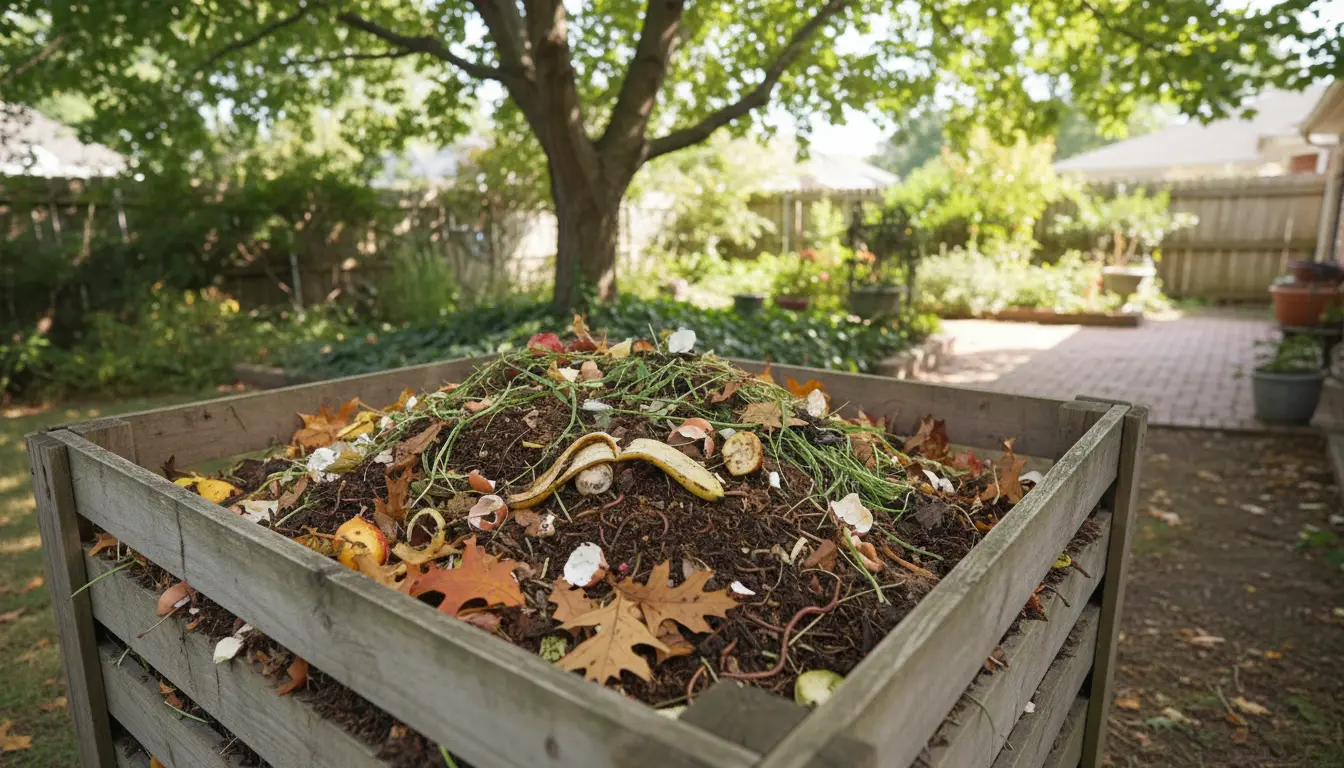
Home Composting Basics
Home composting turns kitchen scraps and yard waste into a rich soil amendment. It reduces trash, lowers methane emissions from landfills, and improves garden soil structure.
Composting is a biological process driven by microbes, moisture, oxygen, and the right mix of materials. Understanding these elements helps you start successfully.
Why Choose Home Composting
Home composting is practical and cost effective. It reduces waste hauling and produces free fertilizer for vegetables, flowers, and lawns.
Even small-space composting, like bokashi or worm bins, can divert significant organic waste from your trash each year.
How to Start Home Composting
Starting home composting requires three simple steps: pick a method, gather materials, and manage the pile. Below are clear options and initial setup tips.
Choose a Method for Home Composting
- Open pile: simple, low cost, good for yards with space.
- Bin system: tidy and contained; choose plastic or wooden bins.
- Tumbler: faster mixing, easier turning, slightly higher cost.
- Vermicomposting: uses worms, ideal for apartments and small kitchens.
- Bokashi: fermenting method for all food scraps, including meat and dairy.
Gather Materials

Compost needs a balance of “greens” and “browns.” Greens supply nitrogen and energy; browns provide carbon and structure.
- Greens: fruit and vegetable scraps, coffee grounds, fresh grass clippings.
- Browns: dry leaves, shredded paper, cardboard, straw, woody prunings.
A good rule of thumb is 2–3 parts browns to 1 part greens by volume for a backyard bin.
Setting Up Your First Compost Pile
Location matters. Pick a level spot with partial sun and good drainage. Avoid areas that flood or are too close to your house foundation.
Start with a 12–18 inch layer of coarse browns for aeration. Add mixed layers of greens and browns, keeping the overall pile moist like a wrung-out sponge.
Maintenance: Moisture, Aeration, and Temperature
Check moisture weekly. Too dry slows decomposition; too wet causes odors.
- Moisture: Add water in dry spells, or add more browns if it becomes soggy.
- Aeration: Turn the pile every 1–2 weeks with a pitchfork or use a tumbler for easier rotation.
- Temperature: Active piles heat to 120–160°F (50–70°C). High temperature helps kill seeds and pathogens.
Home Composting Troubleshooting
Common issues are easy to fix when you know what to look for. Below are typical problems and practical fixes.
Bad Smell
Cause: Anaerobic decomposition due to excess moisture or lack of air.
Fix: Turn the pile and add dry browns like shredded paper or dry leaves to restore air pockets.
Pile Not Heating
Cause: Too small, too dry, or poor carbon-nitrogen balance.
Fix: Increase the pile size to at least 3x3x3 feet, moisten, and add more greens if browns dominate.
Fruit Flies or Pests
Cause: Exposed food scraps or uncovered bins.
Fix: Bury food waste under a thick layer of browns or use a sealed bin or tumbler. Consider vermicomposting indoors to avoid flies.
Composting one ton of organic waste can save approximately 0.5 to 1 ton of CO2 equivalent compared to landfilling. Small household efforts add up across a community.
When Is Compost Ready?
Finished compost is dark, crumbly, and earthy-smelling. Most backyard systems take 2–6 months, depending on method and management.
Use finished compost as a soil amendment, top dressing, or as a component of potting mixes. Avoid using unfinished compost directly on seedlings.
Small Case Study: Sarah’s Apartment Worm Bin
Sarah started a worm bin in a 10-gallon plastic tote for kitchen scraps. She added shredded newspaper, a cup of garden soil, and 1,000 red wiggler worms.
After three months of adding food scraps and keeping the bin moist, Sarah harvested dark, fine worm castings. She mixes the castings into her balcony planters and reduced food waste by 60%.
Practical Tips and Examples for Home Composting
- Collect scraps in a small counter pail with a tight lid to control odors.
- Chop larger pieces to speed decomposition.
- Save fall leaves to use as browns through winter.
- Use a thermometer to monitor active pile temperature if you want faster results.
Final Checklist for Starting Home Composting
- Choose a composting method that fits your space and lifestyle.
- Balance greens and browns; aim for 2–3 parts browns to 1 part greens.
- Maintain moisture and aeration; turn the pile regularly.
- Monitor and troubleshoot odors, pests, and temperature as needed.
With a small initial effort, home composting can become an easy routine that saves waste, improves garden health, and connects you to natural cycles. Start small, observe, and adjust — composting grows with you.