
Why Home Composting for Beginners Matters
Home composting turns kitchen scraps and yard waste into rich soil. It reduces household waste and supports healthier plants without chemical fertilizers.
This guide gives step-by-step, practical instructions for beginners to start composting at home with minimal cost and effort.
How to Start Home Composting: Choose a Method
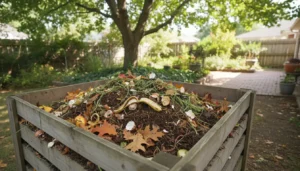
Pick a composting method that fits your space and lifestyle. Small changes in setup make a big difference in maintenance and results.
Backyard Bin Composting
Use a closed or open bin placed on soil or grass. It is suitable for most suburban yards and handles larger volumes of organic waste.
Bokashi and Vermicomposting for Small Spaces
Bokashi is an anaerobic fermentation process that works well in apartments. Vermicomposting uses worms to break down food scraps quickly indoors or in small containers.
Home Composting for Beginners: Materials to Use
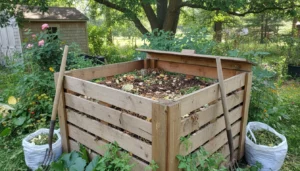
Compost needs a balance of carbon-rich “browns” and nitrogen-rich “greens.” Aim for a rough 2:1 to 3:1 ratio of browns to greens by volume.
- Greens: vegetable peels, coffee grounds, tea bags, fresh grass clippings.
- Browns: dry leaves, shredded paper, straw, cardboard (uncoated).
- Avoid: meat, dairy, oily foods, pet waste, and diseased plants (can attract pests or spread pathogens).
How to Build a Home Compost Pile
Start with a 6–12 inch layer of coarse browns to help airflow. Add alternating layers of greens and browns.
Keep the pile moist like a wrung-out sponge and turn every 1–2 weeks if possible to add oxygen. Turning speeds decomposition and reduces odors.
Simple Step-by-Step
- Choose container or spot: bin, tumbler, or a corner in the yard.
- Layer coarse browns first, then add greens and fine browns.
- Maintain moisture and aeration; turn or stir regularly.
- Wait 2–6 months for compost to mature depending on method and care.
Troubleshooting Home Composting for Beginners
Common issues are easy to fix with simple adjustments. Monitor smell, moisture, and temperature to diagnose problems.
- Bad odor: Add more browns and turn the pile to introduce air.
- Too dry: Add water and some greens to increase moisture.
- Slow decomposition: Chop materials smaller and turn more often.
- Pests: Avoid food scraps like meat and keep bin sealed or use worm composting indoors.
Home Composting for Beginners: Uses and Benefits
Finished compost enriches garden soil, improves structure, retains moisture, and feeds beneficial microbes. It can be used as a top-dressing, potting mix ingredient, or lawn amendment.
- Reduces landfill waste and greenhouse gas emissions.
- Saves money on commercial soil amendments and fertilizers.
- Supports healthier plants and improves water retention in soil.
About one third of household waste is compostable. Composting at home can cut household waste and help soil retain twice as much water as unamended soil.
Small Case Study: Apartment Vermicomposting
Marie, a city resident with limited space, started vermicomposting in a 10-liter plastic bin with red wiggler worms. She kept the bin under her kitchen counter and fed it vegetable scraps twice a week.
After four months she harvested rich worm castings, used them to top-dress potted herbs, and reduced her kitchen waste by nearly half. Minimal odor and simple maintenance made the system sustainable for her lifestyle.
Practical Tips for Home Composting for Beginners
Small habits make composting easier and more reliable. Start with manageable quantities and scale up as you gain experience.
- Chop scraps into smaller pieces to speed decomposition.
- Keep a counter container with a lid for food scraps to avoid daily trips to the compost bin.
- Use a compost thermometer for hot composting to monitor activity (optional).
- Layer thickly in fall to take advantage of abundant leaves as browns.
How to Know Compost Is Ready
Mature compost looks dark, crumbly, and smells earthy. No recognizable food or plant parts should remain.
Use a sieve or screen to separate finished compost from larger pieces. Return larger pieces to the active pile to finish decomposing.
Final Steps: Use and Maintain Your Compost
Incorporate finished compost into garden beds at a ratio of about 1 part compost to 3 parts soil for a general amendment. For potted plants, mix 10–30% compost into potting mix.
Continue regular composting by keeping materials balanced and monitoring moisture. Over time, composting becomes a simple, sustainable part of household routine.
With the right method and consistent habits, home composting for beginners is an achievable way to reduce waste and improve garden health.