
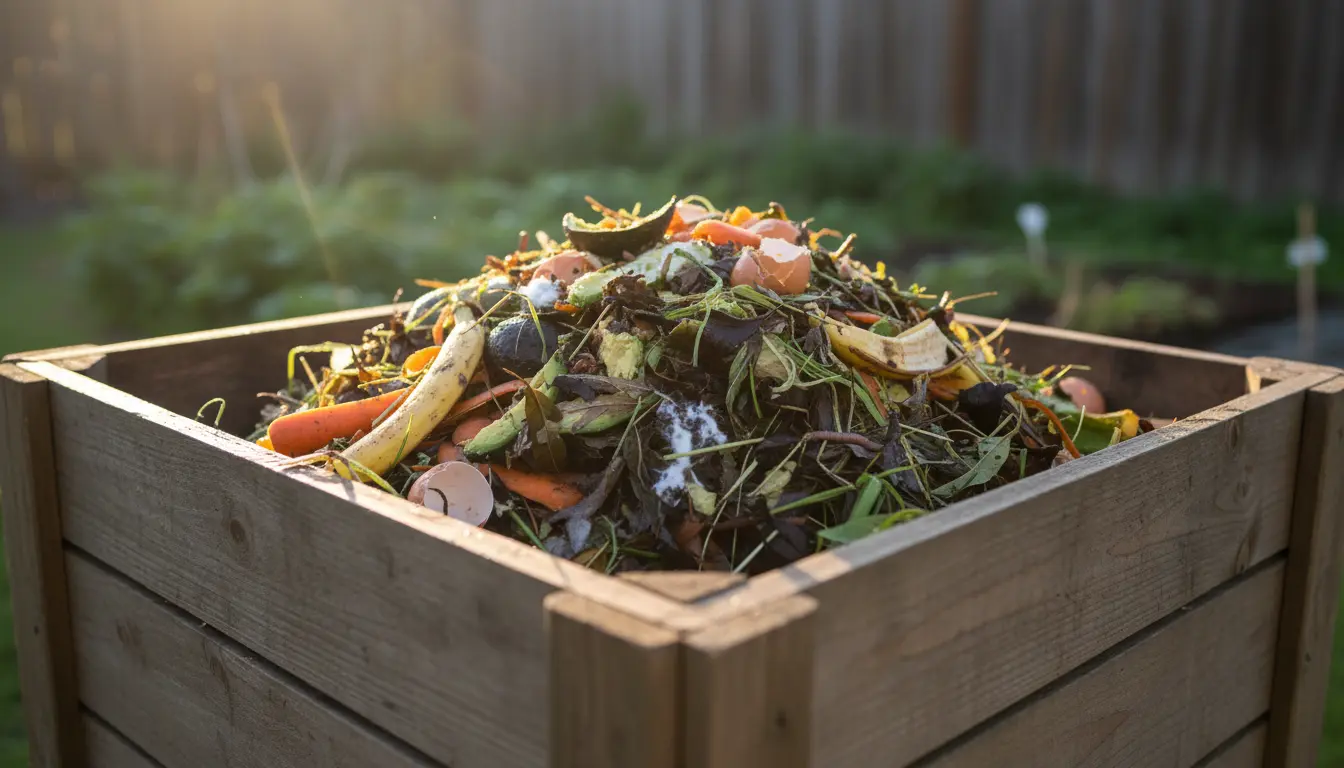
Home composting turns kitchen and garden waste into nutrient-rich soil. This guide gives step-by-step, practical instructions you can apply whether you have a yard, a balcony, or a small indoor space.
Why Home Composting Matters
Home composting reduces household waste and returns organic matter to the soil. It also lowers methane emissions from landfills and improves garden health over time.
Benefits of home composting
- Reduces food waste and garbage collection costs.
- Improves soil structure and water retention.
- Creates free fertilizer for plants and lawns.
Common Home Composting Methods
Choice of method depends on space, time, and how much waste you produce. Each method suits different living situations.
Backyard bin composting
Use a simple bin or tumbler outdoors. This is the most hands-off option if you have a yard and moderate waste.
Vermicomposting at home
Vermicomposting uses worms to break down food scraps quickly. It works well indoors or on small balconies and is odor-free when managed correctly.
Bokashi and indoor fermentation
Bokashi ferments food scraps in an airtight bucket using bran inoculated with beneficial microbes. It handles meat and dairy and is useful where outdoor space is limited.
How to Start Home Composting
Starting a compost system is straightforward. Follow these steps to avoid common mistakes and speed up decomposition.
Step 1: Choose a location and container
Pick a level, shaded area with good drainage if outdoors. Use a plastic or wooden bin, a compost tumbler, or a worm bin depending on your chosen method.
Step 2: Balance greens and browns

Compost needs a balance of nitrogen-rich “greens” and carbon-rich “browns”. Aim for roughly a 1:2 ratio by volume—more browns helps prevent odors.
- Greens: vegetable scraps, coffee grounds, fresh grass clippings.
- Browns: dry leaves, shredded paper, cardboard, straw.
Step 3: Layer and maintain
Start with a layer of coarse browns for airflow. Alternate greens and browns, and keep the pile moist like a wrung-out sponge. Turn or aerate weekly for faster breakdown.
What to Compost and What to Avoid
Knowing what to add prevents pests and odors. Use common-sense rules to keep your compost healthy.
Good items for home composting
- Fruit and vegetable scraps
- Eggshells (crushed)
- Coffee grounds and filters
- Yard waste like leaves and small prunings
Items to avoid or handle carefully
- Meat, fish, and dairy — avoid in simple outdoor piles, or use Bokashi.
- Oily foods and large amounts of citrus — can slow microbes and attract pests.
- Diseased plants and invasive weeds — do not compost unless hot composting reaches high temperatures.
Managing Your Home Composting System
Regular checks help prevent issues. Look for simple signs to adjust moisture, airflow, or ingredient balance.
Monitoring tips
- Smell: a healthy pile has earthy odor; rotten smells mean too wet or too many greens.
- Moisture: add water if dry, add browns if soggy.
- Temperature: warm to hot indicates active decomposition; cool piles need turning or more greens.
Small Real-World Example
Case study: A two-person household in an apartment started vermicomposting in a 10-liter bin. They collected kitchen scraps in a small counter caddy and fed their worm bin twice a week.
After three months they produced several liters of worm castings and reduced their trash from three bags a week to one. They used castings to feed potted herbs and saw improved plant growth after two growing cycles.
Tips and Troubleshooting for Home Composting
Small adjustments prevent common problems. Keep steps simple and consistent for reliable results.
Quick fixes
- Bad smell: add dry browns and turn the pile.
- Pests: bury fresh food scraps under a browns layer or switch to closed bins.
- Slow decomposition: chop materials smaller and increase turning frequency.
Conclusion: Keeping Home Composting Practical
Home composting is a low-cost, environmentally friendly practice that fits many living situations. Start with a simple system, learn from a few cycles, and adjust for your household needs.
With basic steps—balancing greens and browns, maintaining moisture, and choosing the right container—you can turn everyday waste into valuable soil amendment for garden beds and potted plants.